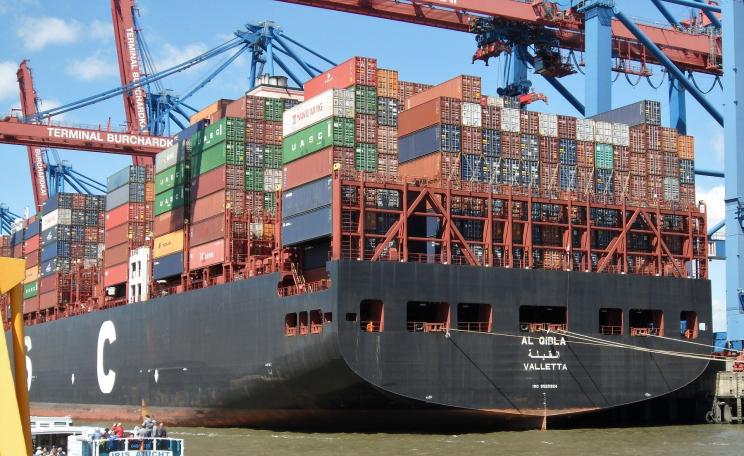
The shipping industry supports our economies - and our daily lives. However, to preserve our planet, it must adopt new technologies to reduce emissions.
Sir Brian Hoskins, chair of the Grantham Institute on Climate Change, among scientists calling on Theresa May to enshrine zero carbon target into UK law.
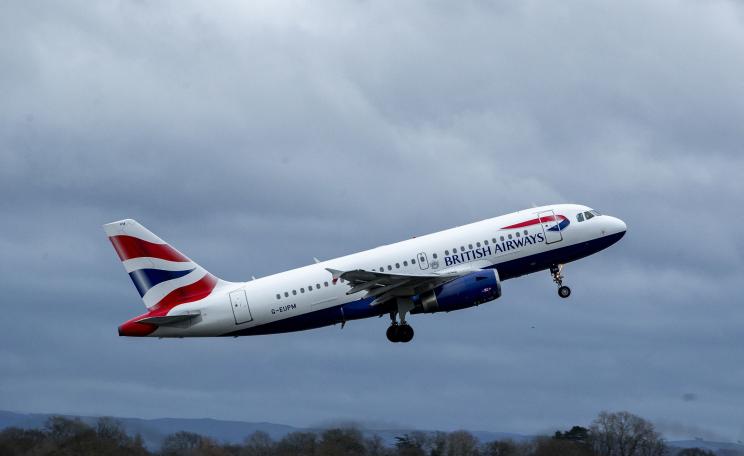
China will no longer participate in the start of the world’s first and only international deal to curb emissions from the aviation industry - but it could rejoin. EMMA HOWARD of UNEARTHED reports
The law of unintended consequences is usually assumed to mean the best will in the world can still cause terrible harm. But the need to understand the causes of climate change is forcing societies to address other risks from industrial production, argues NATALIE BENNETT.
As economic growth in Pakistan surges forward, and its emissions are set to soar, are the implications for climate change being forgotten, asks ANAM ZEB
Science textbooks aimed at teenagers simply ignore the most effective lifestyle changes to prevent climate change: go vegetarian, cycle, take the train overseas and have fewer kids. It is time parents sat down and explained the low carbon birds and the bees, asks BRENDAN MONTAGUE
The world must drastically reduce the amount of CO2 in the atmosphere, writes Simon Redfern - and we can't do it by cutting emissions alone. But we could we do it 'nature's way', using volcanic rocks and mining wastes that naturally soak up CO2 from the atmosphere and ocean, and turn it into harmless forms like limestone and dissolved bicarbonate.
Never mind the climate idiocy that has gripped the USA! Global emissions are already flatlining, writes Joe Ware, and a new initiative just launched in London aims to start pulling them down by 2020. Sure it's ambitious, but it's possible - because the future is unlike the past, and it's already happening, right now. Are you up for the challenge?
A recently discovered peatland in northeast Peru contains two years worth of US carbon emissions, writes Joe Sandler Clarke, but it's under threat from the rapidly advancing 'palm oil frontier'. Now scientists are calling for the wetland's immediate protection - before it's too late to save it.
Natural gas is meant to be a far lower carbon fuel than coal, writes Steve Horn. But a new study shows that methane leaks from gas power plants and oil refineries are 20-120 times higher than thought. And with methane a greenhouse gas almost 100 times stronger than CO2 over 20 years, the leaks are equivalent to about a tenth of the US's CO2 emissions.
A direct action protest by Rising Up! today blocked access to three Heathrow terminals to press their demand for no third runway at the UK's biggest airport. The activists included both climate campaigners and local people fearful of increased pollution, loss of homes and green space and entire villages destroyed.
A new carbon 'tax and dividend' climate strategy would strengthen our economy, reduce regulation, help working class Americans, shrink government, promote national security, and reduce emissions, write eight senior US conservative politicians, financiers and academics. Now Republican control of all branches of the US government makes it an opportunity not to miss!
Newly published letters show that the UK Government may ignore the Committee on Climate Change, its official advisor on climate, and allow emissions from aviation to soar at an expanded Heathrow airport, writes Damian Kahya. Instead it would rely on buying widely condemned 'carbon offsets'.
A 145,000 sq km area of peatland swamp forest has been discovered in the Congo Basin, writes Tim Radford, and it holds a record 30 Gt of carbon, equivalent to 20 years of US fossil fuel emissions. Now the race is on to protect it from damaging development that would emit that carbon over coming decades.