Some funders are arguably more accountable, self-reflective and aware than others.
Craig Bennett, the chief executive of The Wildlife Trusts, has discussed his efforts to buy the Rothbury Estate, which is the size of Athens, from Max Percy, the youngest son of the Duke of Northumberland, and render it in perpetuity unto the nation as a public good for all to enjoy.
It would be a haven for wildlife and biodiversity, and a landscape for sanctuary, restoration, rewilding and recovery.
Bennett’s interview on BBC Radio 4 in November 2025 was followed by a piece from David Attenborough extolling the virtues of this effort and encouraging the public to support it.
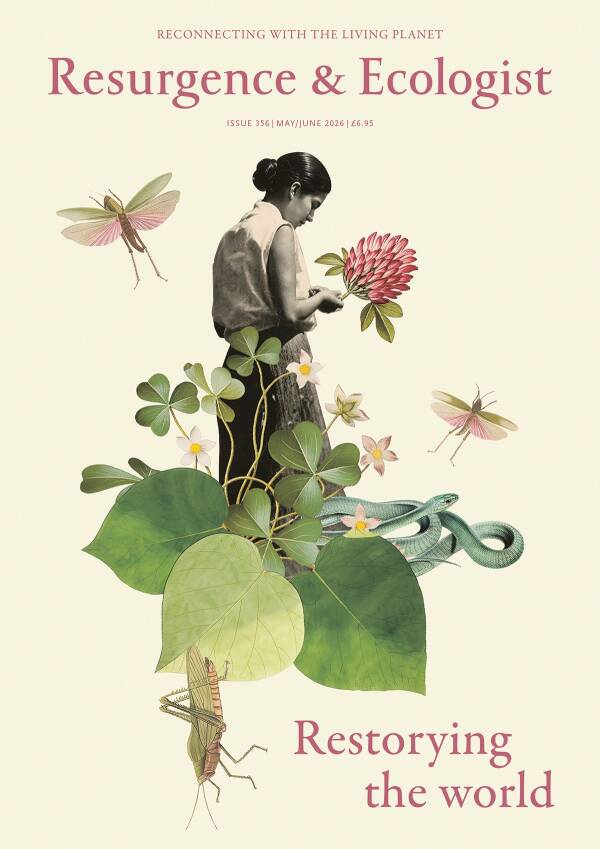
This article was originally published in the Resurgence & Ecologist magazine.
Collaborate
Within hours of the interview, several thousand members of the public had contributed over £2 million to the project, many of them new donors to the environmental cause, moved by the brilliant conservation opportunity and the sincerity and integrity of the two high-profile pitches.
More than £16.7 million towards the £30 million target has now been raised, including generous gifts from a number of private philanthropists.
There are grounds to hope that over the next two years the target will be reached, and an amazing new conservation effort, currently being worked up in depth in close partnership and consultation with the local community, achieved.
Across Britain and around the world, many good – indeed, vital – environmental causes are being upheld by the generosity of individual citizens as well as by a host of national and international philanthropies.
Of the total philanthropic giving worldwide, a growing percentage now goes to environmental causes, broadly defined. Funders also increasingly collaborate around their giving.
Frontline
In the UK, many of the key funders work together through the Environmental Funders Network. At the global level, some of the biggest environmental funders – such as the Bezos Earth Fund, the Children’s Investment Fund Foundation, the Quadrature Climate Foundation, and ClimateWorks – also work closely together to discuss issues, approaches and sectors.
Funders vary widely in their orientation, risk appetite, theory of change and areas of focus. Some prioritise grassroots campaigning and initiatives that challenge the status quo in profound ways.
Others pursue investments in technological innovation – such as alternative proteins and artificial intelligence – with a strong focus on the private sector.
For example, George Monbiot wrote in The Guardian in December 2025 about pioneering, innovative soil-work funded by the Bezos Earth Fund.
Some funders are arguably more accountable, self-reflective and aware than others.
Some support Indigenous peoples’ rights, while others focus on protected areas, local conservation efforts, or climate adaptation and resilience – particularly in frontline communities experiencing the impacts of the unfolding climate crisis.
Protect
At a time of diminishing funding from national governments, including the UK’s, many private philanthropic funders hold increasingly significant power and sway.
They hire leading experts in their fields, have extensive access and reach, and can convene in ways that bring people together around ideas and causes. But with great power comes great responsibility.
Some funders are arguably more accountable, self-reflective and aware than others, with strong boards and greater checks and balances.
Some have been around for a long time and have a strong track record of learning from and evaluating their work, while others may be newer to the scene and still finding their feet.
It is a rich and varied ecosystem, playing a vital role in supporting the many actors around the world who are working to protect and restore the natural environment and address the climate crisis as best they can.
Generously
There is still, however, much to do, and a pressing need for more funding from a wider diversity of donors to meet the demands of the moment.
A number of existing funders are working hard to generate interest and commitment from their peers, seeking to generate greater philanthropic engagement from, for example, potential donors in the Middle East or Silicon Valley.
Dutch historian Rutger Bregman, in his 2025 BBC Reith Lecture series Moral Revolution, rightly calls for increased moral imagination from the wealthiest in society.
This includes those with considerable resources who have not yet considered giving generously for the climate – or indeed for a plethora of other vital causes, such as health and education.
Spirit
There is also a growing trend for wealthy philanthropists to make significant gifts to universities with whose ideals they align, enabling learning and scholarship around particular areas of interest.
In keeping with the Resurgence spirit, however, it is also true that small is beautiful. Many of the most powerful and authentic environmental efforts around the world are crowd-funded and often run on a proverbial shoestring.
We might think of some civil movements in the global south and north, public campaigns that capture the spirit of the moment and drive lasting change, and authentic grassroots efforts that are shaping events in real time.
Ideals
Here in the UK, wildlife trusts and local restoration projects often rely on small local-government grants and the generosity of the British public, which remains committed to environmental protection and addressing the climate emergency even at a time when the cost of living is an issue for so many.
At a time of great need, and of division and anxiety, it is more important than ever for those of us in the climate and environment movements, wherever we sit, to work together and to secure the funding we need to do the work that is so urgently needed.
The role of philanthropists has never been more important in this respect, and there is a strong hope that those who are already giving generously, here in the UK and internationally, will continue to do so.
And let’s hope they will soon be joined by many more foundations, family offices, individuals and others who share a commitment to these values and ideals. The time is now.
This Author
Edward Davey is head of the World Resources Institute in the UK and the author of Given Half a Chance: Ten Ways to Save the World. This is an updated version of an article originally published in the Resurgence & Ecologist magazine.