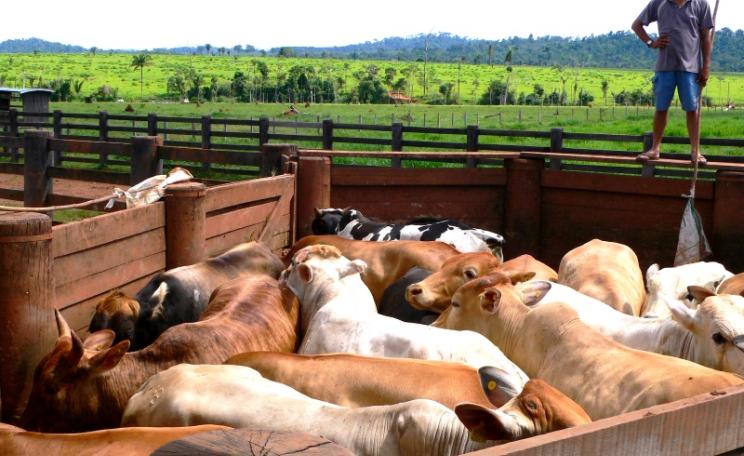
How do you solve a problem like deforestation? By a change of diet, writes Laura Kehoe. Scientists have discovered that we can feed the world and stop destroying forests by eating less meat. If we all went vegetarian that would reduce deforestation by 94%. And if we went the whole way to veganism enough land would be freed up for a new forest the size of the Amazon, and allow a widespread shift to organic farming systems.
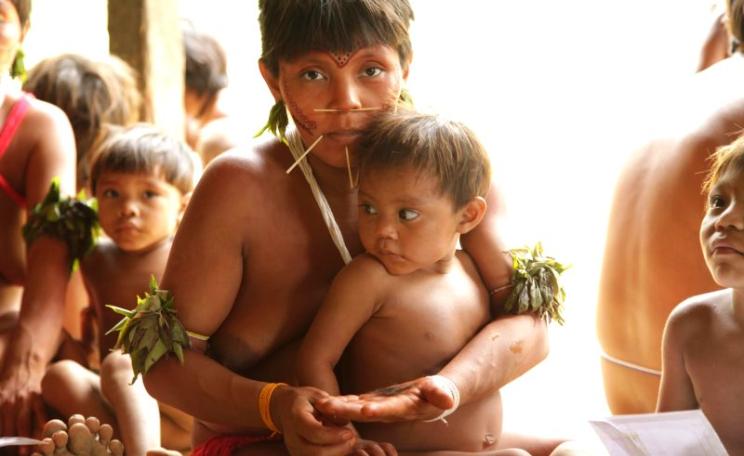
Illegal gold mining in the Amazon has a devastating effect on indigenous peoples, writes Sarina Kidd. First the miners bring disease, deforestation and even murder. Then long after they have gone, communities are left to suffer deadly mercury poisoning. Now the UN has been called on to intervene.
The rights of nature and of indigenous communities are enshrined in Ecuador's constitution, writes Kevin Koenig. But down in the Amazon the government is going full speed ahead with oil extraction on indigenous territories whose owners are committed to keeping their forests and waters pollution-free. A mighty battle is brewing that looks certain to come to a head this year.
The indigenous Wampis people of the Peruvian Amazon have demanded the immediate closure of a Petroperú oil pipeline after a series of devastating spills, writes Vanessa Amaral-Rogers. The company has already been found guilty of 'negligence' after previous oil spills contaminated the Wampis land and rivers.
An encounter with a Colombian shaman led Peter Bunyard on a spiritual journey into and beyond the living, breathing, transpiring Amazon rainforest, providing key insights into the essential role of the great tropical forests in the workings of Gaia. He emerged re-energised from his visions - and inspired to redouble his efforts to save our wondrous planet.
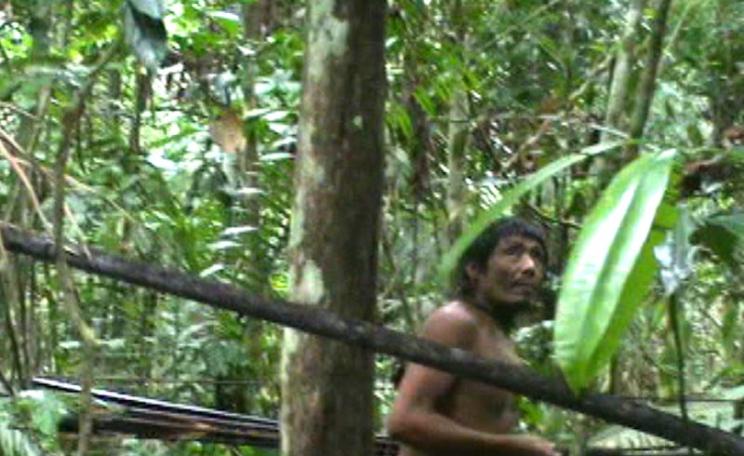
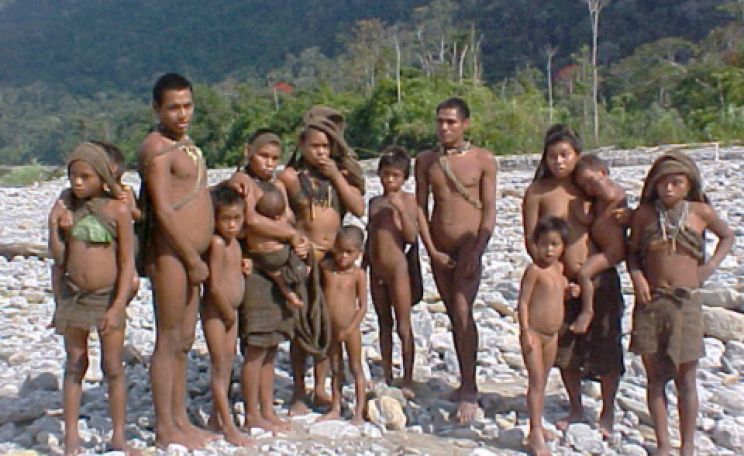
The Kawahiva, an uncontacted tribe in the Amazon rainforest, face extinction unless Brazil's government acts to secure their legal rights to land, security and to remain undisturbed by outsiders, writes Lewis Evans. The decree that would achieve this vital goal has been sitting on the Minister of Justice's desk since 2013. Let's make sure he signs it soon, before it's too late.
The over-hunting of wildlife in the Amazon has an unexpected knock-on effect: the reduced seed dispersal reduces the forest's capacity to store carbon in its biomass, increasing emissions from apparently 'intact' rainforest areas.
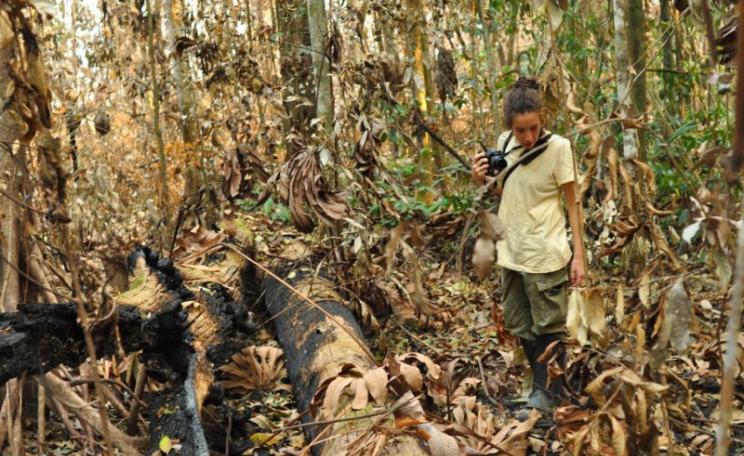
It's not just Indonesia's forests and peatlands that are burning - the Amazon is suffering almost as badly, with over 18,000 fires last month in Brazil alone, write Jos Barlow & Erika Berenguer. The future is looking hot and fiery.
Without water to feed its hydroelectric dams, drought-hit Brazil is turning to solar power - dubbed 'a fantasy' by the country's president just a few years ago, writes Jan Rocha. Now thousands of megawatts of floating solar panel 'islands' are to be installed on dam reservoirs.
The indigenous peoples of the Amazon are employing the tactics of the Occupy movement against oil companies, gold miners and illegal loggers, writes Marc Brightman. Their methods are home-grown: lacking the protection of the state, they have always had to fight their own battles. But recent campaign successes owe much to outside support. We must maintain, and strengthen, our solidarity.
Mainstream climatologists predict a 15% fall in rainfall over the Amazon if it is stripped of its rainforest. But the 'biotic pump' theory, rooted in conventional physics and recently confirmed by experiment, shows that the interior of a forest-free Amazon will be as dry as the Negev desert. We must save the Amazon before it enters a permanent and irreversible dessication.
The oil and gas industry is disrupting communities and damaging ecosystems worldwide, writes David Poritz. Tough, independent social and environmental standards for the industry can bring urgently-needed improvements to company practices - even where government regulation has failed.
Deforestation in the Brazilian Amazon has been sharply reduced in recent years, writes Alex Kirby. But analysts say that palm oil and other cash crops are set for a major expansion, while high demand for beef, and administrative chaos, may undermine efforts to reform the ranching sector.
It may all be over for England, but for Brazil, the battle is only just beginning. Anger over the vast cost of the World Cup - well over $10 billion - and its huge social impacts, is spilling over into a wider fury at massive mega-projects than enrich elites, trash the environment, and leave the poor poorer.
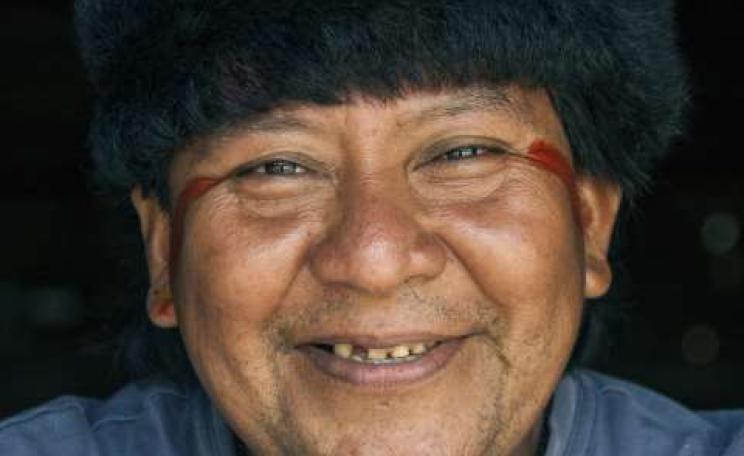
As the World Cup gets under way in Brazil, Yanomami shaman Davi Kopenawa told Liam J Shaughnessy about the very different world he inhabits, deep in the Amazon rainforest - a world of bright spirits, ancient knowledge, union with nature. And a world under threat.
Ecuador's state oil company PetroAmazonas has, in secret, built a road deep into the heart of the world-famous Yasuni National Park in Ecuador's Amazon rainforest, writes David Hill - violating promises and threatening uncontacted indigenous tribes.
This week 20 Amazon Indians walked to the Belo Monte dam site to demand the company keep its promises to compensate indigenous communities. Police shot them with 'rubber bullets' and stun grenades, wounding four. Tensions are rising ...
Scientists have found that the world's second greatest rainforest, the Congo, is losing its green, writes Tim Radford. As temperatures rise and rainfall reduces, the forest canopy is taking on a browner hue, and this could be an early signal of worse damage to come.
Amazon tribes in Peru's rainforest are at risk of 'massive deaths' from new diseases to which they lack immunity, gas company Pluspetrol admits - as it tries to expand its Camisea gas project into a Reserve for isolated indigenous people.
Peru is to expand its Camisea gas project although it threatens uncontacted Amazon tribes with extinction, reports David Hill. The decision also ignores UN pleas to stop the operations.
Water, food supplies and energy production are all in jeopardy as the Amazon forest is felled for profit. And as Paul Brown writes, the damage is spreading well beyond Amazonia itself ...
After a significant drop in the last several years, the annual deforestation rates in Brazil raised 28% for the period August 2012-July 2013, according to INPE, the Brazilian Spatial Institute.