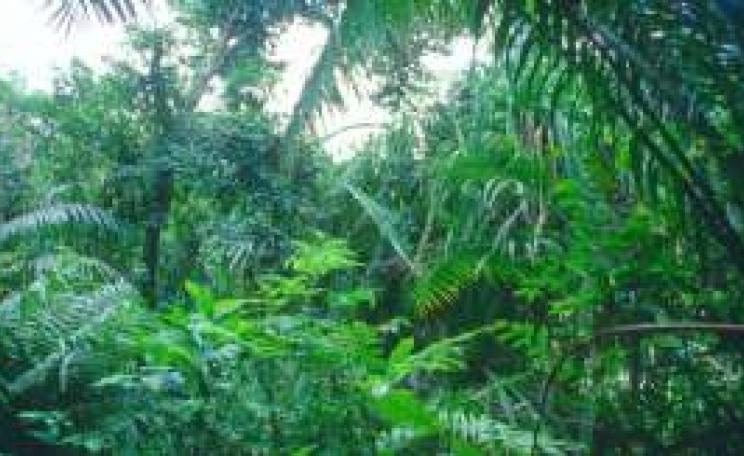
The Brazilian Space Agency and Britain’s Rutherford Appleton Laboratory are planning to boldly go into new realms of space-based rainforest protection.
Protecting rainforests is now almost as lucrative as cutting them down. Mark Anslow reports on a commodities-centred approach to stopping deforestation
It’s the battle of the century. In one corner, the Economy – big, bloated, greedy and growing. In the other, the planet Earth – fragile, finite and fighting back.
A new U.N. led scheme called "Reduced Emissions from Deforestation" (RED) is due to be announced later this year that aims to make it rewarding for countries to preserve their forests rather than cut them down.
Forty-two biologists and botanists have sent a signed petition to the governments of British Columbia and Canada calling for full protection of the country's old-growth forest.
Ethical consumerism in the UK is currently worth £29.3 billion, yet 60 per cent of us feel we don't have enough information to make an ethical decision. There is an ever-growing array of eco labels, but what do they tell us? Or fail to tell us? Pat Thomas explains
HSBC, the UK's largest bank, is helping the Malaysian logging giant Samling list on the Hong Kong Stock Exchange, despite HSBC's claim to be the "first green bank".
The world fervour for biofuels continues to grow at an alarming pace. In this comprehensive special report, the Ecologist examines the facts, fictions and fabrications behind this ballooning industry. The results are worrying...
The world’s forests are natural carbon ‘sinks’ that remove and store atmospheric CO2. So why, in the name of saving the earth, asks Renton Righelato, are we cutting down these precious resources to make way for fuel crops?
The World Bank has released a report encouraging the Indonesian government to create vast timber plantations that would damage local ecosystems and livelihood, in order to encourage economic growth.
Described as a ‘mosquito inside a tent’,
Rainforest Action Network are forcing corporate
America to change its destructive practices.
Nicola Graydon meets this inspiring group of activists
Scientists mapping the effects of deforestation in the Amazon are increasingly concerned that we are reaching a tipping point – when the forest will start to die back of its own accord and rain, currently generated by the Amazon forests, will stop falling, not just in neighbouring countries but as far afield as the United States and South Africa.
This beautiful but deadly plant proliferates in lakes across Africa – choking everything in its path. Why, asks Tom Hargreaves, have all attempts to manage it failed?
The economic troubles in Argentina have been widely reported around the world. The impoverishment of the middle classes and the Argentines’ growing cynicism about their politicians have been extensively written up. Less well covered in the news has been the effects of the crisis on Argentina’s very poorest – people who live far from the eye of city-based reporters, the country’s original inhabitants, a people despised and vilified as ‘savages’ by the settler population.