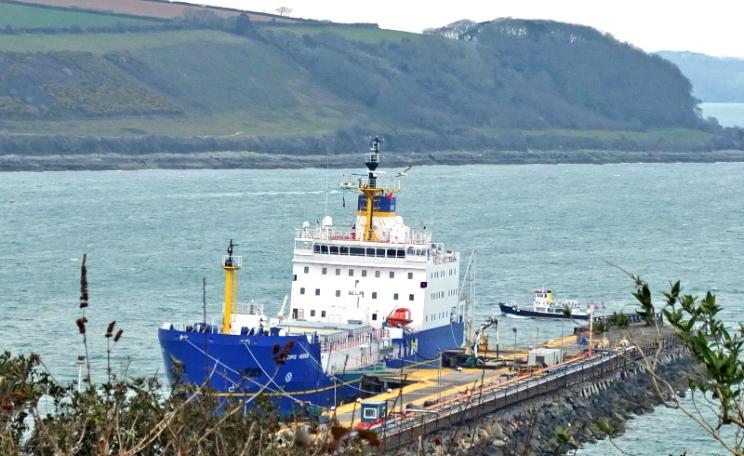
Two heavily armed, UK registered ships are currently engaged in the transport of UK sourced plutonium across the Pacific, writes Tim Deere-Jones. Details of their safety inspection records, survey status, voyage routes and location have been suppressed in the interests of security but the lack of transparency breaches a number of international safety standards.
Koide Hiroaki has spent his entire career as a nuclear engineer, and has become a central figure in Japan's movement for the abolition of nuclear power plants. He met with Katsuya Hirano and Hirotaka Kasai to discuss the catastrophic nuclear meltdowns at Fukushima Daaichi in March 2011, and the crimes and cover-ups committed both before and after the event.
Cancer is just one of of the outcomes of the genetic damage inflicted by nuclear radiation, writes Chris Busby, and perhaps one of the least important. Of far greater long term significance is the broad-scale mutation of the human genome, and those of other species, and the resulting genomic instability that causes cascades of heritable mutations through the generations.
The BBC has been excelling itself in its deliberate understatement of the Fukushima nuclear catastrophe, writes Chris Busby. While calling in pseudo experts to say radiation is all but harmless, it's ignoring the science that shows that the real health impacts of nuclear fallout are around 1,000 times worse than claimed.
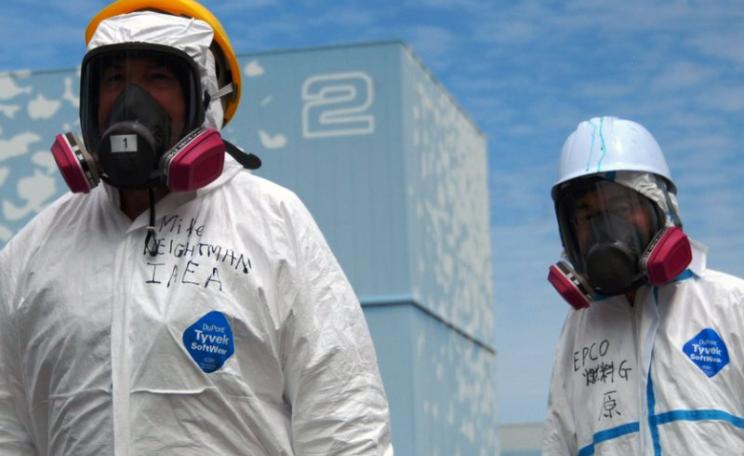
Five years after the Fukushima nuclear disaster began to unfold, the searing psychological effects are still being felt among the 160,000 refugees who fled the fallout, writes Linda Pentz Gunter. But now there's growing pressure to return to contaminated areas declared 'safe' in efforts to whitewash the disaster's impacts. Why the rush? To clear the way for the 2020 Tokyo Summer Olympics, complete with events in Fukushima City.
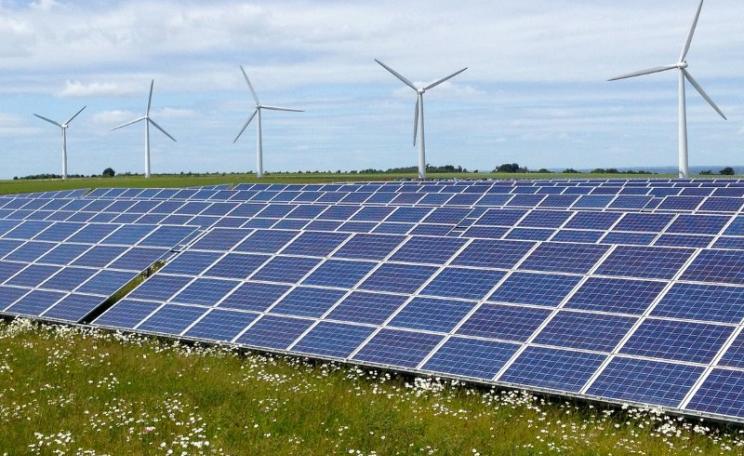
The main claim used to justify nuclear is that it's the only low carbon power source that can supply 'reliable, baseload electricity', writes Mark Diesendorf - unlike wind and solar. But not only can renewables supply baseload power, they can do something far more valuable: supply power flexibly according to demand. Now nuclear power really is redundant.
French nuclear parastatal EDF is facing problem after problem - zombie nuclear projects in the UK, Finland, China and France, a fleet of 'beyond the grave' reactors, a dropping share price and its drooping credit rating. But is it really as bad as all that? Jonathon Porritt has exclusive access to the leaked Agenda of its latest board meeting. And the answer is - no. It's even worse.
Why is it so important to the US that Britain renew its nuclear weapons of mass destruction? The main purpose of Trident, writes Oliver Tickell, is to allow the UK to join American nuclear attacks, adding 'legitimacy' to them and so lowering the threshold for nuclear war - even if it guarantees our own destruction.
Nuclear giant EDF can't afford to write off the £2 billion sunk into the Hinkley C nuclear plant, write Paul Brown & Oliver Tickell. So its cunning plan is to turn it into a 'nuclear zombie' - officially a live project, but actually stone cold dead - until EDF can find a way out of the hole it has dug itself into.
The Japanese were kept in the dark from the start of the Fukushima disaster about high radiation levels and their dangers to health, writes Linda Pentz Gunter. In order to proclaim the Fukushima area 'safe', the Government increased exposure limits to twenty times the international norm. Soon, many Fukushima refugees will be forced to return home to endure damaging levels of radiation.
The attempt by the US Supreme Court to stall the White House Clean Power Plan is being thwarted on the ground, writes Linda Pentz Gunter. The numbers show that new renewable energy installation around the US is outpacing even natural gas - leaving coal in the dust, and new nuclear at a big round zero.
If the UK really wants 3.2GW of 'baseload' power in Somerset, then the Hinkley C nuclear power station is not the only way, write Marie-Louise Heddrich, Thorsten Lenck and Carlos Perez Linkenheil. Wind power with 'wind to gas' plant and CCGT gas power stations could do the same - faster, cheaper, more flexibily, and at much lower technical and financial risk.
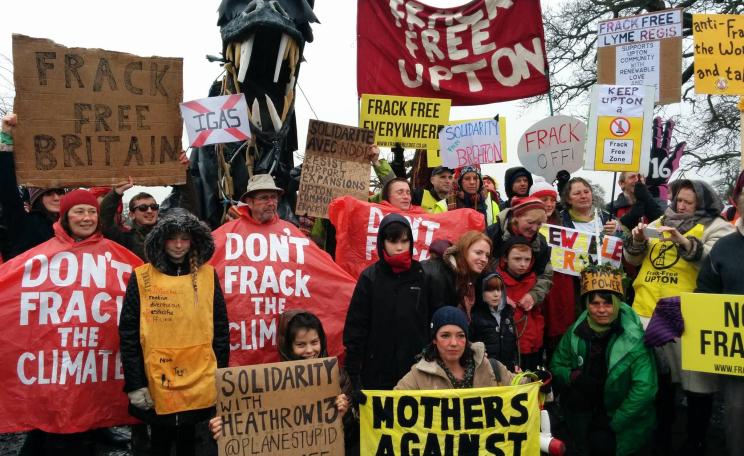
Whether you're fighting fracking, coal mines, new roads or a third Heathrow runway, next weekend's Earth First! Winter Moot is for you, writes Louise Somerville Williams. Campaigners and activists from across the UK and beyond will gather in Stroud to build common strength in our struggle against ecological destruction, and to work for a world of social and environmental justice.
An occupation of EDF's site office for Hinkley C turned into a celebration today as the EDF Board postponed its 'final investment decision' for the tenth time. With strong opposition among French unions and the project afflicted by severe technical and financial problems, it's not just Hinkley that's going down, but the UK's entire nuclear programme.
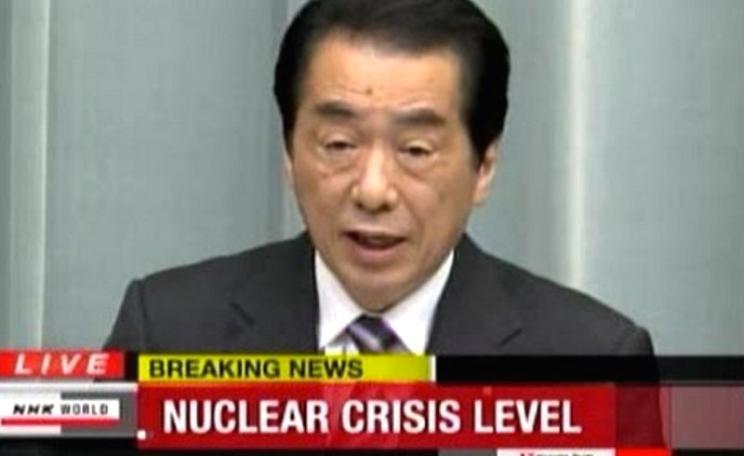
Nuclear power is a uniquely hazardous technology that can destroy entire nations, Japan's prime minister at the time of the Fukushima nuclear disaster has warned British MPs. The lessons of from such catastrophes must be heeded in other countries that believe that nuclear fission can be harnessed safely, writes Linda Pentz Gunter - or they, and the world, will reap the whirlwind.
Highly radioactive tritium has leaked into groundwater at the Indian Point nuclear site 40 miles north of Manhattan, New York, write Sam Thielman & Alan Yuhas. Governor Cuomo has ordered a review of safety at the site, where two reactors are operating with no NRC license.
America's crumbling nuclear power plants, dozens of them built to the design that spectacularly failed at Fukushima, must be closed down to prevent catastrophe, writes Harvey Wasserman. So let's hear Bernie Sanders and Hillary Clinton speak out on the topic and make it a core issue in the Presidential race!
Despite the endless rhetoric about a 'nuclear renaissance', there are fewer power reactors today than there were a decade ago, writes Jim Green. The one country with a really big nuclear build program is China, but no one expects it to meet its targets. And with over 200 reactor shut-downs due by 2040, the industry will have to run very hard indeed just to stay put.
EDF's unfolding fiasco over the Hinkley C nuclear power station proves that nuclear power can come only at enormous financial cost to consumers and taxpayers, writes Caroline Lucas - and even then, investors are scared off by the risks. The government must get over its nuclear obsession and seize our renewable future.
Just as EDF was due to make its 'final investment decision' on Hinkley C, writes Oliver Tickell, another delay. In spite of incredibly generous subsidies, the company is unable to finance it. Its last hope is to persuade the French state to take a 10% stake in the doomed project.
The EDF board is meeting tomorrow to reach its 'final investment decision' on Hinkley C. It was meant to be a rubber stamp but now it's anything but, as EDF's share price sinks to a new low, unions and employee directors harden their opposition to the project, and projects in France, Finland and China run way over time and cost with severe technical problems and safety concerns.
As worldwide stocks of plutonium increase, lightly-armed British ships are about to carry an initial 330kg of the nuclear bomb metal for 'safekeeping' in the US, writes Paul Brown. But it's only the tip of a global 'plutonium mountain' of hundreds of tonnes nuclear power's most hazardous waste product.
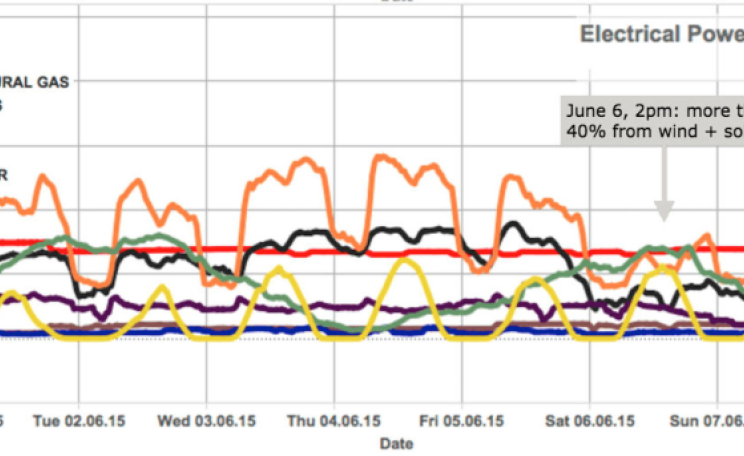
Wind, solar and hydro together generated 14.6% of Britain's electrical energy in 2015, the highest ever, writes Grant Wilson. They also peaked at 22% of electricity over the week of Christmas - another British record.
The UK's nuclear power programme is driven by military demands, write Andy Stirling & Phil Johnstone - but not in the way you might think. The most essential need is not for plutonium or tritium, but for a nuclear industrial sector to design, build and maintain the reactors that power nuclear submarines. Without them, the Trident missile system would have no military credibility.