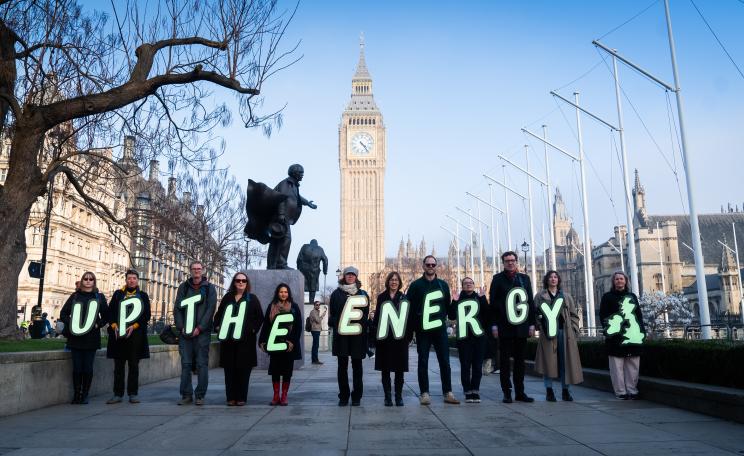
We’re not going to get to net zero if folk are not on board.
Efforts to reduce carbon emissions, from hundreds of miles of new power lines and pylons in the countryside to low traffic zones in cities, have ignited protests by local people concerned they are not being consulted.
There is another way of approaching the transition from fossil fuels, which could help gather important public support for renewables.
It involves putting communities at the heart of decision-making, and is one which experts and campaigners are working hard to put at the centre of both local and national decarbonisation plans.
Congestion
Community energy turns the usual model of energy development inside out. Instead of being purely profit-driven, the needs of local people take centre stage.
Projects vary in shape and size, from partnerships with commercial developers to full community ownership.
From solar farms, wind turbines, hydro and rooftop installations, these assets cut bills, reduce carbon emissions and contribute to the local economy. By its nature, the sector has to be flexible and innovative.
In Bristol, a Low Traffic Neighbourhood plan (LTN), which introduces features like cycle lanes and bollards to slow traffic, has sparked several protests.
Many oppose the trial on the grounds that not enough considerations have been made for elderly and disabled people, and that it will increase congestion on the main routes into the city.
Voice
One protester in Barton Hill told the BBC in November: “It’s not right for this area, these are not busy streets, you don’t need to close off streets that are not busy.”
Against this backdrop, a resident-led group is working to transform Barton Hill’s energy system to a renewable, community-managed model.
The project, called Barton Heat, is working with students from local universities to investigate the feasibility of putting solar panels on the roofs of the tower blocks.
Instead of backing away from the LTN debate, Barton Heat is embracing it. The team is based in a cafe at the centre of the estate where residents can come by and ask questions or collect information. They have also set up a neighbourhood forum, said project founder Stuart Phelps.
“It’s a deliberate attempt to overcome the racial and class divide that the LTN is driving through the community, by setting up a conversation with everyone having an equal voice,” he said.
Needs
Initial funding came through another community energy success story, a nearby battery-owned storage facility co-owned by Thrive Renewables and Bristol Energy Cooperative (BEC).
The development was the result of a resident-led campaign against two polluting gas power plants, one of which was next to a nursery school. Supported by BEC, both planning applications were resisted and the battery storage project built instead.
We’re not going to get to net zero if folk are not on board.
Phelps is hopeful that putting the community at the heart of decision-making over the energy transition will make a real difference to the people of Barton Hill.
“I feel more confident now about some sort of community energy element in how our community goes forward than I ever have done. We’ve got massive fuel poverty, we’ve got deprived areas, we are the only people who will do it.”
Critical to the success of community energy projects like Barton Heat is trust. This is earned through the knowledge that, as Phelps said, being local themselves, the groups are best placed to understand the needs of people in the area.
Boost
On the other side of the country, another group of residents are concerned their views are not being listened to when it comes to reducing carbon emission. In Essex, protesters are questioning plans to build pylons as part of a national decarbonisation effort.
“We feel no alternative has been put to us,” the founder of one protester group was reported as saying. “Offshoring and underground existing infrastructure does exist and we don’t accept that this can be rammed down our throats.”
The infrastructure is part of the government’s manifesto pledge to make Britain “a clean energy superpower”.
Under the Net Zero Action Plan 2030, 600 miles of new power lines and hundreds of pylons will be built to lay the ground for the decarbonisation of the electricity grid.
Many more renewable energy projects will need to come online. Making sure community energy is at the heart of these plans could be a huge boost in bringing public opinion on board.
Scale
It’s almost there. Community energy was named as part of Labour’s manifesto promise to decarbonise Britain through GB Energy, which lays out a commitment to deliver 8GW through community energy organisations, local councils and others. But since then, how exactly this will be enacted is yet to be determined.
A coalition of community energy experts called for the government to ensure community energy is recognised as a core part of the Clean Power 2030 Action Plan in a letter to Ed Miliband, the secretary of state for energy and climate change.
“We’re not going to get to net zero if folk are not on board.” said Fraser Stewart, the just transition lead for decarbonisation non-profit Regen, who signed the letter.
“Compared to big commercial developers, community energy allows people to take part in governance and can allocate profits to where they are most needed," he added.
“For example, community energy would allocate most profit into a community benefit fund over the lifetime of a project, whereas a commercial developer would only allocate £5,000 per Megawatt, which is nowhere near the same scale.”
Threshold
Due to the nature of the sector, groups tend to be more holistic and better at addressing things like fuel poverty and insulation, he said. “They think more in the round, not just about profit.
The heat transition is an inherently local issue. People don’t trust their energy suppliers and local authorities have budget and trust issues. Community energy can reach people in a very different way.”
But community energy groups still face big barriers in stepping up to this challenge. With years of policy barriers (not least the de facto ban on onshore wind and regulations that prevent generators from becoming suppliers), as well as chronic lack of funding, community energy has faced an uphill battle over the last decade. Reversing this would give the government’s net zero plans important public support.
One huge barrier is getting plugged into the electricity grid, with most projects facing a wait of a decade or more for a connection.
Regen are campaigning for the threshold at which projects need to join the lengthy transmission connection queue from 1MW to 5MW, allowing them to connect more quickly to the local network.
Governance
They are also pushing the government on GB Energy’s commitment to provide low interest finance to support the sector, becoming a bridge to give the community time to raise money for projects.
“Potentially GB Energy could seed-fund community energy organisations," said Prina Sumaria, Regen’s net zero project manager.
As well as giving groups a vital lift in getting projects going, this would help professionalise the sector, which is predominantly volunteer run.
Regen is also pushing for different models of shared ownership with commercial developers. Some communities might look to own and run a part of an asset - for example, a number of turbines in larger wind farms.
For other groups, the burden of operating that asset might be a risk. Revenue sharing is an alternative option that is gaining traction among commercial developers. They would do most of the building and constructing of the asset then, through a governance model, they share the revenue.
Listening
“Grid connections and accessing flexible enough finance are huge obstacles for rolling out new projects,” said Helen Martin, chief executive of BEC.
“We also need to take a serious look at models that would allow us to sell the power we generate to people and businesses nearby at a fair price–that would make more community projects viable, and reduce the burden on the grid of getting to net zero. Getting the sector enshrined into the government’s 2030 net zero plans would benefit everyone.”
Instead of leaving communities feeling like net zero plans are being imposed on them, community energy gives people a sense of agency and procedural justice. “It’s a huge win for everyone”, said Martin.
So far, policy-makers have been positive on getting community energy etched into the government’s decarbonisation plans, Sumaria from Regen added.
“They have been doing extensive engagement, they’ve been coming to our events, hearing about what communities need. At the moment they are very much in listening mode.” The test now will be whether listening will translate into action.
This Author
Marianne Brown is communications and community engagement manager of Bristol Energy Cooperative. Her book The Shetland Way: Community and Climate Crisis on My Father’s Islands is published by Borough Press.