Global heating is already pushing up inflation as climate change affects food production.
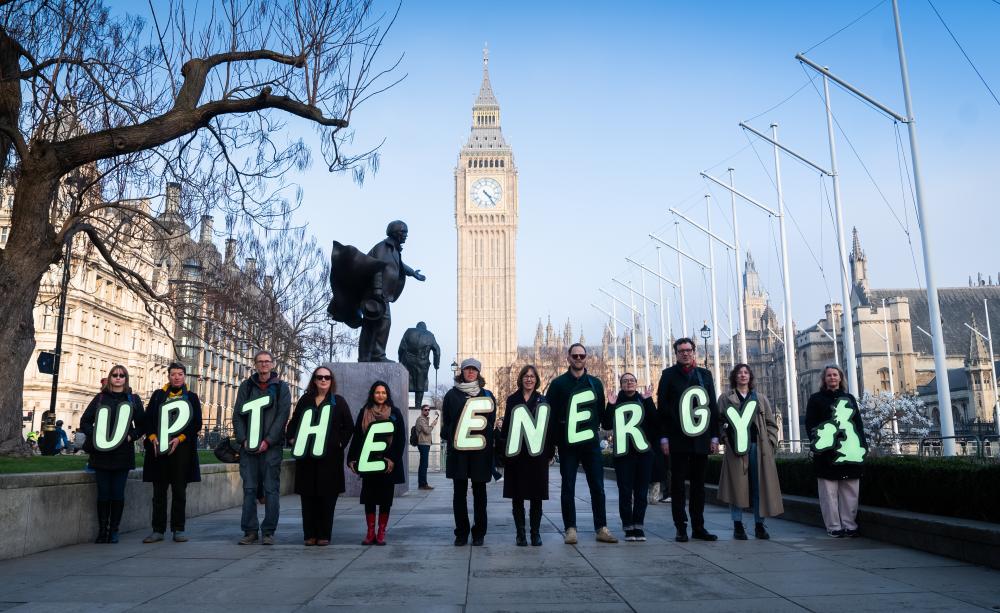
We stood in Parliament Square spelling out the need to ‘up the energy’ on government commitments to expanding community-owned energy earlier this month.
The illuminated words accompanied the delivery of an open letter, signed by 250 people and organisations led by Community Energy England, supporting the British Government’s ambition to scale-up the sector, and underlining the need to do so without delay.
Shining out from the glowering dusk, our message was clear: we have the technology we need to transform our energy system, now we need to bring people along with it. Community energy can help do that.
Promises
Community energy is a not-for-profit sector where the needs and hopes of people living nearby are built into the design, management and delivery of renewable energy generation.
The range of these projects reflects the diversity of these communities - whether it’s solar panels on a school delivering warm spaces, revenue from a wind turbine supporting a local community plan or a potential solar farm supporting an air ambulance helibase.
There are more than 600 organisations across Britain generating power, cutting bills, creating jobs and reinvesting locally.
The government has set a positive direction of travel towards its Mission 2030, to decarbonise the electricity grid in four years time.
Its Local Power Plan (LPP), published in February this year, promises £1 billion of funding for local and community energy.
Insulation
By 2030, the aim of the LPP is that “every community in the UK will have the opportunity to own a local energy project.”
This is “the largest public investment in community energy in this country’s history”, and will be delivered through a combination of grants, loans and advice through the publicly-owned clean energy company Great British Energy.
The plan promises to directly support more than 1,000 local and community energy projects in the timeframe.
Importantly, GB Energy also commits to moving forward policy and regulatory changes to support local energy over the long term, such as price mechanisms that recognise the benefits of generating energy close to where it’s used.
Parallel to energy generation is efficiency. Under the Warm Homes Plan, the country will invest £15 billion in upgrading homes by installing solar, batteries, heat pumps and insulation.
Community-owned
It includes setting up a Warm Homes Agency to improve consumer protections and provide advice for households, which will be delivered in partnership with local authorities, although organisations like the Centre for Sustainable Energy (CSE) have called for more clarity and detail on how this will be achieved.
Global heating is already pushing up inflation as climate change affects food production.
If delivered properly, CSE said, the plan “is the biggest public investment in home energy upgrades in British history”. The potential is there to create tens of thousands of jobs, support the move away from gas and towards more renewable energy, and help millions of households.
While this is all much needed good news, there is much more to be done, including fair export prices, grid access, and use of public land and buildings. Our letter demonstrates that the sector is united and ready to deliver – and more action is needed.
The government has acknowledged that its clean energy mission “will only succeed if we take people with us”.
Public support for community energy is strong: polling commissioned by Common Wealth shows 62 per cent of the public would support a community-owned renewable energy project in their area, compared to 40 per cent support for a privately-owned project.
Foundation
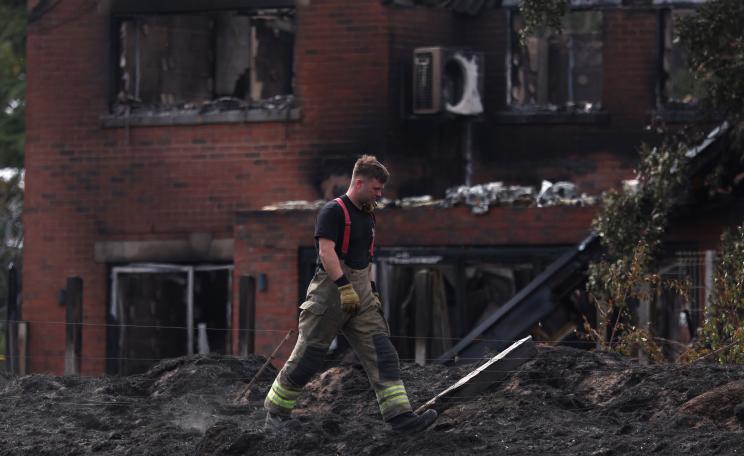
We know fossil fuels are fuelling seriously bad news across the world. Global heating is already pushing up inflation as climate change affects food production.
As well as the devastating loss of life, the war in Iran is causing chaos in the global supply of oil and gas - consequent price hikes in energy, petrol and the transportation of imported food will further increase the cost of living.
As the Community Energy England 'up the energy' installation outside parliament shone in the dusk, it offered an alternative to the gloomy headlines.
It is a chance to build an energy future that puts the hopes and needs of local communities at the centre of electricity production - and the foundation stones for this are very much here already. This is what energy security actually looks like.
This Author
Marianne Brown is communications and community engagement manager of Bristol Energy Cooperative. Her book The Shetland Way: Community and Climate Crisis on My Father’s Islands is published by Borough Press. She is also a former editor of the Resurgence & Ecologist print magazine.