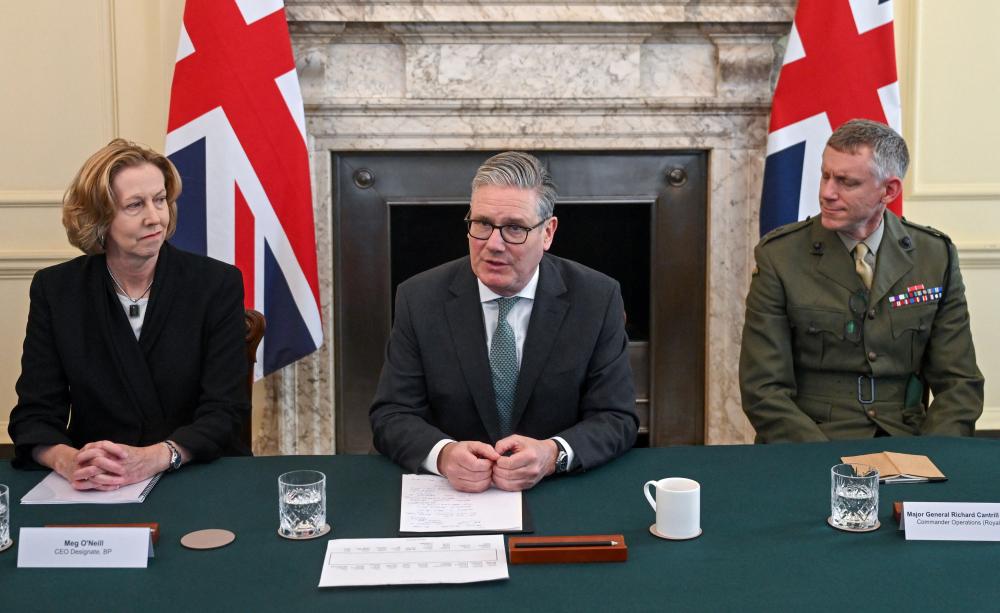
Oil companies have more access to HM Treasury ministers than firms from almost any other sector.
Oil prices in Europe are approaching a record $150 a barrel in response to the ongoing crisis in the Strait of Hormuz. As a result, the share value of the world’s six biggest stock-market-listed oil companies has soared by more than $130bn, hitting record highs.
For the two British companies on that list – Shell and BP – the combined spoils of Trump and Netanyahu’s war are estimated at £5bn, while US oil companies can expect a $63bn boost. This is money extracted from every other corner of society by an industry to whose product we have become addicted, a product the combustion of which is driving the climate crisis, and from which we must wean ourselves.
READ OUR FULL REPORT (PDF)
Part of the reason we haven’t done so yet is that these companies retain vast power, not just over our economy, but also over our politics and society – power they use to shape laws and norms and culture. And ultimately that power comes from money, and from their ability to manage it effectively – their skill in shifting profits and legal registrations between jurisdictions, in order to ensure that they retain as much as possible.
READ MORE FROM THIS SPECIAL SERIES, BIG OIL AND THE BRITISH STATE
Dividends
The most obvious example of this in recent years is Shell. For more than a century, the company was known as Anglo-Dutch. Its full name, Royal Dutch Shell, wasn’t a reference to the House of Windsor, but to the House of Orange – the Netherlands’ royal family. From 1917, its global headquarters had been in a Renaissance Dutch-style building in the Hague. But in 2022, it abandoned that history. The Shell Centre, a modernist tower on the south bank of the River Thames, just behind the London Eye and across the water from the Houses of Parliament, became its International HQ. Now, it’s just Shell plc. And now, legally at least, it’s just ‘Anglo’.
If Brexit was about transforming Britain into even more of an offshore haven for corporate wealth and power, then this single relocation is perhaps its biggest success. The move means that Shell’s global headquarters is now just one mile from BP’s, and that London hosts two of the world’s six ‘oil supermajors’. Houston, Texas hosts another two (ExxonMobil and Chevron), while Paris and Rome host one each (TotalEnergies and Eni).
Oil companies have more access to HM Treasury ministers than firms from almost any other sector.
BP and Shell are, respectively, the world’s sixth and seventh biggest carbon emitting companies since the industrial revolution, according to calculations by the Carbon Majors’ Database. Between them, they are responsible for 4.3 per cent of all global carbon emissions since 1854, and more than two per cent of emissions since 2016. Britain’s domestic emissions, by contrast, are around one per cent of the world’s carbon pollution. So the fact that we host these companies – clearly providing something they find useful in sustaining their profit margins – is one major way in which Britain contributes to the destabilisation of the climatic systems on which our civilisation depends. The fact that we provide a comfortable home for these dealers helps ensure that the world remains addicted to their product.
In this series of essays on Big Oil and the British state, I’ve already looked at how British trade policy works to protect oil industry assets around the world, embedding vast quantities of climate-changing emissions, and at how British military strategy acts as a massive subsidy to the global oil trade. But when I interviewed experts in both the Netherlands and the UK about why Shell made its move – why this parasite on the planet was so keen to make Britain its primary host – I got two other answers: the tax system, and a legal case that Friends of the Earth Netherlands was taking against the company because of its climate failures. In this essay, I’m going to look at tax, and how Britain’s status as a tax haven ourselves, and as the centre of the world’s biggest network of tax havens, is helping drive the climate crisis. In the next, I will look at how the English legal system was so attractive to one of the world’s biggest polluters when it sought to flee justice.
Alison Schultz from the Tax Justice Network said: “It just makes perfect sense as a company. If you really want to dodge taxes, it makes sense to locate to the UK. Even coming from the Netherlands – which [also] allows you to pay little tax and to hide things.” The main driver of Shell’s move, she explained, was something called dividend withholding tax, a tax companies are charged directly whenever they pay out dividends. In the Netherlands, the rate of this tax is 15 per cent. In Germany, it’s 26 per cent. “This is something most countries do,” said Schultz, “but in the UK, it is zero. Usually, this is based on where the HQ is. That’s what made it useful for Shell to move its HQ – now it is based in the UK, the UK is not taking any of these dividends as taxes.”
Tax-abuse
Vincent Kiezebrink, a researcher at the Dutch think tank SOMO who has looked closely at Shell's affairs, also highlighted dividend withholding tax. Specifically, he says, Shell had stayed in the Netherlands over the previous years because the Dutch government had been planning on scrapping the tax. This idea was met with a backlash from opposition parties, and was abandoned, leading Shell to relocate to the UK. Unilever had already moved its HQ to the UK in 2020. Indeed, Ben van Beurden, who was Shell’s CEO at the time of the move, told the Cleaning Up podcast in 2025 that this was a major factor in his decision to make the shift.
If Shell were still located in the Netherlands, then the shareholders’ bonanza likely to result from the blocking of the Strait of Hormuz would at least be funding public services for the Dutch people. But now that it’s based in tax-haven Britain, any boost in dividends coming from the soaring oil price will go straight to shareholders.
That’s not all. As well as paying dividends out, Shell is also a major recipient of dividends – from its subsidiaries around the world. “Usually as an HQ – the global ultimate owner – you will receive dividends from some of your subsidiaries,” explained Schultz. Around the world, it’s common for these to be exempt from tax if, say, the HQ owns 100 per cent of the shares in another company. But often a giant like Shell will have smaller toeholds in a lot of companies, and the rules around whether and how these are taxed vary by country. Britain’s rules, Schultz confirmed, are particularly generous to vast conglomerates when compared to those of other countries.
The detail of Britain’s tax regime for companies extracting North Sea oil is also complex, and again ultimately works to protect oil company profits above all else. A report in 2020 calculated that, in 2016, oil production in the north German region of Schleswig-Holstein was around two per cent of the UK’s, “but the region received $57 million from the companies, while the UK paid $322 million to the companies”. The report calculated that the UK had missed out on £250 billion ($323 billion) in tax revenue over the previous 13 years because of this generosity towards the industry. While headline tax rates have increased since the price spikes caused by Russia’s invasion of Ukraine in 2022, the underlying framework is still much more geared towards industry profits than in other countries.
Schultz and her colleagues look in detail at many ways different tax systems in 70 different countries work, and rank them based on how much they facilitate corporate tax abuse. Britain currently comes 19th. The two biggest companies to benefit from this status are the UK’s two largest firms: Shell and BP. “The UK is a major tax haven,” Schultz concluded. This fact is clear to international experts, but rarely mentioned in the British media.
Conglomerate
Indeed, this bold fact still significantly underestimates Britain’s role in global tax evasion. This is because the worst two jurisdictions, by the same rankings, are the British Virgin Islands and the Cayman Islands. Bermuda is fourth, Jersey is eighth, the Isle of Man 12th and Guernsey 13th. And these are all either British Overseas Territories or Crown Dependencies. In other words, seven of the top 20 facilitators of corporate tax evasion are British jurisdictions. Indeed, also in the top 20 are Singapore, Hong Kong, UAE, the Bahamas, Cyprus and Malta, all of which have complex historical and not-as-historical-as-you-might-think connections to the UK. Many other British Overseas Territories – Anguilla, Turks and Caicos, and Gibraltar, for example – are relatively low on the list (32nd, 40th and 48th) only because their overall global role isn’t vast, while they still have their own niche as part of Britain’s network of offshore jurisdictions.
Together this network forms by far the world’s most important system of offshore spaces.
Generally, British people don’t think about these spaces. On the rare occasions these territories are criticised, they are usually treated as wayward children over whom the British government is seen as having little power. “They’re a bit naughty, but what are we meant to do?” seems to be the official line. But any assessment of the history of how these places became offshore havens shows clearly that it wasn’t their own idea. They were set up as offshore financial centres by the core – that is, Whitehall and the banks and the consultancy firms in London, with the tacit support of the Bank of England.
This process began in Jersey, in the 1960s. Marcus Samuel, the proprietor of the bank HM Samuel and Co, had multiple clients around the empire who were looking to relocate back home due to decolonisation, but who wanted to avoid Britain’s upper tax rate, which was above 90 per cent at the time. In 1962, he persuaded Jersey’s parliament to scrap a cap it had on interest rates and set the island up as an offshore haven. Samuel was a member of the House of Lords, the third Viscount Bearsten. The first Viscount, his grandfather, from whom he had inherited both his title and his bank, was also the founder of another company: Shell. This connection between Britain’s oil industry and its tax havens is more than just one historic familial quirk. To this day, Big Oil is a major utiliser of British offshore zones.
The Shell Overseas Contributory Pension Fund, for example, is used by the company to provide pensions to staff who work outside their home country. It is estimated that it owns assets worth around $5bn. It is registered in Bermuda – Britain’s longest-standing territory outside this archipelago. In fact, in total Shell’s latest annual report shows eight different companies listed in Bermuda, including Qatar Shell GTL Ltd, Shell Oman Trading Ltd, Shell Saudi Arabia (Refining) Ltd, and Solen Life Insurance Ltd, and its tax contribution report says it has £1.8bn ($2.33bn) in capital there. I don’t imagine that the primary activities of these companies are taking place in Bermuda – Shell employs only three people there. Similarly, the conglomerate has seven companies registered in the Cayman Islands, also a British Overseas Territory, including two that are active in the North Sea, and others whose names suggest activities in Egypt, India and Bolivia.
Complexities
This is, however, piddling, compared to the company’s use of the Bahamas. According to its own 2024 tax contribution report, Shell declared revenue of $33bn in the tiny Caribbean country, which has no known oil or gas reserves. That’s 11 per cent of its global revenue. The company employs just 45 people there. Unlike Bermuda or the Cayman Islands, the Bahamas has, since 1973, been an independent country. However, it became a tax haven before this, while it was still a British colony, and it remains part of the British offshore network. It retains important constitutional connections to the UK – including that Charles is its king, and legal appeals are, technically, to the king and, in practice, to the judicial committee of the Privy Council.
Gibraltar is a British Overseas Territory. Its business minister explained to me in 2024 how the peninsula’s various links to the UK are crucial to its ability to attract businesses. One key fact he cited – something he said they often advertise to potential investors – is that the highest court of appeal there is also the judicial committee of the Privy Council. If business deals go wrong, he explained, investors are reassured by knowing that their cases will be heard in London, by British judges. In other words, while the Bahamas is an independent country, Shell’s multibillion dollar presence there is ultimately protected by a British court. And it seems likely that this is an important reason why Shell is there. In my next essay in this series, I’ll look in more depth at Britain’s legal system, and how it props up the oil industry.
While the Bahamas are a central part of Shell’s tax planning, the Channel Island of Guernsey has played a central role in BP’s. Reuters reported in 2020: “BP’s so-called captive insurer – meaning it serves only other BP entities – had $6.5 billion in cash on hand at the end of 2018 after years of robust annual profits, according to insurance rating agency AM Best Co. The insurer, Jupiter Insurance Ltd, has accounted for as much as 14 per cent of BP’s global annual profits in recent years... Jupiter has six directors but no employees; BP outsources insurance administration to a brokerage located in Guernsey, a tax haven in the UK Channel Islands.” In other words, the company appeared to be shifting vast chunks of profit into its in-house insurance firm on Guernsey in order to legally avoid paying tax on it. In its most recent tax transparency report, BP now says profits of its Guernsey-based insurer are subject to UK taxes, though it doesn’t clarify what it means by that. I asked, but BP didn’t respond to my questions.
The company also has three subsidiaries in the British Virgin Islands, and part-shares of nine companies registered in the Cayman Islands.
While being based in London gives easy access to the lawyers and accountants who are generally most fluent in the complexities of how to use Britain’s panoply of offshore options, non-British oil companies also make use of offshore Britain to protect their profits – and so their capacity to incinerate the planet. For example, as Saudi Aramco, the world’s biggest oil company, has sought to raise capital in recent years, it has made extensive use of the Cayman Islands. The US oil giant Chevron has an address in Hamilton, the capital of Bermuda – Chevron House – at which multiple of its subsidiaries are registered.
Jurisdictions
Of the world’s top ten offshore oil rig contractors as ranked by the maritime news site Baird Maritime, three are registered in Bermuda. Valaris, the offshore drilling company with the world’s biggest fleet of oil rigs, is registered in a building two minutes’ walk from Chevron House. Seadrill and Borr Drilling are registered in buildings just down the road.
Four of the world’s ten biggest oil tanker companies are also registered in Bermuda. One of them, DHT Holdings, ranked as the sixth biggest by the website marine-digital.com, is headquartered at Clarendon House, the same address as Valaris. SFL, ranked as the ninth biggest oil tanker company, and Frontline, the sixth biggest, are both registered in another building a five-minute walk away, while the second biggest oil tanker firm, Teekay Corp, also has its registered address nearby. Stellar, a major captive insurance company owned by Saudi Aramco, is listed at Clarendon House, while Everen Ltd, a specialist insurance company for the oil industry, is another entity with its base in Hamilton.
In total, in a 25-minute walk through central Hamilton, you can take in the legal headquarters of three of the world’s ten biggest oil drilling contractors, four of the ten biggest oil tanker companies, multi-billion-pound hubs of both Chevron and Shell, and the in-house insurance provider of the world’s biggest oil company. And, on your walk, you would pass the HQs of untold numbers of other firms outside the top ten in each of these elements of the oil industry. Hamilton has a population of about a thousand, making it about the same size as a large village in the UK. There is surely no other village on Earth so profoundly involved in heating the planet.
Many British jurisdictions – including the UK itself and many of its Overseas Territories and Crown Dependencies – allow ships to register in their jurisdictions as their home port. They are collectively organised as the Red Ensign Group, which lists the world’s ninth largest shipping fleet. Particularly significant here is the Isle of Man, which, according to the group’s website, “currently has over 16m gross tons of shipping on its register of which over 50 per cent are tankers”. On its own, Mann has the world’s 18th largest trading fleet - ahead of the USA and Russia - with the UK 24th and Bermuda 35th.
Profits
And it’s not just oil companies that are operating in areas of low taxation. The coal mining giant Glencore has its headquarters in a low-tax Swiss canton, and the company’s press office tells me that it is tax resident there. According to the Tax Justice Network, Glencore’s parent company, Glencore plc, is registered in Jersey. Investigations have previously shown that the coal mining giant Adani made extensive use of the British Virgin Islands. And the Australian mining conglomerate BHP has companies registered in multiple different British offshore territories, including the Cayman Islands, Bermuda, Guernsey, Jersey and the UK itself.
A spokesperson for BHP said that their “tax, royalty and other payments to governments” in the 2025 financial year totalled $10.4 billion, 65 per cent of which was paid in Australia. “Our global adjusted effective tax rate in FY2025 was 37.2 per cent. Once royalties are included, our FY2025 rate increases to 44.6 per cent,” they added, emphasising a “long-standing commitment to transparency”.
Minimising tax bills is likely a significant motive for many of these companies. But these offshore jurisdictions provide other benefits, including lax regulation, and secrecy. As Schultz and a colleague pointed out in a recent report, the lack of transparency means that banks that publicly claim not to be funding fossil fuel projects can funnel money into projects registered in these jurisdictions, leaving researchers unable to verify any claims that they have cleaned up their investments. This practice has been dubbed “greenlaundering”. There is no suggestion that any of the companies listed here have broken any laws. With the exception of Glencore and BHP, none of the companies above responded to my invitation to provide a quote for this piece.
British offshore jurisdictions play a crucial role in helping fossil fuel capital to maximise its profits, allowing these companies to perpetuate themselves as they drive the planet towards the climatic cliff edge. If we want to understand the extent to which the British state is responsible for the climate crisis, then the fact that Britain itself is a tax haven and the way that Whitehall created and allows the continuation of the world’s most important network of offshore jurisdictions are surely significantly more important than simply counting our own domestic emissions.
Influence
The UK’s tax agency, HMRC, is astonishingly secretive. When I sent Freedom of Information requests to other government departments asking for lists of companies from whom they have had secondments, they all complied. HMRC refused, forcing me to appeal to the Information Commissioner in a case that’s ongoing. I do know that Shell has in the past had secondment arrangements with HMRC.
HMRC allows big businesses to negotiate how much tax they pay. And these negotiations and the agreements entered into remain secret. Schultz told me that this is unusual compared to how tax authorities in other countries work.
Oil companies also have more access to Treasury ministers than firms from almost any other sector. In the year to September 2025 Treasury ministers met with either Shell or BP 18 times and also had multiple other meetings with smaller oil companies. The UK remains highly dependent on oil, so obviously ministers meet regularly with the oil industry. But this is still shocking: these are companies that are pretty open about their intention to pump sufficient quantities of carbon from the ground into the atmosphere to ensure the complete destabilisation of our civilisation. Yet they get special access to government ministers.
The financial and professional services industries also have huge influence on the Treasury and HMRC. These companies are, for the most part, heavily invested in fossil fuels. As just one example of this influence, Jen Tippin is the chief operating officer of NatWest and also a member of the board of directors of HMRC. NatWest continues to invest in fossil fuels, despite theoretical commitments to net zero. Tippin is also a former head of tax policy at Deloitte, whose clients have long included companies from the oil and gas industry.
The societies across this planet have to transition away from oil. Yet fossil fuel capital has used the loopholes in Britain’s constitutional set-up to bury itself deep into the global economy, evading both transparency and tax and allowing it to perpetuate itself for the foreseeable future. Indeed, the closer you look, the more you realise the loopholes are not in the system: the loopholes are the system. The war profiteering we’ve seen from the oil industry in recent weeks will drive hundreds of millions of people around the world into poverty. And, with significant help from Britain and its offshore networks, it will make the supremely rich even richer.
This Author
Adam Ramsay is an investigative journalist. He publishes the Abolish Westminster newsletter. Read more from this special series, Big Oil and the British State.