What role does culture play when formal systems fail to adequately respond to human suffering?
It started with a song. As a musician, Charlotte Mabon’s way of processing strong emotion is to pick up her guitar and start writing.
The song ‘Each Life Sacred’ was a response to witnessing the suffering of children in the occupied territory of Palestine whose lives were being torn apart by repeated bombings and humanitarian blockades.
The Each Life Sacred album is available to buy on bandcamp. All sales go directly to the charity War Child.
The footage was continuous and unrelenting and the grief poured out of her like a river. But she wasn't alone.
Collapses
Around the same time, photographer and activist Anouska Beckwith was asking a similar question through her own work: how do we respond, creatively and collectively, to the suffering we encounter?
There was a collective shock running through our community and we got to know who each of us were, we began a support group to share our sadness, our rage, our helplessness and our art.
Those of us who are not immediately impacted by the war are living through a different kind of proximity to suffering, one that our nervous systems are not necessarily equipped for. With online media the worst news is literally at our fingertips.
The screen collapses geography. The child on the other side of the world is no longer abstract. Instead they are visible, audible and immediate.
And yet, our capacity to respond remains largely unchanged. We care. We want to be a force for change but there is a rupture between what we feel and what we can do.
Collaborate
It is within this rupture that paralysis often takes hold - where grief and empathy overwhelm us and leave us unsure of how to act.
What we experienced within our small collective showed us that something else is possible. When grief is shared, it becomes active.
The support group did not remove the helplessness, but it redistributed it - making it something we could hold together, rather than something that quietly consumed us in isolation.
What formed was not just a creative collaboration, but a kind of social ecosystem bound together by our tender hearts, our fury and our human need for connection.
A number of the women within the support group were musicians and artists so Charlotte invited the singer Ayla Schafer to collaborate on the recording of the song and Anouska and Anika Nixdorf to create the artwork.
Handmade
It quickly became clear that this wanted to be a project of many voicesand in pooling together and sharing our artistic visions, this one song started to blossom into something bigger.
We had the idea to create a crowdfunding campaign to raise money for the charity War Child. People would donate to War Child and receive the song and artwork in return.
What role does culture play when formal systems fail to adequately respond to human suffering?
But why just one song when so many artists around the world were passionately creating music and art for the same cause? So we set about the next phase - to create an album.
‘Each Life Sacred’ became a collaboration album made up of 20 contributing musicians from around the world including sitar virtuoso Anouska Shankar, the much loved folk musician Johnny Flynn and Mercury Prize nominee Sam Lee.
We also collected seven handmade pieces from international artisans in order to add a prize draw component to the crowdfund campaign. As we know, creativity isn’t limited to one form.
Suffering
The many creative threads of the project were diverse in style but entirely unified in intention – to use our music and art to hold and channel our grief and rage and turn it into something that could help.
We crowdfunded more than £30,000 for War Child over the course of just four weeks. It was a powerful example of music and art acting as connective tissue.
It allowed individuals, scattered across different countries and contexts to cohere around a shared understanding of what we were witnessing and feeling.
There was no singular voice leading the narrative, but rather a community of voices. In a time where so much of our engagement with crisis is individualised - scrolling, reacting and absorbing media alone - this was a return to something collective.
From a sociological perspective, it raises an important question: what role does culture play when formal systems fail to adequately respond to human suffering?
Interpret
We often think of art as secondary - something that follows events or attempts to interpret them after the fact.
But what we witnessed was art acting in real time, not as a commentary, but as an intervention; not solving the crisis, but shifting how people relate to it by creating pathways for engagement where there might otherwise have been withdrawal.
There is also something deeply ecological in this - a recognition of interdependence across social, cultural and ecological systems.
No system exists in isolation. A conflict in one region reverberates outward, shaping emotions, discourse and cultural responses globally.
The children most directly impacted by war are the most vulnerable within that system but their suffering exposes the fractures in the wider human network. In that context, the act of creating together symbolised a refusal to let fragmentation be the only response.
Resistance
The ‘Each Life Sacred’ album is not just a collection of songs - it is evidence of what can emerge when people choose to remain open in the face of overwhelm and resist the instinct to turn away.
Its impact lies not only in the funds raised, but in the model it offers: a way of responding that is connective rather than isolating and generative rather than numbing. It does not resolve the crisis, of course, but it changes how we stand in relation to it.
Looking ahead, we are all too aware of the many other pressing crises around the world - from the Congo, to Sudan and to the children held by ICE in America - and we recognise that this is only a beginning.
The ‘Each Life Sacred’ project showed us what is possible. What comes next is still forming, but the intention is clear: in troubled times, art becomes a form of resistance, binding us across the lines that divide us.
These Authors
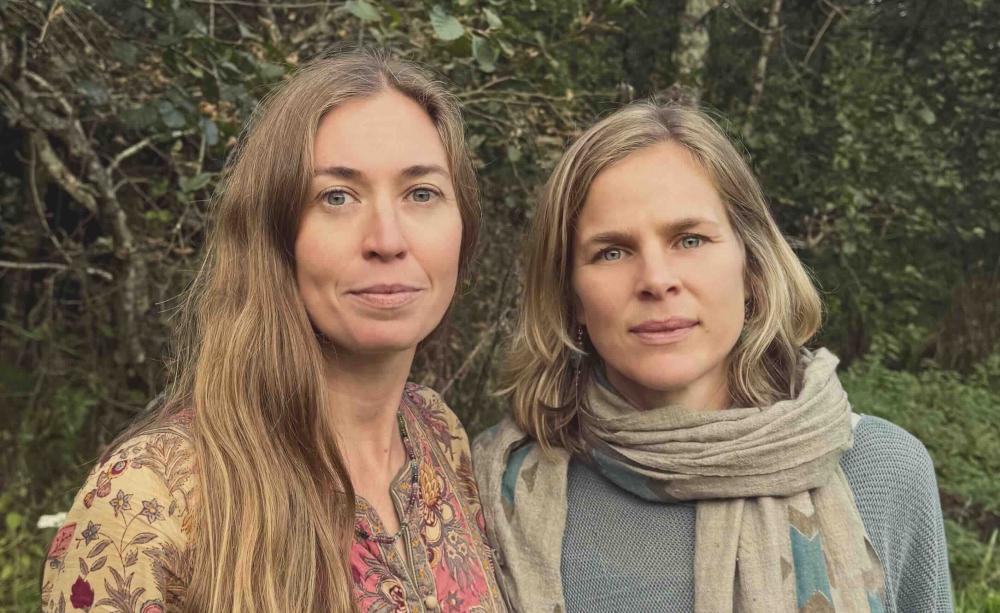
Charlotte Mabon is a singer songwriter living in Devon, UK. Her debut album River of Soul was released in November 2025 and can be found on bandcamp and on all the streaming platforms. She offers one-to-one vocal coaching and facilitates workshops on songwriting, vocal improvisation and personal transformation.
Anouska Beckwith is a fine art photographer, creative director, writer and activist based in Devon, UK. A self-described disciple of Mother Earth, her work explores the relationship between the feminine and the natural world, creating dreamlike imagery inspired by the aesthetic of the Pre-Raphaelites and early Surrealist photography. Alongside her artistic practice, Beckwith is a feminist and an advocate for animal, environmental and human rights, using art as a form of resistance and a call to protect the living world.