I was attempting to restore a small piece of ecological equilibrium.
I walked into Weyfish, a fishmonger below Catch, a high-end seafood restaurant in Weymouth on 10 April 2025, and did what we’ve all thought of doing. I reached my arm into an aquarium, picked up a lobster and walked calmly out.
As an ecologist, I acted out of deep love and concern for this wild creature, taking it across the road and placing it carefully into the waters of Weymouth Harbour.
What followed demonstrates the staggering dysfunction in our relationship to natural ecosystems and also of our legal and media ecosystems too. I was arrested, prosecution and convicted - feeding a media frenzy.
Strip-searched
As a scientist, it appears ludicrous that I have had to admit guilt for "criminal damage" to a fishmonger’s "pet" lobster, a lobster that was stolen from its habitat, commodified and held captive in tortuous conditions.
My media ordeal has been no less absurd. I have been portrayed in the press as misguided and ignorant, while basic factual errors have been allowed to proliferate. It's time to set the record straight.
Six weeks after I liberated that lobster, four police officers in three vehicles arrived at my home with arrest warrants. I was strip-searched and my home was ransacked as they searched for the "critical rainbow-knitted jumper evidence".
I was taken into custody, strip-searched, held for hours and charged with five serious offences - most of which were eventually thrown out due to lack of evidence.
One of these was an absurd charge of assault by battery that, according to the custody sergeant, had “come from above”.
Scrutiny
Some 12 months later I appeared in court via video link to answer to the charge of criminal damage to a lobster. I pleaded guilty to avoid lengthy court proceedings.
All of this, I estimate, cost the taxpayer around £13,000. This money was spent in order to settle the score over a £25 lobster.
The headlines that emerged show that even basic fact checking is beyond most media outlets.
'Animal rights activist killed my crayfish', ‘Animal activist banned from Michelin restaurant after ‘"freeing" educational pet lobster’, ‘Lobster died after partner was thrown into sea by eco-activist’.
The articles feature numerous claims made by the well connected restaurant owner, none of which stand up to scrutiny and were not substantiated in court.
Delicacy
Accuracy matters in science. Throughout the reporting on my case, the animal was repeatedly referred to by the restaurateur as a "crayfish".
The term is used to diminish a complex sentient being to a mere menu item, as well as deliberately framing the lobster as a freshwater organism, escalating the media ‘cruelty’ click bait.
I was attempting to restore a small piece of ecological equilibrium.
It was in fact a Palinurus elephas, the spiny tailed lobster. A primarily nocturnal, saltwater creature that lives at great depth, it is listed as a "vulnerable" species on the IUCN Red List.
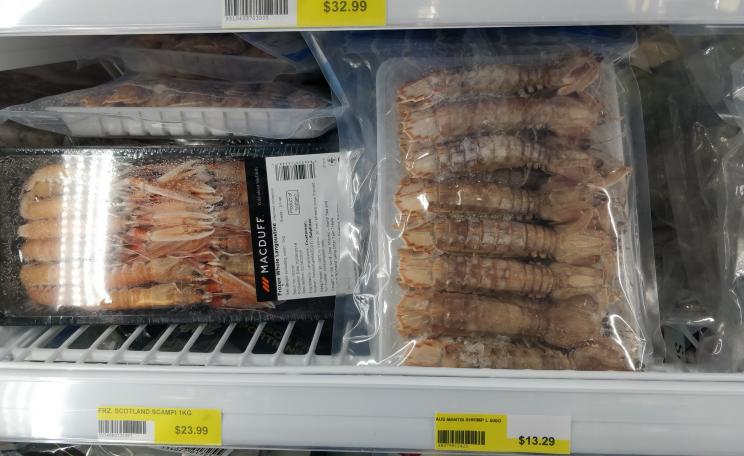
Treated as a culinary delicacy, it is frequently taken from its natural environment and held captive in unfit conditions, ready to cook and serve up with a side of garlic butter.
In court, a witness statement from the general manager of the restaurant confirmed that the crustacean in question was a spiny lobster, caught by a local fisherman.
Equilibrium
To the restaurant, it was a croquette on a tasting menu: to the marine ecosystem, it is a vital, declining keystone species.
While the species is also found in the warm Mediterranean, the court heard that this individual was from Lulworth, not Lloret de Mar, and it was released less than 10 miles from ‘home’.
It is highly likely living its best natural lobster life in a deep, dark crevice, away from the bright lights and noise of the restaurant.
When I returned that lobster to Weymouth harbour, I was attempting to restore a small piece of ecological equilibrium.
Despite the completely false claims that I threw the animal "like a cricket ball" - a flourish of dramatic fiction - the court noted that I placed the animal carefully into the water.
Crisis
The frustrated restaurateur shifted to a more sentimental narrative, claiming the lobster’s "mate" had died of loneliness. What better click-bait than to claim that a peaceful climate activist had ‘killed’ not one, but a pair of lobsters?
But Palinurus elephas is a naturally solitary species. They do not "pine". In the cramped, high-vibration environment of a display tank, a roommate is a source of territorial stress, not romance.
What’s more, if this lobster were truly a "beloved pet for educational purposes", it wouldn't have been kept in a bare, shallow tank under constant light and loud noise.
Lobsters are sentient beings, meaning they can feel pain, distress, and discomfort, and this is recognized under UK law.
So while the news columns were filled with the demonisation of a peaceful activist, the bigger picture is that we are living through an extreme ecological crisis.
Bystander
There are three threats to our oceans that should be making front-page news every single day: loss of wildlife, ocean acidification and warming and the slowing of the key marine current known as the Atlantic meridional overturning circulation (AMOC).
Together these threaten the maintenance of global food security and the stability of organised society: our fundamental ability to survive.
Nature doesn’t care about power, influence, or media narratives. Nature only cares about balance. And right now, the scales are tipping in a direction that none of us - restaurateurs and activists alike - will survive.
I will not be a bystander and I don’t regret for a minute my simple, unplanned, and peaceful act to prevent ongoing harm to one vulnerable animal.
This Author
Emma Smart is a marine biologist and climate activist. She discovered a new species of fish, Garra smartae, when in her early 30s.