Television frequently presents farmed animals as unintelligent, interchangeable commodities.
Television does more than entertain. It shapes how society understands the world, influences public attitudes, and informs political and ethical debates.
That influence brings responsibility. When broadcasters misrepresent, public trust suffers. When television consistently mischaracterises farmed animals and the lives they live, the consequences shape how society perceives and ultimately treats over a billion living beings each year.
Most people in Britain have little direct contact with farmed animals. Unlike companion animals, farmed animals are largely hidden from public view.
Misleading
As a result, television plays a significant role in shaping public perceptions of how animals raised for food are kept and who they are.
What viewers learn about these animals often comes not from personal experience but from documentaries, factual programmes, news coverage and entertainment media. This is why accuracy matters.
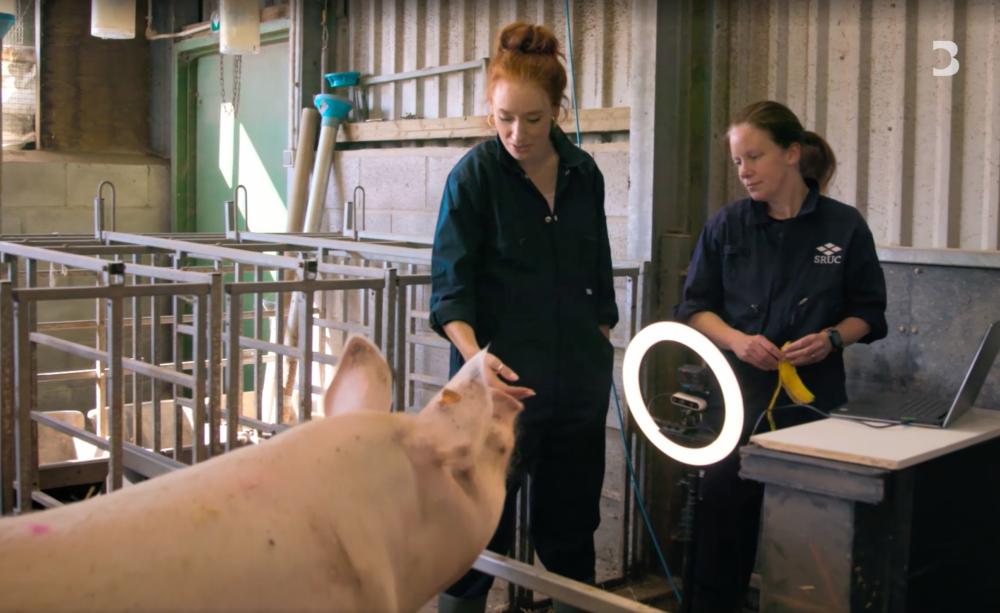
A recent complaint to the BBC by The Animal Law Foundation concerning an episode of The Future with Hannah Fry illustrates this concern.
The programme featured research using artificial intelligence to assess pigs' emotional states and experiences. Yet viewers were subsequently presented with comments questioning whether pigs experience emotions such as happiness or sadness.
The Animal Law Foundation argues that this created a misleading impression that does not reflect the current state of scientific understanding regarding pig sentience and emotional capacity.
Assumptions
Whether or not one agrees with the specifics of that complaint, it raises an important question: are broadcasters applying the same standards of rigour to animal-related subjects as they would to other areas of science?
When television elsewhere presents unsupported scepticism about climate science, medical research or technological developments, editorial standards require challenge, context and evidence.
Animal science should not be treated differently simply because the subject concerns species that society uses for food production.
The wider problem is that misleading portrayals of farmed animals are often so familiar that they pass unnoticed. Cultural assumptions become embedded in programming choices, language, framing and editorial decisions.
Commodities
Over time, these portrayals help shape public attitudes, influencing everything from how we see certain animals, consumer behaviour and legislative priorities.
Both Ofcom and the BBC recognise that broadcasters have a duty not to materially mislead audiences. The BBC's public service mission requires it to inform and educate, while Ofcom's Broadcasting Code emphasises the importance of due accuracy.
These principles exist because audiences have a right to expect that factual programming reflects evidence rather than assumptions, stereotypes or outdated beliefs.
Television frequently presents farmed animals as unintelligent, interchangeable commodities.
Television frequently presents farmed animals as unintelligent, interchangeable commodities rather than as individuals with distinct personalities, preferences, social relationships and emotional lives.
Accurate
Scientific understanding of animal cognition and behaviour has developed dramatically over recent decades, yet public portrayals often lag behind the evidence.
Pigs continue to be depicted as unintelligent despite extensive research demonstrating sophisticated learning abilities.
Chickens are routinely portrayed as mindless or lacking individuality despite evidence of complex social structures and communication.
Cows are often shown as passive agricultural units rather than social animals capable of forming long-term bonds and experiencing a range of emotional states.
Audiences deserve accurate representations of the animals whose lives are profoundly affected by human decisions.
Feelings
Misleading portrayals can take many forms. Sometimes they involve factual inaccuracies. More often, they arise through omission, framing and characterisation.
A programme may technically avoid making false statements while still leaving viewers with a fundamentally misleading impression.
This is particularly evident in the way farmed animals and farming systems are depicted on television.
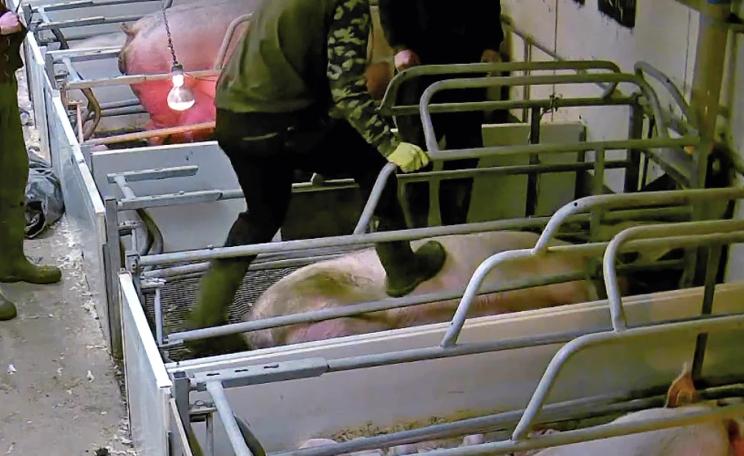
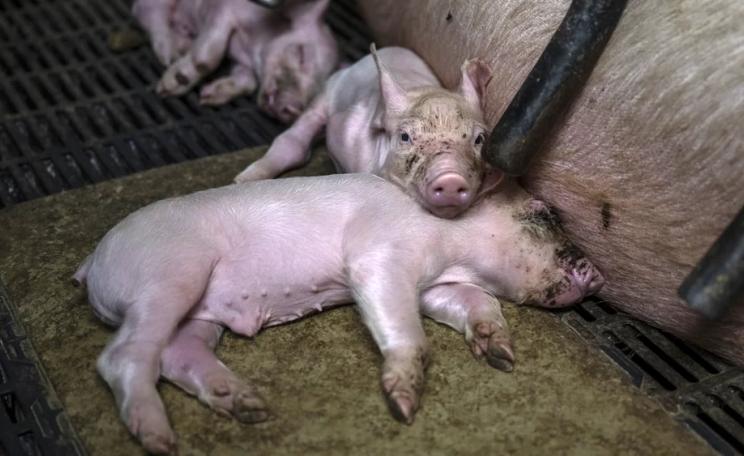
Audiences are frequently presented with images of animals grazing in open fields, roaming freely outdoors, or living in idyllic rural settings, despite the reality that the overwhelming majority of farmed animals spend much or all of their lives in intensive indoor systems.
Broadcasters risk reinforcing misconceptions that have become culturally normalised. This matters because public understanding influences public policy.
Britain formally recognises animal sentience in law. Parliament has accepted that animals are capable of experiencing feelings and that those experiences matter when considering public policy.
Misinformation
Television should reflect what we know about animals, not what tradition, convenience or cultural habit has led us to assume about them.
Where evidence demonstrates complexity, intelligence and emotional capacity, those realities should not be obscured, minimised or cast into doubt without justification.
In addition, it should accurately portray the conditions animals are kept in, so the British public is fully aware that these creatures with intelligence and emotional states are kept in environments that do not meet their needs.
In an age increasingly concerned with misinformation, accuracy should extend to all subjects, including the animals whose lives remain largely hidden from public view.
This Author
Edie Bowles is the founder and executive director of The Animal Law Foundation.