A spirituality without social justice misses my point.
Sustainable changemaking demands more than external action, it requires profound internal transformation too. ‘Inner development’, far from New Age spirituality, is becoming a globally recognised field.
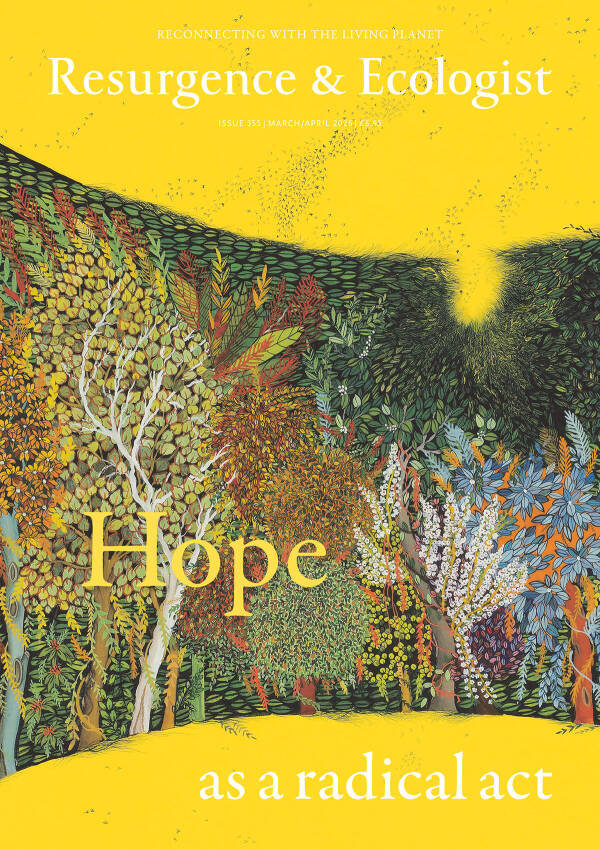
This article also appears in the latest issue of the Resurgence & Ecologist magazine, out now.
For example, The Inner Development Goals (IDGs) initiative suggests that we haven’t met the Sustainable Development Goals because we have under-resourced the interpersonal skills required to make such change.
The IDGs isolate the five key ‘inner’ skills required: being, collaborating, action, thinking and relating.
Meditation
Each dimension contains sub-skills – for example, ‘collaborating’ includes communication skills, co-creation skills, inclusive mindset, intercultural competence, trust and mobilisation skills.
‘Thinking’ includes critical thinking, complexity awareness, perspective skills, sense-making and long-term orientation and visioning. This takes ‘inner work’ far beyond meditation and journalling and is concerned more with how we build solidarity across movements with sensitivity, as well as how we develop and foster trust within ourselves and others.
Inner work is a necessary condition for world shift, but it is not sufficient on its own. The addendum is significant.
When I was 20 years old, I spent one month in a meditation community where people existed off-grid, so engrossed in their internal landscape that conversations of social injustice blew past them like leaves.
The central idea of this kind of meditation, someone once explained to me, was that focusing on our own internal work will make a generation of conscious agents.
Performative
But the idea that spiritual practice alone will transform eight billion people both ignores enormous systemic barriers and is working to a timescale that we simply don’t have.
Secondly, a spirituality which foregrounds personal prosperity rather than collective to me doesn’t capture what is at the heart of spiritual endeavour: to decentre the ego enough to appreciate that we are all equal (in our humanity) and all deserving of justice and peace.
Therefore, a spirituality without social justice misses my point. At age 20, meditating in that community in the mountains, while not looking at the world, I found stillness, happiness and joy. But resilience is forged not by how calmly we can sit in the shadows, but how tall we stand in the wicked winds.
That happiness grew out of shielding my eyes from suffering and therefore it was eviscerated once I left the sanctuary.
A spirituality without social justice misses my point.
Though I had found wellness, stepping out into the real world and then losing it felt like a personal failure. I establish that we need inner work but not just inner work. Because attitude doesn’t equal action. Attitude without practice is performative.
Marginalised
Then a second concept I introduce is ‘intersectionality’, illuminating how we understand society and power.
Intersectionality is a framework for understanding how various forms of social identities – such as race, gender, class, sexuality, disability, and more – intersect and overlap, creating complex layers of discrimination and privilege.
The concept was first coined by Kimberlé Crenshaw in 1989, though its roots can be traced back to Black feminist thought and the work of activists like Sojourner Truth.
Crenshaw introduced the term in her paper ‘Demarginalizing the Intersection of Race and Sex’, where she analysed how Black women face unique challenges due to the combined effects of racism and sexism.
Her work demonstrated that social justice frameworks often failed to address the compounded nature of oppression experienced by individuals who occupy multiple marginalised identities.
Discrimination
Historically, feminist and anti-racist movements have sometimes overlooked the specific needs of those who exist at the intersections of various identities.
For example, the mainstream feminist movement often centred the experiences of white, middle-class women, while anti-racist movements, in some cases, focused primarily on the struggles of Black men.
Crenshaw’s intersectionality theory sought to challenge this single-axis analysis by demonstrating how Black women experience both gender and racial discrimination in ways that are not simply additive, but interlocking and complex.
Intersectionality as a lens has been applied in fields ranging from sociology to law to public policy.
For example, in legal contexts, intersectionality is used to highlight how discrimination laws, which tend to treat race, gender or other categories as separate issues, may fail to address the full scope of discrimination that people with intersecting identities face.
Capitalism
Intersectional environmentalism is an extension of this concept. Coined by US youth environmental activist Leah Thomas during the rise of the Black Lives Matter movement, intersectional environmentalism highlights the connections between environmental degradation and social injustice.
Leah brought this concept to the forefront by emphasising that environmental justice
cannot be separated from racial and social justice – just as intersectionality examines overlapping forms of oppression, intersectional environmentalism calls for a more
inclusive approach to environmentalism by connecting the dots between individual issues and the system.
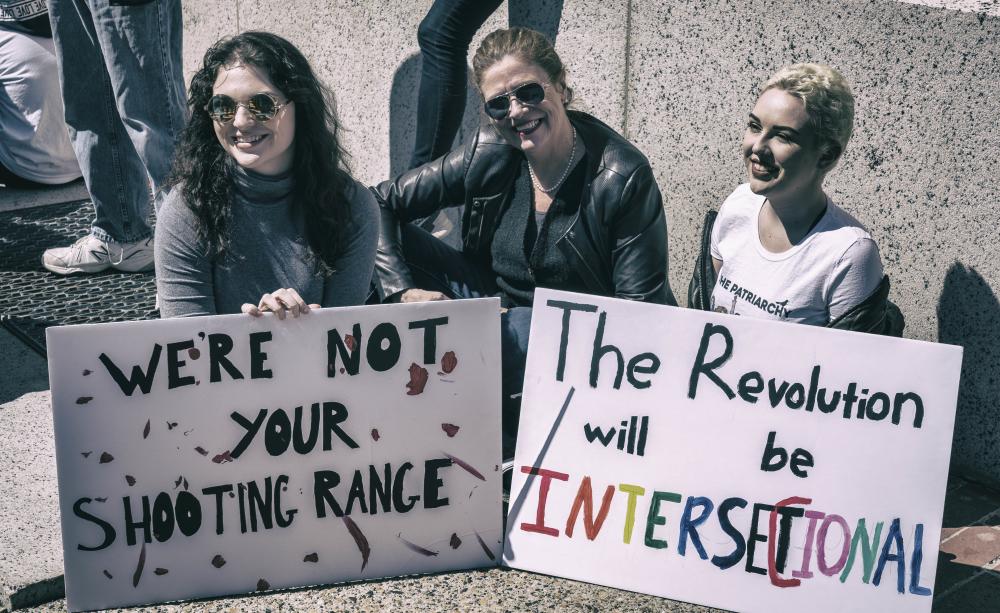
It gives rise to the common notion in the youth climate movement that there is no climate justice without racial justice, gender justice, class justice, disability justice and more, because climate breakdown and climate injustice are inherently linked to wider systems of capitalism, colonialism, patriarchy and white supremacy.
Resilience
This is big stuff, right? A lot more than doing our bit by having shorter showers. In moving from single-issue campaigning to intersectional, we are requiring individuals and groups to hold a much wider view.
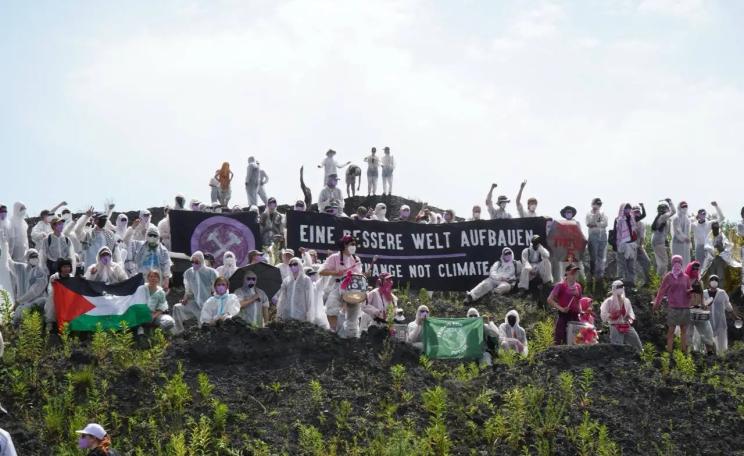
The common cry for “system change, not climate change” involves looking very deeply at systems that perpetuate harm. Intersectional campaigning invites us to assess our own levels of power and then to redistribute it to those historically afforded less.
How much ‘power’ and ‘access’ we respectively have is more nuanced than just race, gender, ability, class and sexuality. It also includes our lineage, upbringing, follower count, body shape and how conventionally attractive we are.
We are right to ask more from our campaigns and our movements. To hold bigger challenges, we need to be better resourced.
That means our movements and changemakers need to be financially equipped and trained but also rooted in collective resilience, humility to listen and self-awareness. It is the interweaving of three powerful frameworks: intersectionality, intersectional environmentalism and inner development that I call ‘inner-tersectional changemaking’.
Advocate
This holistic approach to changemaking integrates inner development with collective justice, recognising that lasting change requires both inner transformation and systemic disruption.
It includes holding both the complex systems of the world and the complex selves that we are; it’s a call to action and to introspection. It also emphasises that true transformation arises from integrating the macro – societal systems of power and injustice – with the micro – the inner landscapes of our minds and behaviours.
An active approach to “be the change you want to see in the world”, innertersectional changemaking acknowledges the dual responsibility of inward growth and outward action.
Consider the activist who campaigns tirelessly for climate justice, but their imposter syndrome stops them from speaking up effectively.
Or the social justice advocate who is deeply committed to equity, but their overidentification with work is leading to burn-out.
Systemic
Innertersectional changemaking calls us to honour these inner battles, not as separate from the fight for systemic change but as integral to it. Inner and outer transformation are inseparable.
The journey of inner development is deeply personal, but it also has profound implications for collective change.
Looking at our inner saboteurs can transform our ability to persevere through setbacks. Learning to navigate our own fear and anxiety makes us better equipped to hold space for others.
When we practise empathy and self-awareness, we become more effective allies and coalition-builders. Inner development strengthens our capacity to stand in solidarity with others, even when the road is long and challenging.
In my own changemaking journey, I have lost interest in a ‘climate solution’ that doesn’t consider both the systemic and inner-led components to change.
Obsession
Advances in climate technology might suck trillions of CO2 particles out of the air, yes, but then what are we left with?
We still have a failing system where suicide is one of the biggest killers for young men in the UK under the age of 35; where greed causes civilian casualities in gut-wrenching numbers; and where unequal gender relations cause women to live with preconceived limitations.
We still sit in a polarised world where cancel culture feels easier than engaging in uncomfortable conversations.
We still have political factions where fixation on our identity can keep us in echo chambers and deny many of us (with the safety to do so) learning and understanding. We are still afflicted by the degradation of the soul.
Innertersectional changemaking means bringing human nature to the foreground. It requires not only mobilising against those who vote for harm, but also practising enough compassion not to recreate the ‘us’, ‘them’ and ‘the other’ dynamic.
It asks us to momentarily pause our obsession with the out-there and take a long hard look at our justice movements too, and systems of harm we may be perpetuating internally.
Compassion
For example, I see great changemakers and movements, but I still see ego, career-hunger, vanity, cliques, jealousy and tearing each other down when we don’t meet the unrealistic standards we ask of one another.
I see people dismissing others if their chosen career path is not presently world-changing, rather than seeing the complexities that sit inside them, such as financial insecurity or a lack of mentorship to walk a different path.
They only see their complicity in the ‘system’. This isn’t the same as giving people permission to be rubbish. It’s to actively engage with the judgements in our mind, the assumptions and the discomfort, rather than to turn away and question if this helps or hinders us (the micro) and the wider movement (the macro).
The notion “if you think this, we are no longer friends” is common on my timeline, without an appreciation that the person you dismiss has an invisible history of personal circumstances, familial relationships and, perhaps, pain.
It erodes their humanity and their innate ability to change their mind. The ‘inner’ invites more compassion, empathy and understanding. It’s not easy work but it’s essential if we’re to better people, planet and psyche.
This Author
Katie Hodgetts is an award-winning youth changemaker, author and facilitator. She founded the Resilience Project at the age of 24 after seeing little psychological and inner-led support on offer for young people in navigating burnout and climate anxiety. Her organisation now operates internationally.
This article also appears in the latest issue of the Resurgence & Ecologist magazine, out now. It is an edited excerpt from Act, Rest, Reset, Repeat: Create Change Without Burning Out, published by Watkins, 2026.