There’s something particularly unsettling about this crisis because the warning arrived almost as soon as antibiotics themselves.
Drug-resistant infections are already killing more than a million people directly each year.
As intensive farming drives antibiotic use, environmental contamination and climate change are all adding pressures that help resistance spread. Meanwhile, some of the medicines we have come to depend on are losing their power.
Most of us don’t give antibiotics much thought until we actually need them.
Deaths
An infected wound, pneumonia, cancer treatment, an organ transplant or even a relatively straight-forward operation can make them essential.
We take the medicine and expect to get better. That expectation is so embedded in modern medicine that the alternative can be difficult to contemplate.
But imagine going into hospital for surgery, developing a bacterial or fungal infection and then discovering that the drugs doctors would normally use simply don’t work.
Antimicrobial resistance, or AMR, threatens not only our ability to treat infections caused by bacteria, fungi, viruses and parasites, but the safety of much of modern medicine, including surgery.
This isn’t a prediction about a distant future. In 2021, an estimated 4.95 million deaths worldwide were associated with bacterial antimicrobial resistance.
Illnesses
Researchers estimate that in 2019 at least 1.27 million deaths were directly caused by it. Some projections suggest the number of deaths each year could rise to 10 million by 2050.
The numbers are difficult to take in. But resistance is already being found in infections that are anything but unusual.
By 2023, approximately one in six bacterial infections confirmed in laboratory causing common illnesses worldwide was resistant to antibiotic treatment.
Between 2018 and 2023, resistance increased in more than 40 per cent of the pathogen-antibiotic combinations monitored by the World Health Organisation (WHO), with average annual increases of between five and 15 per cent.
These are not simply rare organisms we find in specialist hospital wards. They include bacteria responsible for illnesses people develop every day.
Inadequate
A major study published in The Lancet estimates that bacterial AMR could directly cause 39.1 million deaths between 2025 and 2050.
There’s something particularly unsettling about this crisis because the warning arrived almost as soon as antibiotics themselves.
Then there’s the huge financial cost. The WHO estimates that without stronger action, treating resistant bacterial infections could cost healthcare systems a staggering $412 billion a year up to 2035, with another $443 billion lost annually through reduced productivity.
Resistant infections also mean longer stays in hospital, additional tests and second or third-line medicines that may cost more and cause more serious side effects.
There’s something particularly unsettling about this crisis because the warning came almost as soon as antibiotics themselves.
Alexander Fleming, the Scottish physician and microbiologist who discovered penicillin, was already warning about resistance in 1945. He understood what could happen if bacteria were exposed to inadequate amounts of the drug.
Resistant
The warning did little to stop antibiotics spreading far beyond the treatment of illnesses.
By the early 1950’s, they were being used in animal feed to make livestock grow faster. Europe eventually banned antibiotic growth promoters in 2006, but antibiotic use in farming remains an important part of the wider resistance story.
Antibiotics themselves are not the enemy. They are vital medicines, and sick animals, just like sick people, need treatment. The difficulty begins when their use becomes routine, excessive or unnecessary.
The WHO identifies misuse and overuse of antimicrobials as major drivers of resistance.
When bacteria are repeatedly exposed to antibiotics, some are killed while resistant bacteria survive and multiply. Resistant genes can also move between bacteria.
Untreatable
Gradually, a medicine that once worked well may become less effective or even stop working altogether. That’s where farming becomes particularly important.
The Alliance to Save our Antibiotics estimates that roughly 70 per cent of antibiotics globally are used in farm animals rather than people.
According to a recent study published in PNAS Nexus, in some countries, up to 80 per cent of antibiotics are used in livestock to promote growth or as disease prevention, rather than using it for treatment of a sick animal.
What’s clear is that livestock account for a substantial share of global antibiotic consumption, and antibiotics have historically been used in groups of healthy animals, rather than reserved for animals that are ill.
Certain types of antibiotics used in animal farming have led to the rise and spread of livestock associated strains of MRSA (staphylococcus aureus) and Clostridioides difficile (C-diff).
Farm antibiotics have also contributed to a rise in an untreatable type of E. coli and infections such as Salmonella and Campylobacter.
Poultry
Cóilín Nunan, policy and science manager of the Alliance to Save our Antibiotics, mentioned that the progress made by British farming over the past decade is significant, but argued there is still much further to go.
He said: “Farm antibiotic use in the UK has fallen by roughly 57 per cent, and use of the highest-priority critically important antibiotics has fallen by 84 per cent. Those are very significant reductions, and they have contributed to lower levels of antibiotic resistance in bacteria found in farm animals.
“But antibiotic use is still significantly higher than it should be. In countries such as Norway and Sweden, where standards of animal husbandry tend to be higher, there are fewer disease problems and less need for antibiotics.
“In the UK, antibiotic use in the pig industry is over four times higher per pig than in Sweden. When we look at organic pig farming, the difference can be even greater, with antibiotic use around 20 times lower than in conventional pig farming”.
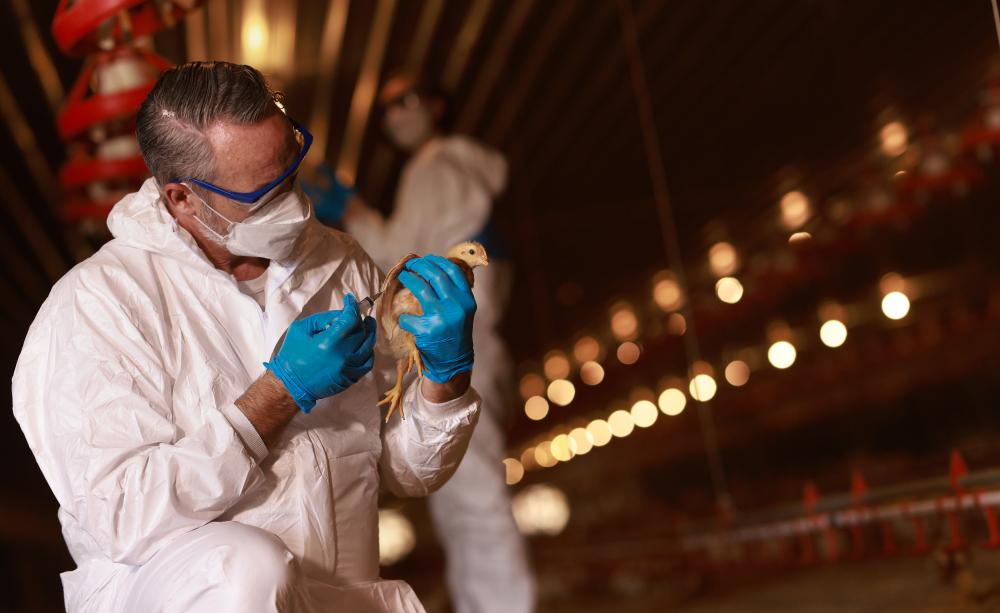
Poultry presents a particular problem. While the use of medically important antibiotics has fallen substantially, intensive chicken production continues to rely heavily on ionophores, antibiotics that are not used in human medicine but are used to control coccidiosis.
Scale
Nunan explained that the conditions in which intensive chickens are raised help explain that reliance.
He said: “Coccidiosis is by far the biggest disease problem in intensive chicken farming, and it can only occur when chickens ingest faecal matter.
"The reality is that intensively farmed chickens are kept in conditions where consuming faecal matter is unavoidable. Without ionophores, many of those chickens would become ill."
There is also growing concern about the assumption that antibiotics not used in human medicine pose little risk to human health. Research into co-selection suggests their use can contribute to resistance to medically important antibiotics.
The scale of ionophore use makes this particularly important.
Excreted
Nunan explained: “The use of medically important antibiotics in poultry has fallen substantially. But the use of ionophores is enormous – around 17 times higher than the use of medically important antibiotics in poultry.
"The latest science shows that these drugs can contribute, through co-selection, to resistance to medically important antibiotics."
But resistance is not the only concern. Nunan also pointed to what happens to these drugs after they have been given to animals.
Because ionophores are too toxic to be used in human medicine, he said their potential effects on animals and the wider environment, including soil and aquatic organisms, also need to be considered.
He said: “Most of these antibiotics are excreted by the animals, often still in an active form. So, we also must ask what happens when large quantities of these drugs enter the environment.
Traceability
"There are concerns about their effects on soil and aquatic organisms, as well as growing evidence that they can contribute to resistance to medically important antibiotics."
This is why AMR is increasingly approached as a One Health problem. Human health, animal health and the health of our environment are interconnected. Bacteria don’t recognise the boundaries between farms, people and the environment.
Trade can complicate the picture further. Reducing antibiotic use on British farms doesn’t necessarily address the risks associated with imported meat produced to different standards.
In 2026, the UK government decided to continue allowing Brazilian meat imports despite concerns about antibiotic use in Brazilian livestock production, while the EU and Norway moved to prohibit imports of animal products produced using antibiotics for growth promotion.
Brazil has banned some antibiotic growth promoters, but others remain permitted, and concerns have also been raised about access to critically important antibiotics and weaknesses in traceability.
Livestock
This raises a difficult question for trade policy. If British farmers are required to meet increasingly strict standards on antibiotic use, should trade deals and import rules allow food produced under practices that would not be allowed here?
Nunan warned that the issue extends beyond competition between British farmers and overseas producers.
He said: “The UK is still importing meat from Brazil, even though the EU recently banned Brazilian meat imports because of Brazil’s use of antibiotic growth promoters. Brazil is now looking for other markets, so there is the potential for more Brazilian meat to come into the UK.
“That concerns British farmers, but there is a human-health concern too, because antibiotic-resistant bacteria can spread through the food chain”.
Climate change adds another layer to an already difficult problem. A scientific review found several ways in which a changing climate could contribute to AMR in livestock systems.
Flock
Elevated temperatures can compromise animals’ immunity, increasing their susceptibility to disease and potentially driving greater antimicrobial use. Higher temperatures may also make it easier for resistance genes to move between bacteria.
Changes in rainfall and humidity can affect pathogen survival and movement of resistant bacterial and antimicrobial residues from manure into soil and water.
Floods and droughts complicate matters even further. Floodwater can disperse resistant bacteria and resistance genes through the environment, while drought may concentrate them in shrinking water sources and other places where they can survive. This can create routes between livestock, wildlife, ecosystems and people.
There are still important gaps in the research, particularly when it comes to confirming in the real world what scientists have seen in laboratory studies. Even so, the evidence suggests that climate change and AMR cannot be looked at as separate problems.
For farmers, the connection is even more immediate. Heat-stressed animals can become more vulnerable to disease. More disease can create greater pressure to use antibiotics, particularly where large numbers of animals are kept together and infection can move quickly through a flock or herd. If that leads to greater antibiotic use, resistant bacteria have more opportunities to survive and spread.
Pathogen
Climate change isn’t creating antibiotic resistance from nowhere. What it can do is make some of the conditions in which resistance develops and spreads more favourable.
A study published in The Lancet Planetary Health suggests that climate change could be making antibiotic resistance worse, including in bacteria such as Salmonella, which can spread between animals and people.
Between 1940 and 2023, antibiotic resistance in Salmonella increased globally by 38 per cent. The researchers found that climate change was linked to around a 10 per cent increase in resistance, with increases seen in 82 of the 100 countries studied.
It’s not just bacteria. The increase in cases of Candida auris, a fungus resistant to multiple drugs associated with hospital-acquired infections, may be caused by higher temperatures resulting from climate change.
This pathogen affects severely ill patients, including both adults and children in hospitals across the globe.
Prescribing
Joel Henrique Ellwanger, biologist and researcher at the department of genetics at Federal University of Rio Grande do Sul (UFRGS) in Brazil, explained how climate change may have played a role in the surge of Candida auris.
He said: “Climate change can influence the evolution of pathogens. Certain microorganisms, once unable to infect humans because they were accustomed to lower temperatures, are now adapting to warmer conditions that mimic the human body's warmth.
"This adaptation creates the potential for these microorganisms, typically present in soil and similar settings, to infect humans and cause illnesses. This phenomenon is believed to have happened with Candida auris.”
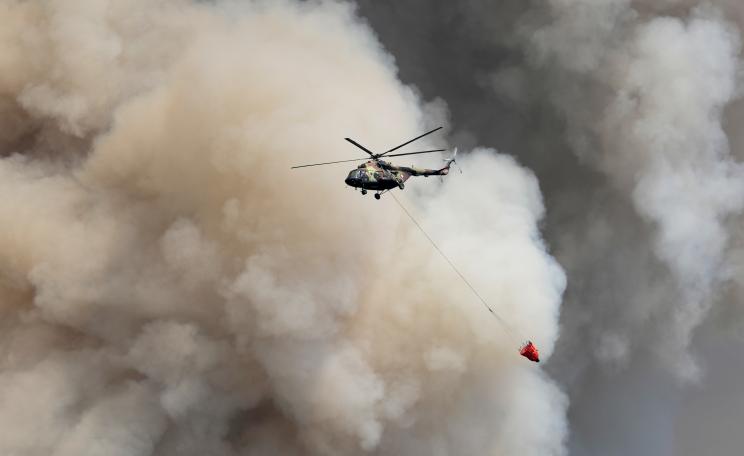
Scientists are even examining another possible route: wildfire smoke. A paper in Ambio argues that fine particles released during fires could potentially carry resistant microorganisms and antimicrobial-resistance genes through the air.
Wildfire-related respiratory illness could also increase healthcare demand and, potentially, antimicrobial prescribing. But the evidence here is still developing.
Prohibit
But who suffers the most? AMR can affect anybody, but the WHO says vulnerable populations and people in low-resource settings are more heavily affected.
Where access to clean water, sanitation, diagnostics, infection control and effective medicine is limited, preventing and treating resistant infections becomes much harder. Resistant organisms can cross borders and our ability to protect ourselves from them is unevenly distributed.
In the UK, sales of veterinary antibiotics for food-producing animals, adjusted for the animal population, fell 57 per cent between 2014 and 2024. However, there has been much less progress in reducing antibiotic use and drug-resistant infections in people.
Between 2019 and 2024, antibiotic use fell by only two per cent, well short of the 15 per cent reduction target. At the same time, the number of drug-resistant infections increased by 13 per cent.
New veterinary medicines regulations came into force in Great Britain on 17 May 2024. They prohibit antibiotics from being used routinely or to compensate for poor hygiene, inadequate animal husbandry or poor farm management.
Treatments
But preventative use is restricted rather than completely prohibited. A vet may prescribe antibiotics preventatively in exceptional circumstances, where the risk of infection is very high and the likely consequences are severe.
Nunan argues that changing the rules is only part of the answer if farming practices themselves do not change.
He said: “The EU and the UK have both nominally banned routine antibiotic use, and using antibiotics to compensate for poor hygiene or inadequate animal husbandry. But in practice, husbandry standards have not improved enough.
"In my view, the law has not been properly applied because antibiotics are still being used to compensate for problems created by the way animals are raised.
“The EU has banned purely preventative group treatments where none of the animals has been diagnosed with disease. Group treatment is still allowed where disease is actually present and there is a risk of it spreading. The UK has refused to introduce a similar rule and still permits prophylactic group treatments."
Welfare
For Nunan, the differences between farming systems show how much further reductions could be achieved by changing the conditions in which animals are raised.
He explained: “We know that significantly improving animal husbandry and better hygiene standards can dramatically reduce antibiotic use.
"Giving animals more space, raising them outdoors, using more resilient breeds and ending practices such as very early weaning and routine tail docking can all make a substantial difference.
"If we move towards higher welfare standards, we can achieve really significant reductions in farm antibiotic use."
Husbandry
The Alliance to Save our Antibiotics points towards low antibiotic use in countries such as Norway, Iceland, Sweden and Finland and argues that practices including weaning, better diets and improved living conditions have helped reduce dependence on group treatments.
The idea behind this isn’t complicated: keep animals healthy enough that antibiotics are not routinely needed in the first place, rather than using the drugs to deal with disease afterwards.
But Nunan argues that there is a trade-off. Raising animals in less intensive systems can cost more, potentially challenging the expectation that meat should be available cheaply and in large quantities.
He said: “Making large improvements to animal husbandry can result in meat becoming more expensive. This, however, has the benefit of lowering the risk of antibiotic resistance, which is a major cost to medicine.
Evolve
"Also, when meat becomes more expensive people tend to eat less of it. So, there is a relationship between higher husbandry standards and lower meat consumption”.
That raises a bigger question about whether reducing our dependence on antibiotics also means reconsidering the amount and type of meat we consume.
As Nunan puts it: “We need to reconsider our diets as part of this discussion. Moving towards less, but better, meat production is part of the solution to antibiotic resistance, as well as the wider environmental problems associated with industrial meat production."
And we cannot simply assume science will keep producing replacements for the drugs that stop working. Developing new antibiotics is scientifically difficult and commercially challenging, while bacteria continue to evolve.
Protect
Preserving medicines that we already have matters just as much as finding new ones. That means reducing unnecessary use in people and animals, preventing infections, improving sanitation and vaccination, monitoring resistance, investing in new treatments and diagnostics and dealing the effects of a heating world.
We have lived with effective antibiotics for so long that it’s easy to treat their usefulness as permanent.
But the loss of antibiotics is unlikely to announce itself as a single catastrophe. A successful operation might be followed by an infection that’s difficult to treat. A familiar drug might stop working as well as it once did. Doctors try another antibiotic, then another.
Resistance accumulates quietly: bacterium by bacterium, patient by patient, farm by farm, prescription by prescription.
We still have time to protect these medicines. The question is how much more evidence we need before we decide to act.
This Author
Monica Piccinini is a Brazilian-British journalist and a member of the National Union of Journalists. She is a regular contributor to The Ecologist and publishes on Substack, Medium and on her own platform, YourVoiz.org.