Beauty products. Few items are sold to us with more reassurances that they will be good for our health, appearance and well-being. Few items are so drastically misnamed. In this collection of 'Behind the Label' articles, we select five beauty products that shouldn't feature on your bathroom shelf...
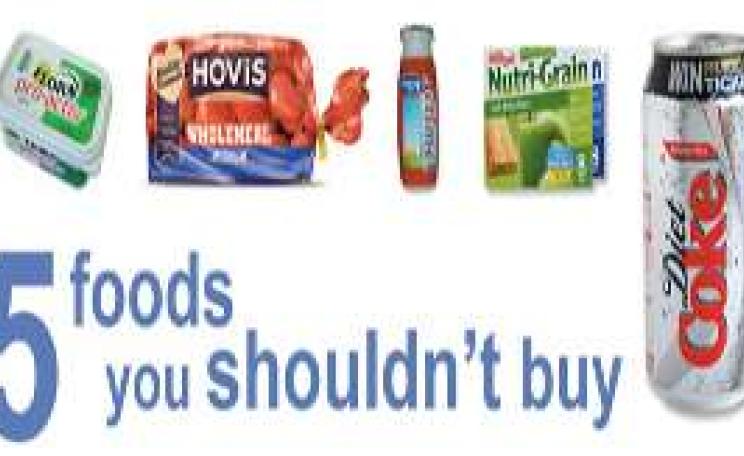
In this special online collection of Pat Thomas' acclaimed 'Behind the Label' series, we bring you five food products that shouldn't be on your kitchen shelves...
Freedom Food was set up in 1994 by the RSPCA as the first farm-assurance scheme to concentrate primarily on animal welfare. The Freedom Food mark found on eggs, dairy, meat, poultry and salmon products means the animals involved have been reared, handled, transported and slaughtered to standards devised and monitored by the RSPCA.
Ethical consumerism in the UK is currently worth £29.3 billion, yet 60 per cent of us feel we don't have enough information to make an ethical decision. There is an ever-growing array of eco labels, but what do they tell us? Or fail to tell us? Pat Thomas explains
One of the major causes of rainforest destruction and biodiversity loss in tropical zones is the illegal logging of hardwoods. The Forest Stewardship Council (FSC) label, broadly speaking, exists to address this by promoting environmentally appropriate, socially beneficial and economically viable management of the world’s forests.
This labelling scheme, introduced in October 2001 and found on all new cars, indicates how much carbon dioxide a car emits. It also gives estimated fuel costs for 12,000 miles and the vehicle excise duty for 12 months, so car buyers can see how much these will cost before they buy.
The food industry’s attempt to get in on the green labelling act was launched in 2000 to reassure consumers that a range of food products meet independently inspected standards.
At heart, fair trade is a strategy for poverty alleviation. It creates opportunities for producers in the developing world who have been economically disadvantaged by the conventional trading system and ensures they receive a fair price for their goods, and support and education for sustainable farming practices.
All organic food must meet a common set of minimum standards, as defined by the EU. Each EU member state has a national control body; the United Kingdom Register of Organic Food Standards (UKROFS) regulates the activities of six certification bodies in the UK. The oldest and largest, the Soil Association (founded in 1946), currently undertakes 80 per cent of all certification in the UK and is arguably the organic label most trusted by consumers.
Linking Environment and Farming (LEAF) is an industry funded certification scheme, with standards aimed at encouraging efficient farming systems that look after the land and the rural community. Its underlying objective is to develop farming standards that are above baseline levels, but these are not aimed at meeting organic standards.
All European manufacturers and retailers must tell you about the energy efficiency of household ‘white goods’ such as fridges, freezers, washing machines, tumble driers, dishwashers, air conditioners, ovens and lightbulbs. The European Energy Label is certified by the Energy Savings Trust (EST), in conjunction with industry and the government. On these labels, products are rated from A to G, with A being the most efficient.
The Marine Stewardship Council (MSC) began in 1997 as a joint initiative between the World Wildlife Fund (WWF) and Unilever, a multinational company and one of the world’s largest buyers of fish. Its aim was to help preserve our dwindling fish stocks by certifying well-managed and sustainable fisheries.
This is a Europe-wide label for non-food products including copy paper, dishwashing detergents, indoor paints and varnishes, hard floor coverings, textiles, televisions… even tourist accommodation. It covers a variety of environmental impacts such as production energy use, waste generation and recyclability, across the product’s whole life cycle.
It has spawned a dozen urban legends. It gets praised and reviled by bloggers. And it tastes like carbonated cough syrup. But does Red Bull do you any good? Pat Thomas reports
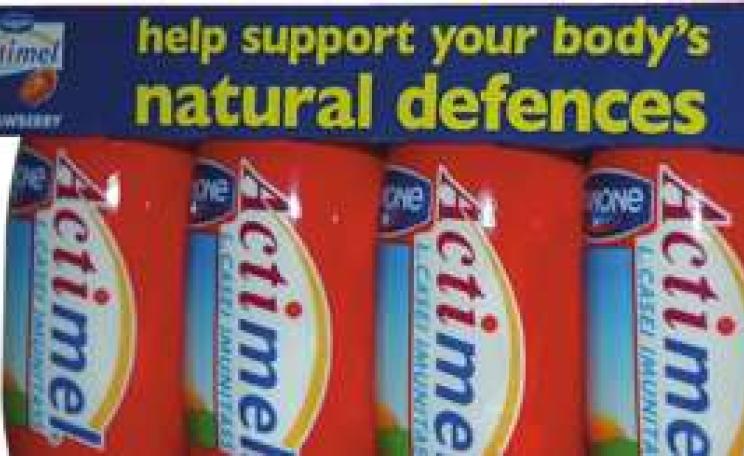
As doctors can tell you, the best remedy for colds and flu is the traditional one: rest, warmth, fluids – and time. Drug manufacturers want you to believe otherwise. But, as Pat Thomas reports, pharmaceutical ‘cures’ may be more than just a waste of money
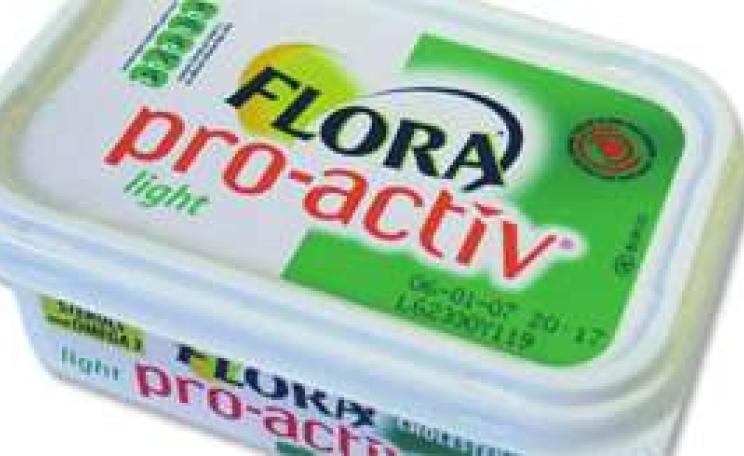
Food is supposed to be good for you, which is why many people believe that functional foods such as cholesterol-lowering spreads are a ‘good thing’. But are they? Pat Thomas reports
The human gut is a unique ecosystem and the hallmark of any healthy ecosystem is the presence of a diversity of micro-organisms. If you are a slave to probiotic drinks you could be encouraging an unhealthy imbalance. Pat Thomas reports.
We are enamoured of fragrances, and virtually every aspect of our lives is touched by a fragranced product. But is it a touch too much? Pat Thomas reports.
Far from being the healthy drink implied by its sports sponsorships, Diet Coke is a worrying cocktail of neurotoxic and potentially carcinogenic chemicals
If you’re one of the millions of people using fake tan to look attractive and healthy, be wary: they are full of chemicals that can cause damage to your skin. By Pat Thomas