Campaigners at COP21 in Paris are calling for a new 'upstream' carbon tax to be levied on fossil fuel producers, writes Henner Weithoener, and so send a clear market signal and finance poor countries' compensation for 'loss and damage' caused by climate change.
Pro-GMO US senators have a dastardly plan to deny states the right to require GMO labeling, writes Steven M. Druker, by attaching their DARK Bill as a rider to the Appropriations Bill next week. Now is the the time to wake up senators to the Bill's true intent, and to the deceit, illegal behaviour and scientific falsification that has kept the dangers of GMO foods a well kept secret - so far.
Coal prices are in terminal decline, writes Kyla Mandel, oil giant Statoil is calling for the strongest possible agreement, and the world's energy bosses are planning for a decarbonised future. COP21 is marking the definitive tipping point in the demise of fossil fuels.
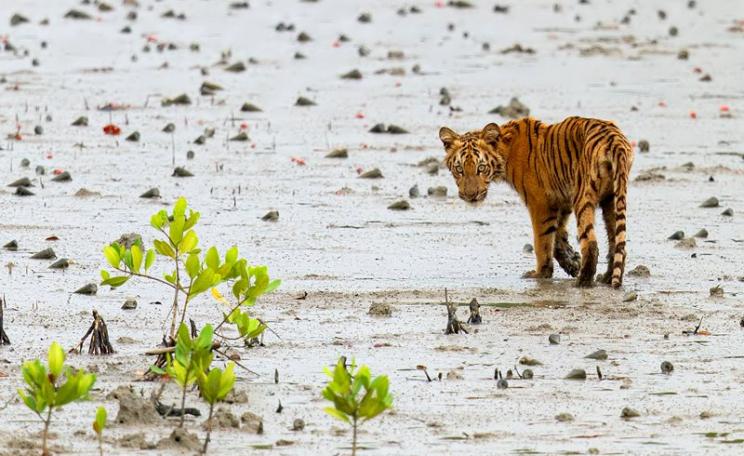
As COP21 reaches its endgame, there are plans to build 2,440 coal-fired power plants around the world, write Mowdud Rahman & Greig Aitken. Their completion would send global temperatures, and sea levels, soaring. Yet Bangladesh, the world's most 'climate vulnerable' large country, has plans for a 1.3GW coal power plant on the fringes of its World Heritage coastal wetlands.
As Arctic Peoples at COP21 in Paris appeal for unity to halt global warming, writes Tim Radford, scientists report that Greenland's glaciers are now melting at a speed not seen since the last Ice Age almost 10,000 years ago.
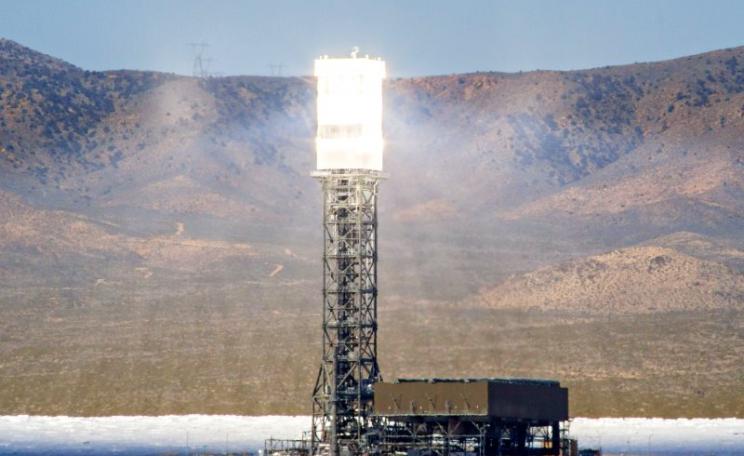
ITER, the elusive and multi-million dollar fusion fantasy, was yet another nuclear chimera introduced at the Paris COP21 climate talks as a 'solution' to our climate crisis, writes Linda Pentz Gunter. But the idea is pure fantasy: long before it can be made to work, if it ever can, it will have been made obsolete by harnessing the power of our giant fusion reactor in the sky: the Sun.
Investigative reporters working for Greenpeace UK's Energydesk have uncovered a nexus of senior academics willing to accept large sums of money from fossil fuel companies to write reports and newspaper articles published under their own names and university affiliations, without declaring the funding. Lawrence Carter & Maeve McClenaghan spill the beans ...
A new movement has been launched at COP21 in Paris to give legal effect to the rights of nature and communities, writes Hal Rhoades, providing effective protection against the gross environmental damage and human rights violations that accompany extractive industries from mining to oil development and agri-business projects, and which underlie climate change.
Levels of CO2 are at their the highest in 800,000 years, writes Tim Radford, but news of a probable decline in emissions this year is providing welcome cheer at the COP21 climate summit: thanks to renewables, economic growth and falling emissions can go hand in hand.
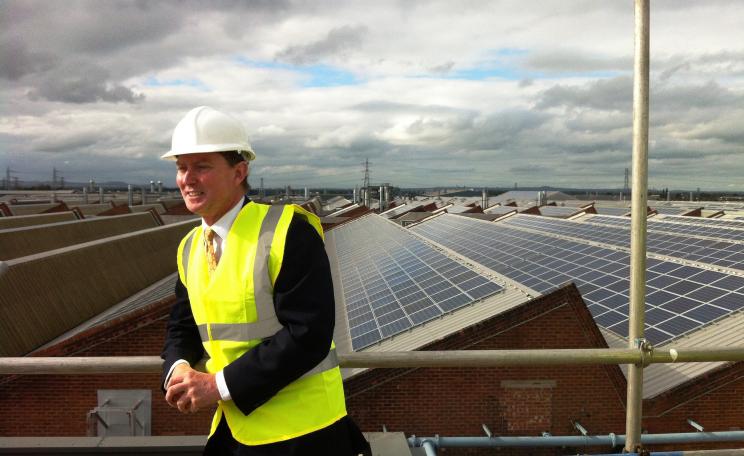
The EU's decision to renew 'punitive' tariffs on imports of PV modules and cells from China will cost the EU's solar installers an extra £700 million, writes Oliver Tickell - just as the UK industry is reeling from 87% government cuts.
Saturday's delivery of the draft Paris Agreement text for ministers to run with today was a small miracle, writes Luke Kemp. But it came at the cost of 935 bracketed texts to be argued over by ministers this week, while key questions - whether it will be a legally binding treaty, and how poorer countries will be paid to adapt to and mitigate climate change - are still up for grabs.
Last week a new billionaires club strode into COP21 in Paris promising big money for 'clean energy': the Breakthrough Energy Coalition. But most of its members are nuclear obsessives, writes Linda Pentz Gunter, from Bill Gates to Jeff Bezos and Richard Branson. And what the the world needs is not 'patient investment' into nuclear research, but impatient investment into renewables deployment.
Monsanto was accused of 'crimes against humanity and the environment' at COP21 in Paris this week, writes Pavlos Georgiadis. And now the evidence against it is being gathered for presentation at a 'Monsanto Tribunal' taking place next October in The Hague.
The latest text of the Paris Agreement on climate change published today sets 1.5C as its 'long term temperature goal', half a degree lower than previously agreed. It's a big victory for poor 'climate vulnerable' countries - and a blow for Saudi Arabia.
'Pay up or there's no deal', a coalition of 134 developing nations have warned the rich industrial countries at COP21 in Paris - the ones that caused the climate problem in the first place. As Paul Brown writes, much more than the $64 billion so far pledged will be needed to get them on board.
COP21 is overwhelming, writes Kevin Smith at the end of the Summit's first week. It's huge, its complicated, everyone is running around in a constant frenzy, NGOs are squeezed out of key meetings, and all but the biggest countries struggle to keep up with the action. But still, negotiations are progressing. And amid the chaos, some truly wonderful, surprising, inspiring things are happening.
Increased atmospheric CO2 is doing much more than warming the Earth, writes Tony Juniper - it's also acidifying oceans, something that is already having major impacts on ocean ecology in the Southern Ocean and the North Atlantic. Likely effects: more CO2 in the atmosphere, more jellyfish.
Paris has been awash with hype about 'CO2 recycling' and 'carbon neutral' or even 'carbon negative' technologies based on burning millions of trees, writes Rachel Smolker. But the alchemical notion that waste carbon can be spun into corporate gold is hitting serious reality checks. It's time to ditch the fantasies and progress the real solutions: like caring for land, soils, forests and grasslands.
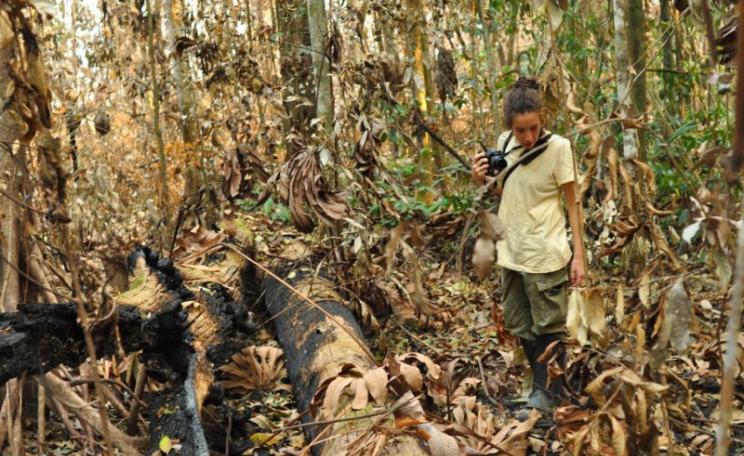
It's not just Indonesia's forests and peatlands that are burning - the Amazon is suffering almost as badly, with over 18,000 fires last month in Brazil alone, write Jos Barlow & Erika Berenguer. The future is looking hot and fiery.
The health of Europe's citizens is on trial as the EU's food safety regulator challenges the World Health Organisation over glyphosate and cancer, writes Corporate Europe Observatory. On the WHO side, published, peer reviewed science, real world epidemiology and open processes. While the EFSA conclusion is based on secret industry studies and opaque procedures. Will science or realpolitik win the day?
As world leaders convene in Paris for the COP21 climate summit, the major task before them is to replace fossil energy generation with renewables, writes Paul N Edwards - and with the right incentives, it could happen fast. For developing countries it's different: they could skip over fossil fuels much as they have gone straight for mobile telephony. But will they seize the opportunity?
New research shows that wind and solar can meet 80% of Germany's power demand, with biogas and hydropower providing the balance, writes Keith Barnham. And if Germany can do it, so can other countries, many of them even more easily - with no need for fossil fuels or nuclear power. COP21 should raise its ambitions and commit to a 100% renewable electricity future, everywhere.
A climate negotiators gather in Paris for COP21, the WMO say that a combination of human and natural causes will make 2015 temperatures the hottest ever - half way to the 2C 'safety threshold'. But despite the ever falling price of solar and wind, many newly industrialising countries are insisting on coal-fired development.
As the Paris climate summit falls under the brutal double cosh of terrorism and a heavy-handed security response targeted at climate campaigners, creative non-violent responses are taking shape to express the collective will of the billions who cannot be there, writes Nadine Bloch: the need for equitable solutions to the climate crisis, as a first step towards a healthy, peaceful, sustainable planet.