If you can’t name the problem, how will the British public trust you to come up with the solution?
Environmental groups are calling on Andy Burnham, the prime minister, to be clear on the cause of Britain's extreme heat summer crisis as he continues to "dodge the issue" of climate breakdown.
This comes after the prime minister and Labour Party leader failed to even say the words "climate change" in his remarks after the recent COBRA meeting on extreme heat.
READ: The letter to Andy Burnham, with signatories, is available here.
Greenpeace, WWF, Green New Deal Rising, the Women’s Institute, Uplift and Friends of the Earth, along with other organisations, wrote in an open letter that the public deserves leadership that speaks honestly about the nature and complexity of the challenges the country faces this year, and in the years to come.
Trust
And the have urged Burhman to recognise that climate breakdown is behind the current devastation, adding that means publicly recognising the scale of the crisis, naming its cause, and using his position to tackle this grave threat to our lives and livelihoods now and the lives of our children and grandchildren in the future.
Hannah Martin, co-director of Green New Deal Rising, coordinated the letter. She said: "Since becoming prime minister, Andy Burnham has not uttered the words 'climate change.'
"It’s barely believable as wildfires sweep the nation and drought sweeps across the country. If you can’t name the problem, how will the British public trust you to come up with the solution?
"As Mayor of Greater Manchester he was clear that ‘there should be no turning away from net-zero.’ Where is his leadership on this issue now?"
She added: "This is the hottest summer on record and every summer from now is likely to be hotter still. It's time for him to build trust with the public and say it like it is.
Burden
This government need to commit publicly to rapidly accelerating our move away from fossil fuels including saying no to new oil and gas projects like Jackdaw and Rosebank.
"Instead [it] continue[s] to ramp up investment in clean power and the industries of the future like wind, solar, green building technology and public transport as well as making sure our communities are equipped to adapt to the changing climate."
Robert Palmer, the deputy director of Uplift, said: “It is clear that the root cause of the heatwaves, wildfires and droughts which are devastating the UK is climate change.
"Nearly three-quarters of the country is in drought, there have been over a thousand wildfires to date, the whole of England is under a health warning and a sixth heatwave is on the way later this month.
If you can’t name the problem, how will the British public trust you to come up with the solution?
"Heartbreakingly, this is after the sweltering heat has already killed thousands this summer. This is also a horrific economic burden in terms of dealing with wildfires, ruined crops and fears that food bills are set to rocket."
Credentials
He added: “Andy Burnham has a track record of talking about the importance of tackling climate change.
"Now that he’s prime minister it’s vital that he links the fires, droughts and heatwaves that the country is currently suffering to the danger of climate change and shares a credible plan for what his government is going to do.
"He must take urgent steps to deal with the problem, including stopping major new oil and gas drilling such as the Rosebank and Jackdaw fields.
"Scientists could not be clearer that more drilling will wreck our planet and perpetuate this extreme weather. The Prime Minister needs to look out of the window and protect the country.”
Suzi Shingler, a campaigner with Stop Rosebank, said: “While he was mayor of Manchester Andy Burnham made much of his green credentials, now as prime minister, he has the chance to prove to the country he is a man of principle.
Hottest
“The clearest way for him to do that is to come out and say he will not allow the development of the super-emitting Rosebank oil field.
"He should also stick to what the electorate voted for and that is for no new oilfields. If he doesn’t, he will lose the support of many in the country and rightly so as the UK battles unprecedented extreme heat.”
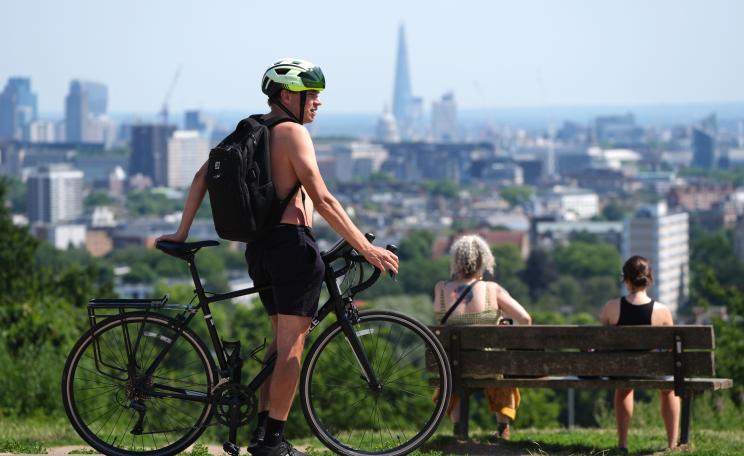
A heat health alert was extended until last Saturday for much of England amid warnings that high temperatures may increase health risks for vulnerable groups. It came after temperatures provisionally reached 38.1C at Kew Gardens in London on Thursday, the second time this year the country has seen temperatures hit 38C.
Officials have urged people to take simple precautions such as staying out of the sun at the hottest part of the day, checking in on vulnerable friends and family, and staying hydrated.
Polly Ashmore, acting consultant in public health at the UKHSA, said: “Drinking plenty of water, avoiding the sun during the hottest part of the day and keeping indoor spaces cool are all things you can do to keep yourself and others safe.
Greenhouse
“For vulnerable groups including older adults and those with existing health conditions, warmer weather can result in serious health outcomes.
“We urge health and social care services to ensure they are prepared and encourage people to check on vulnerable friends and family to make sure everyone is aware of the forecast, follows the necessary advice and stays safe in this period of hot weather.”
The intense heat has made 2026 the first year on record to see three separate days where temperatures reached the 37C threshold, as well as the first year with four days at 36C or above, and extends 2026’s record-breaking run of days above 35C.
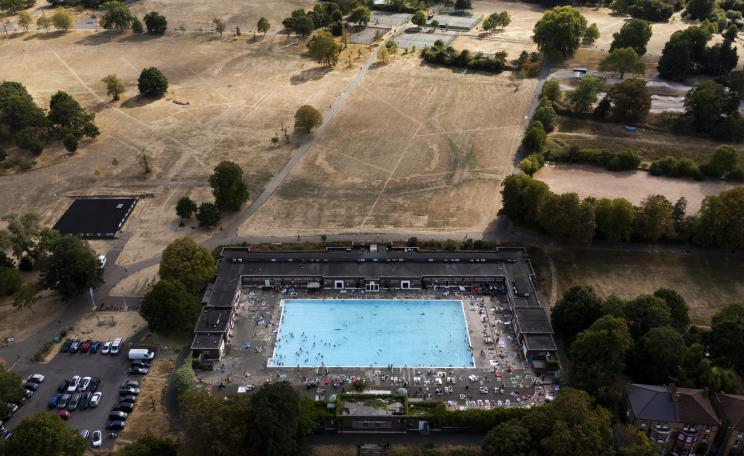
It is the fifth heatwave in a summer which has also been marked by extremely dry weather and drought for much of England and Wales.
Britain is facing increasingly extreme conditions such as heatwaves, drought and wildfires fuelled by climate breakdown, which is mostly driven by greenhouse gas emissions from burning fossil fuels for power plants, vehicles, heating and industry.
Shortages
England and Wales have already seen as many wildfires this year as during the whole of 2025.
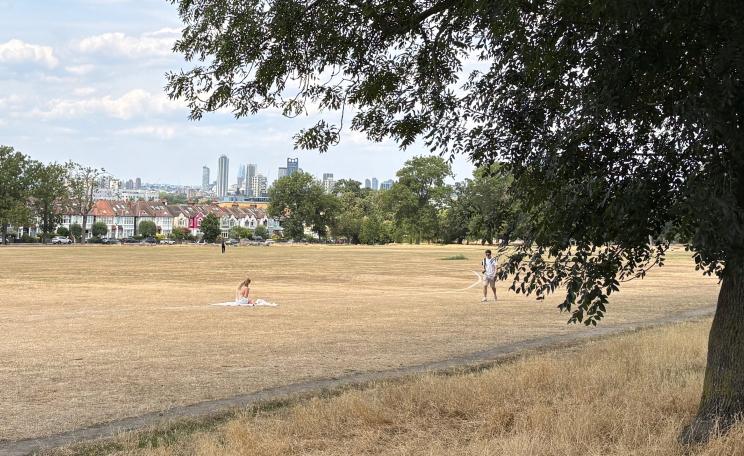
With record dry conditions in July and a dry start to August, nearly three-quarters of England and the whole of Wales are in drought, heaping pressure on water resources for households, agriculture and the environment.
The ongoing dry weather means that reservoir storage for England now stands at 66 per cent, down from 69 per cent a week ago and nearly 14 percentage points below the long-term average for the time of year, the Environment Agency said.
MPs have urged the Prime Minister to deal with the “desperately worrying” strain on the UK’s water resources by speeding up the rate at which Britain’s new reservoirs are built.
Some nine new reservoirs are planned to be up and running by 2050 in England, aimed at helping to protect against water shortages by collecting more rain during wet periods, after a more than 30-year gap in which none have been built.
Cool
Analysis by the UKHSA found that around one in six of all heat-associated deaths in England during summer last year were thought to be linked to dementia.
Angelo Makri, senior knowledge officer for wellbeing at the Alzheimer’s Society, said: “High temperatures can pose serious risks for people living with dementia if they are not supported to stay cool and hydrated.
“People with dementia may not always recognise when they need a drink or wear suitable clothing, which can increase the risk of dehydration and heat-related illness.
“With temperatures set to reach extreme highs this week, we’re urging families, friends and carers to make sure loved ones are drinking enough, wearing light clothing and keeping their homes as cool as possible.”
This Author
Brendan Montague is an editor of The Ecologist. This article is based on a press release from Green New Deal Rising and copy from the Press Association news wire. The letter to Andy Burnham, with signatories, is available here.