Britain will be particularly badly hit: a quarter of the food we import is grown in the most at-risk areas of the world.
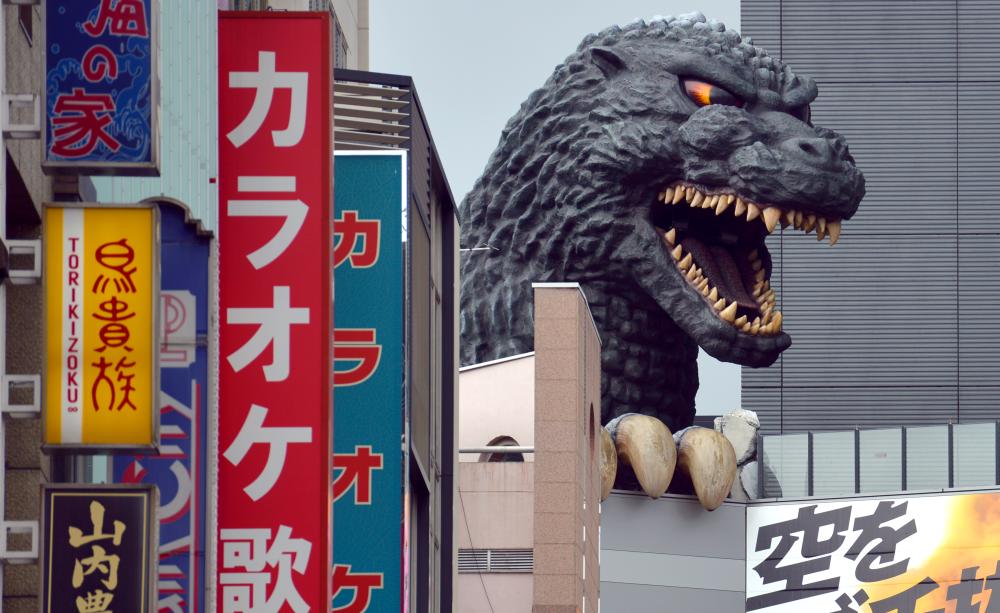
Godzilla – in the form of a super El Niño – is coming: a new account of just how dramatic it will be arrives each week.
The worst El Niño in a thousand years, it is set to take us past not just 1.5C of average global heating for a time, but 2C – a difference between what is merely dangerous climate change and absolute catastrophe.
The record-setting El Niño is just one more entry on the list of record-setting climate events over the past few years.
Supercycle
What does it even mean for us to read that Bangkok is under water, or Californian homes are falling into the ocean? None of it points toward a new normal. They are all symptoms of a climate spiralling out of control.
We are already in a period of ever escalating costs – for us, for government and for businesses. But we should understand El Niño not as just one more shock driving up prices and creating shortages, but as part of a broader dynamic.
We are now in a period where the cost of crucial commodities – not just food but many of the fundamental resources we rely on – is increasing, and will continue to do so over at least the next decade.
El Niño should be understood as part of a process where both climate change and the costs of building an electrified, ‘low carbon’ economy are driving a long-term increase in the cost of fundamental commodities – a climate supercycle.
Which means that after years of climate denial, false solutions and tepid climate policies, we are now strapped in for a hard transition.
So what is a super cycle and how is the climate supercycle different?
Constraints
A normal supercycle is an extended period of time where the price of a broad range of commodities, such as metals, energy, and food, all increase due to growing demand.
These years-long periods are usually set off by the build-out of new infrastructure and manufacturing capacity, a surge in industrialization, and are underpinned by a rising cost of energy.
The climate supercycle is different. This supercycle won’t be driven by global economic growth, but by the coupled costs of climate impacts and the effort to build out an economy that means we reduce carbon emissions.
The supply constraints imposed by climate impacts will offset the growth generated by investments in renewables and electrification, creating a stagnant global economy increasingly crippled by persistently high inflation - call it climate stagflation.
Britain will be particularly badly hit: a quarter of the food we import is grown in the most at-risk areas of the world.
Inflation
We can break down the costs. Major financial analysts such as Goldman Sachs and HSBC estimate that this El Niño could push global food commodity prices up by 15 per cent or more.
Already, we’ve seen falls in everything from potato yields to milk production in Europe, while both excess rainfall and drought will create shortages of key staples like wheat and rice.
Britain will be particularly badly hit, not just because we import so much of our food, but because most of the food we import is grown in drought prone areas. A full quarter of the food we import is grown in the most at-risk areas of the world.
Beyond higher prices for consumers, there are also higher costs for farmers, logistics companies and retail stores.
Higher temperatures - and disruptions caused by flooding, storms, and other weather events - increase the cost of production, driving up inflation.
Shortages
The result is people and businesses spending more to consume the same amount, reducing the money left over for ‘discretionary’ spending, and the money available for investment, reducing economic growth.
This in turn reduces government income, while the increased costs to public services and necessary government spending reduce government budgets further.
Alongside this, the demand for key resources is increasing. Electrification, like AI, needs copper for wiring, alongside everything from steel to gold to lithium.
Mining to generate more supplies takes time – sometimes well over a decade for each mine. More refining capacity also takes time to build, while protests and social movements can and often do block destructive developments.
This all creates shortages of critical resources as well as higher prices.
Security
A series of public bodies, from the UN to the International Energy Agency, has put out report after report over the years mapping the gap between demand for these resources and future supply, with the gap between the two appearing to be wider each time.
We will not have a surplus of transition minerals anytime soon. Worse, climate impacts are also increasing the cost of extracting them.
All of this is a snapshot of the decade to come. Increasing costs, shortages and failed harvests, and an endless sequence of disasters big and small will crush growth while increasing costs.
Yet unlike a normal supercycle, the climate supercycle won’t result in a commodity bust. Commodity prices won’t cause a retreat from investment or curtail public spending.
Climate impacts will increase the panic to transition, as governments, businesses and consumers chase security in a warming world.
Transition
Meanwhile you can’t eat less food, and there is a limit to what resources you can ‘choose’ to use less of in the modern world.
Supercycles are never “just economics” – there is always a political dynamic that goes beyond the dismal science of supply-demand curves.
The last supercycle was driven by China’s five-year plans and a vision of industrialisation and “peaceful assent”. The climate supercycle is no different.
It’s tempting to see the far right’s global campaign against the climate transition as something that will temper the climate supercycle.
Yet their efforts have so far only slowed the transition economy’s build out, while the alternative put forward in the US – the tech-fascism of making everything AI – is competing for the same critical resources as the transition economy, like copper and construction workers.
Conflict
AI is being endlessly politically facilitated – it is a choice to contract Palintir, to change stock market regulations, and to fund central bank policy to facilitate investment for AI.
It is also a choice to not restructure tax policy or fiscal rules, and rely on the bond market to fund government spending - further driving up the cost of the transition and contributing to the supercycle.
While this is squeezing government budgets in the Global North, it is creating an economic crisis in the Global South.
The impacts of the climate supercycle are far from even, and will disproportionately punish those countries who have contributed least to climate change.
Nor should we see the wars on Iran and Ukraine as someone ‘outside’ of climate change. Climate activists have long argued climate change would exacerbate and drive conflict.
Energy-vampire
Historical analysis suggests as much as 20 per cent of past armed conflicts have been driven by climate variations, while current conflicts often closely map onto regions impacted by drought.
Part of this approach to our hotter epoch has to understand the oil company and far right reaction to climate policies as part of the war of transition. The war on Iran is a climate war, one that is part of the surge in commodity prices in the climate supercycle.
The realities of the hard transition mean climate activism can’t be distinguished from the fight over the cost of living.
As much as we fight to block fossil fuels – to oppose new oil and gas developments, the expansion of fracking, or the energy-vampire developments of data centres – we also have to fight for price controls and an expanded social wage.
Warning
It also means seeing all wars as climate wars, and returning to centring peace activism and anti-imperialism as vital pillars of an environmentalism for everyone.
The original Godzilla was a Japanese cultural representation of the horrors of inter-imperial war and nuclear weapons.
Since then Godzilla oscillated between representing the horrors of a war-making industrial modernity and nature’s monstrous response to environmental depredations.
Both were ways of knowing about the horror people lived through. This year’s El Niño is not yet that. It is instead a warning of what is still to come, a warning we must heed.
This Author
Dr Nicholas Beuret is a lecturer at the University of Essex researching the politics and political economy of climate change and the green transition. His book Or Something Worse: Why we ned to disrupt the climate transition is out now with Verso.