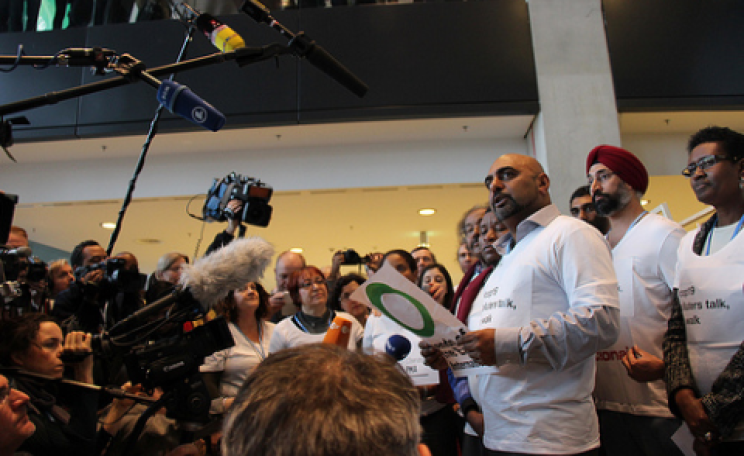
Yesterday, as climate talks degraded into a sideshow for the coal industry, more than 800 conference participants walked out. So where now for the climate movement? Alexander Reid Ross argues for an end to collaboration, and the beginning of a deeper resistance.
Environmental chemistry student Michael Brown evaluates how seriously recent claims that global extinction could occur within our lifetime should be taken....
Environmental chemistry student Michael Brown evaluates how seriously recent claims that global extinction could occur within out lifetime should be taken
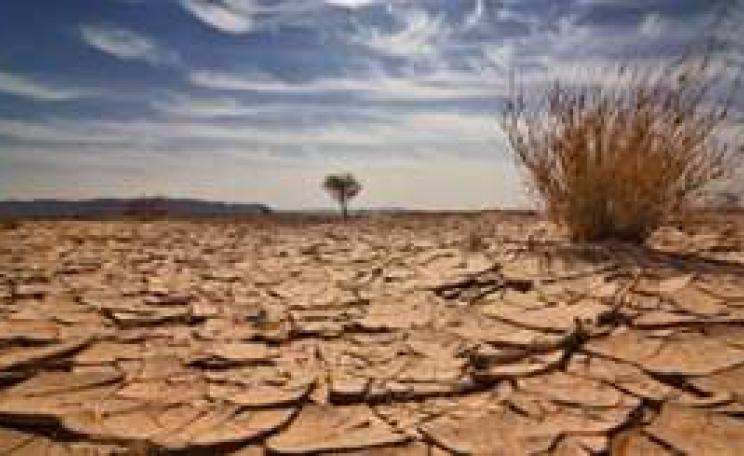
Africa’s answer to climate change is a proposed 4,000-mile long, nine mile wide wall of trees stretching from Senegal to Djibouti. Designed to stop encroaching desertification, some interpret the project (and its benefits) literally whilst others see it as more of a metaphor. Despite this split, the project is now taking root in Senegal where they have already planted 50,000 acres of trees.
Continuing her exclusive series - Coalition Green Watch - Bibi van der Zee further assesses David Cameron's pledge to head the 'greenest government in history' and, whilst the jury may still be out, finds alarming cause for concern...
Targets for increasing the use of biofuels to power cars, trains and buses will result in more ecosystems being converted to agriculture - actually increasing carbon emissions, says new report
In the first of an exclusive new series Bibi van der Zee sets out how we'll put to the test David Cameron's pledge to head the 'greenest government in history' - and why we need YOUR help
Microalgae could help turn the tide on climate change by providing clean, green energy for everything from light bulbs to planes, argues Matthew Aylott. But does the UK have enough space, sunshine - or indeed the stomach - to grow them?
A drive to persuade county councils to cut their carbon dioxide emissions by 40 per cent by 2020 could result in as many as 70,000 green jobs, new research reveals
'If you liked sub-prime, you'll love carbon trading!' Join the Camp for Climate Action on the 1st of April as they set up in the Square Mile to greet global leaders and remind them that climate change must remain on the agenda
So, the Carteret Islands are sinking, but why should you care? It’s a question well worth trying to answer; after all, the islands are a long, long way away, you are unlikely to meet the people who are about to loose their homes and when they do, it won’t change your daily life.
If you read the international press, it is easy to be convinced that the international ‘debate’ about global warming is about whether international organisations and country governments are able to ‘wake up’ to alarming news about the future of the planet.
A hundred years ago, markets ruled: fortunes were made, workers abused, bubbles blown. The Austrian School of economists, led by Ludwig von Mises, said this was fine: despite temporary messiness, the market knows best.
The Campaign against Climate Change aims to bring people together both in the UK and around the world to produce the biggest, most visible and loudest possible demand for urgent, radical and resolute action on climate – both from our own government here in the UK and from the nations of the world acting together.
By radically changing the way we acquire our food, the development of agriculture has condemned us to live worse than ever before. Not only that, agriculture has led to the first significant instances of large-scale war, inequality, poverty, crime, famine and human induced climate change and mass extinction.
By Clive W. Dennis (winner of the Ecologist/Coady International Institute 2006 Essay Competition)