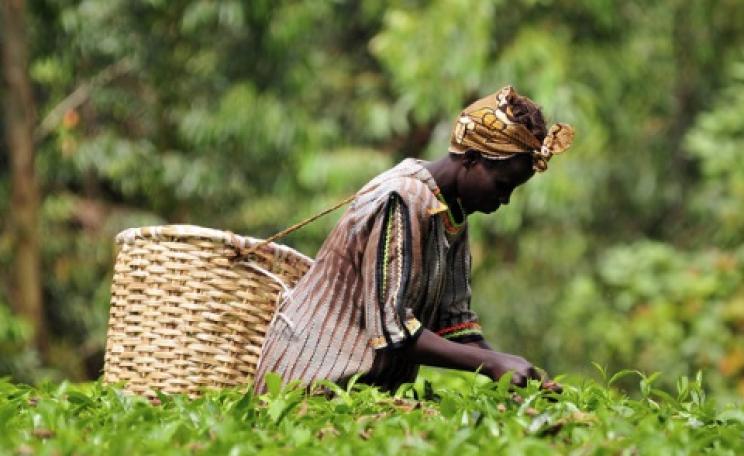
GM crops may benefit agribusiness, writes Andrew Adam-Bradford. But they offer little to Africa or the millions of farming communities that feed the continent. Rather than impose corporate 'solutions', governments should invest in indigenous agro-ecological farming.
What's the biggest threat to your life savings you've never heard of? Rebecca O'Connor shows how the world's exposure to unburnable carbon assets, and competition from clean energy technologies, could hammer your savings, pensions and investments.
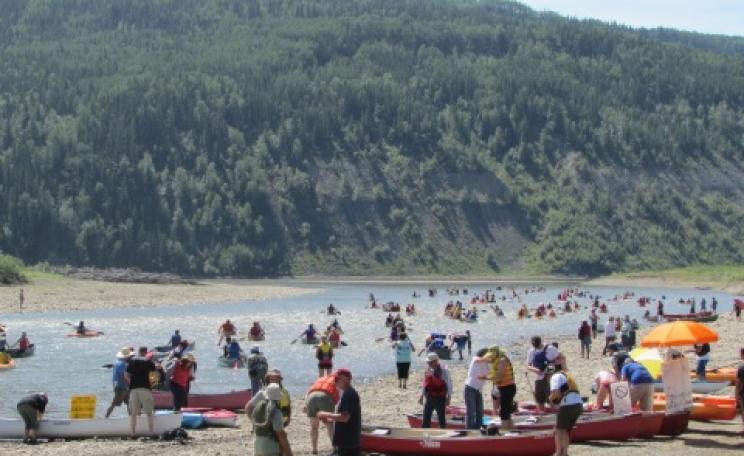
Canada's biggest infrastructure project is planned for Peace Valley, BC - a gigantic $7.9 billion dam that would flood 83 kilometres of the Peace River - all to produce electricity that no one needs. But a coalition of farmers, ranchers and First Nations is determined to block it ...
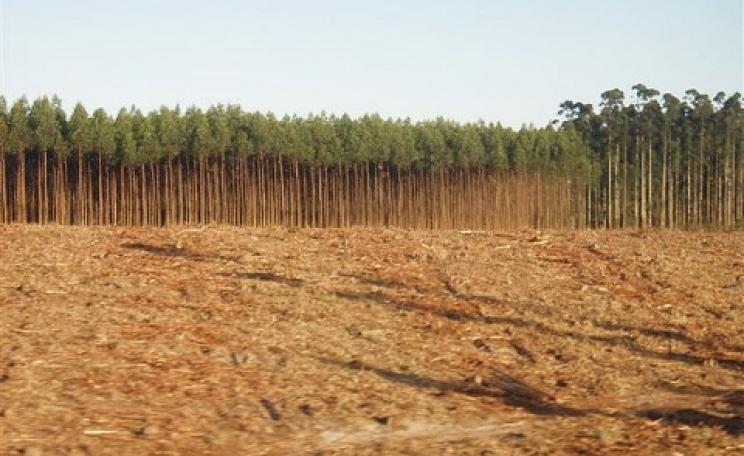
The World Bank's 'Tropical Forest Action Plan' was an abject failure, writes Chris Lang. Now the same mistakes are being repeated under a new acronym. TFAP is out, REDD is in - but it's still all about corporate control of forests, and blaming deforestation on its victims.
Missouri voters have narrowly passed a 'right to farm' amendment to the state constitution. But small farmers already enjoy such rights, writes Ben Whitford. The beneficiaries will be industrial-scale corporate producers who now have a legal shield against regulation on GMOs, pollution, animal welfare and health standards - and, of course, the lawyers.
The systemic failure of the Nigerian government and oil giant Shell to clean up the horrendous oil pollution in the Niger Delta has been branded 'shameful' by a group of Nigerian and international NGOs.
Students, workers and civil rights activists gathered in their hundreds today in Delhi to protest at the mining company Vedanta, and the Indian government's support of highly destructive mining projects in forests and on indigenous peoples' lands.
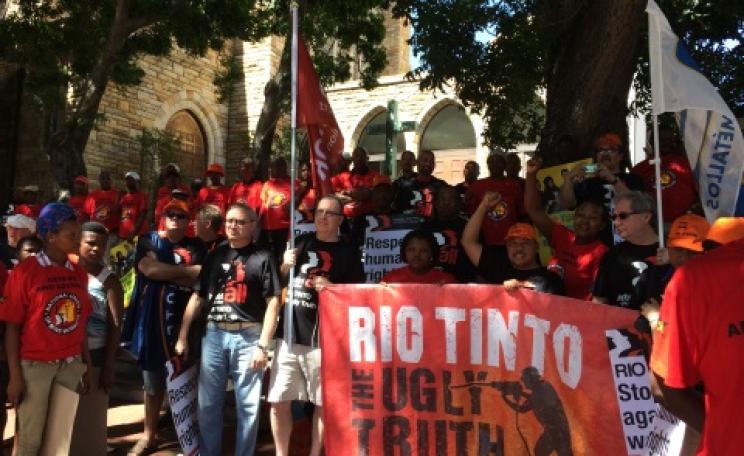
Global mining giant Rio Tinto markets itself as a 'sustainable company', writes Kemal Özkan. But serious failures in its reporting, and its attempt to hold an Australian indigenous group to ransom, reveal a very different truth: the company is driven by a reckless pursuit of profit at any cost.
Pesticide companies are responsible for assessing the safety of their products, writes Christopher N Connolly - and this situation cannot continue. The research should be carried out independently, subjected to peer review, and published.
Israel desperately covets Gaza's gas as a 'cheap stop-gap' yielding revenues of $6-7 billion a year, writes Nafeez Ahmed. The UK's BG and the US's Noble Energy are lined up to do the dirty work - but first Hamas must be 'uprooted' from Gaza, and Fatah bullied into cutting off its talks with Russia's Gazprom.
Already 56,000 people have pledged to support a global 'internet seed swap' initiative promoted by Avaaz, writes Julian Rose. Trouble is, the plans are deeply flawed, and have been developed without consultation with major seed saving groups worldwide.
Following The Ecologist's revelation about Ecover's use of synthetic biology to make laundry detergent, the company has put its trials on hold, writes Jim Thomas. But to regain public trust, the company must re-engage honestly with its critics, and its customers.
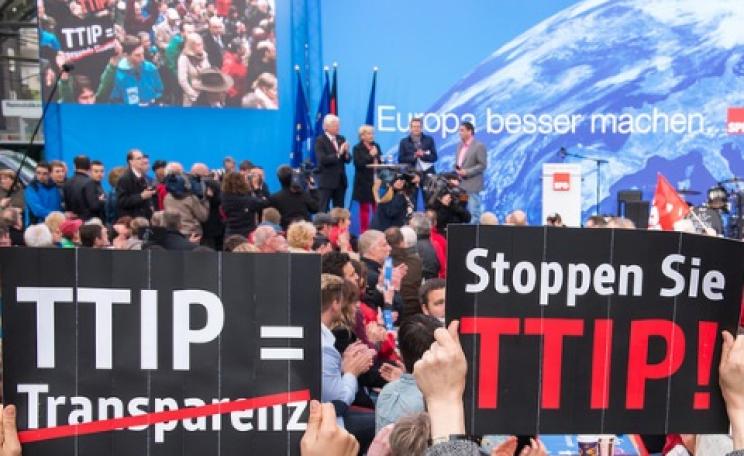
The EU-US TTIP trade agreement would 'protect investors' by giving them the right to sue national government for changes in the law that reduce their returns, writes Cécile Toubeau - putting an end to progress on environment and human development.
The European Parliament votes today on the TTIP 'trade' deal, described as a 'Bill of Corporate Rights' that will undermine democracy in both the EU and the US, writes Polly Jones. But given the extraordinary secrecy that shrouds the negotiations, few of the MEPs themselves really know what they are voting on.
Blaming 'lack of time', Syngenta withdraws its emergency application to use a seed treatment blamed for killing bees. Friends of the Earth and 38 Degrees claim victory - but Syngenta warns: we'll be back!
Using sophisticated financial engineering, Thames Water is making its customers pay almost the whole cost of its £4.2 billion London sewage tunnel. Is it time England ditched corporate ownership of its utilities and adopted Wales's 'non-profit' model?
The United Nations has voted to legislate against human rights abuses carried out by transnational corporations, reports Lucia Ortiz. But the resolution, proposed by Ecuador and South Africa, was opposed by the US and the member states of the EU.
Campaigners for the labeling of GMOs in food are winning their battle against corporate America, writes Ralph Nader. No wonder the corporations are fighting back with lawsuits and scare stories ... they're on the back foot, and they know it.
The forced retraction of a study that identified serious harm to rats fed on GMO maize and Monsanto's 'Roundup' reveals a deep and systemic corruption of science and regulation, writes Gilles-Eric Séralini. Urgent and far reaching reforms must now take place.
Ecover refutes allegations that it has been using 'synthetic biology' to make soap ingredients from algae. On the contrary, write Tom Domen & Dirk Develter, it's just old fashioned fermentation, and the company remains at the forefront of sustainability and responsible practice.
Why does the fracking lobby refuse to engage in open, public debate? Because, writes Paul Mobbs, it has already got its way, with the uncritical support of all the 'mainstream' media and political parties. You and I simply do not matter. So what are we going to do about that?
After eleven years of campaigning by local people suffering from water shortages, state authorities have closed Coca-Cola's bottling plant at Mehdiganj, Uttar Pradesh - inspiring campaigners at another three Coca Cola sites in India.
In California, water no longer runs to the sea - it runs towards money, writes Will Parrish. Most of the state's water is already controlled by agribusiness elites. Now, backed by politicians, they are planning to grab the little that's left, leaving nature and indigenous communities high and dry.
Green soap-maker Ecover is the first company to openly admit that that it's using ingredients derived from 'synthetically modified organisms' - the next wave of GMOs - writes Jim Thomas. So why are they risking their ‘natural' brand for this experimental biotechnology?