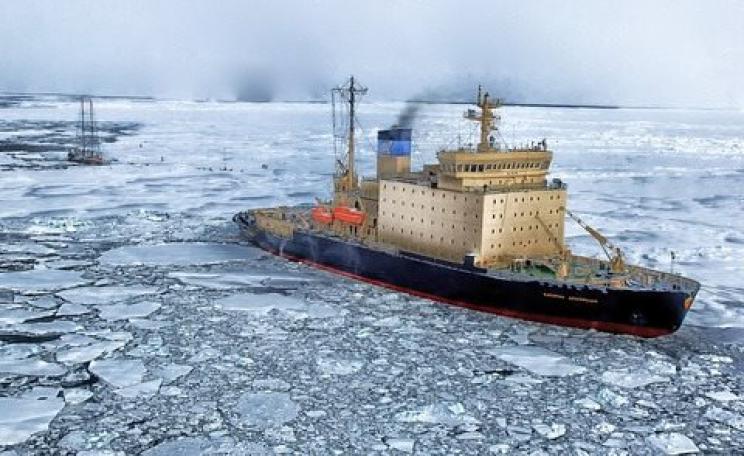
The Arctic is a special place, teeming with life, but it is under threat like never before, writes Robert Spicer - not just from climate change, but from oil drilling, industrial fishing and shipping, as receding ice creates now commercial opportunities. We must designate an Arctic Sanctuary where nature can reign undisturbed.
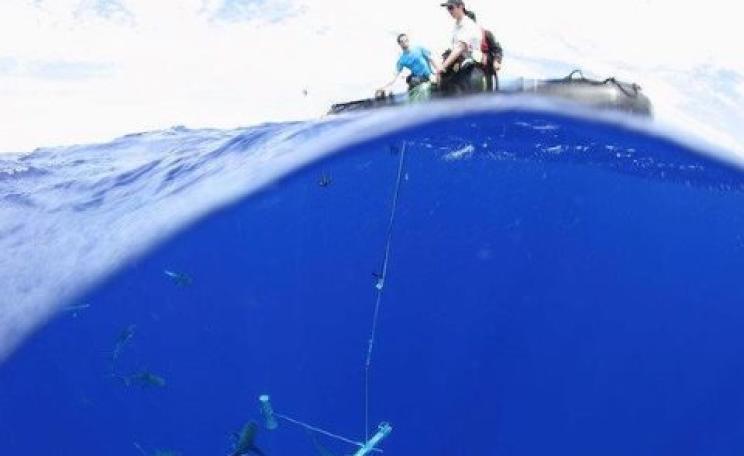
In 2003 nations pledged to place 20-30% of the world's oceans into no-take marine parks, writes Jessica Meeuwig - but more than ten years on, such areas now cover just 1% of ocean area. Now the World Parks Congress in Sydney, Australia, provides an opportunity to drive marine protection forward, and benefit both ecology and economy.
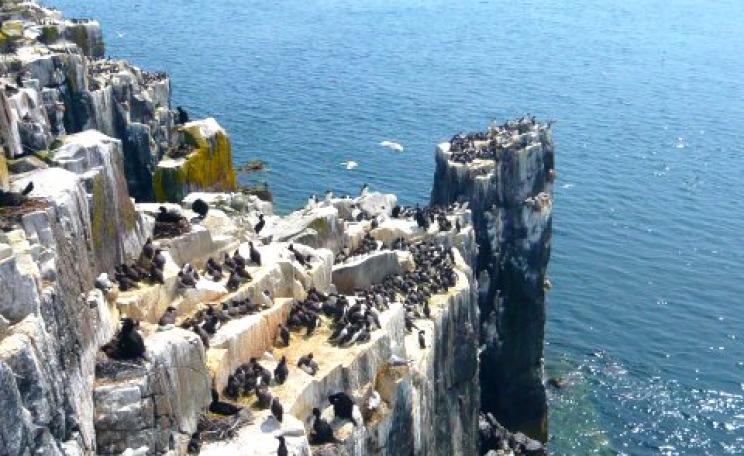
The 2009 Marine Act was meant to result in a full network of marine protected areas along the UK coast, writes Tom Hickey. But since then far too few MPAs have been created, and no real change or action has followed. Hence the launch of the Marine Charter today - to galvanise political will - and manifesto commitments - for the 2015 election.
Until demand for fish is balanced with sustainable methods of production, write Ruth Thurstan & Callum Roberts, governments should consider the social and environmental implications of promoting greater fish consumption. Worldwide, wild fish supplies per person have been declining ever since 1970.
Small-scale fishing communities are key to any transition towards an ecologically and socially just food regime. But backed by the World Bank, powerful corporate interests are seizing their fish, seas and shores in the name of 'sustainability'. A revolution of the poor is needed to rebuild food sovereignty - and restore the oceans to the global commons.
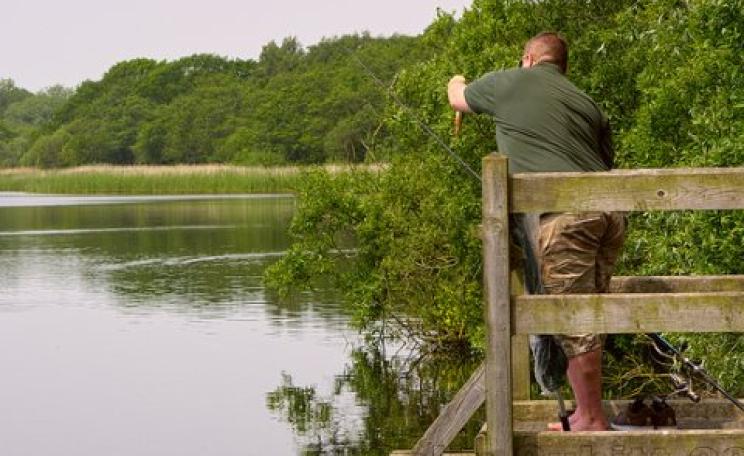
Can you be a committed nature and animal lover, and enjoy shooting and angling? Only after extraordinary mental contortions, writes Lesley Docksey - who is only mildly surprised to find out that a Facebook critic is a PR man for 'country sports and associated technologies'.
The Danish Navy has just supported the annual 'grind' cetacean slaughter on the Faroe Islands, seizing three boats used by Sea Shepherd to obstruct the hunt, and detaining their crew. The move enabled whale hunters to slaughter an entire pod of 33 pilot whales.
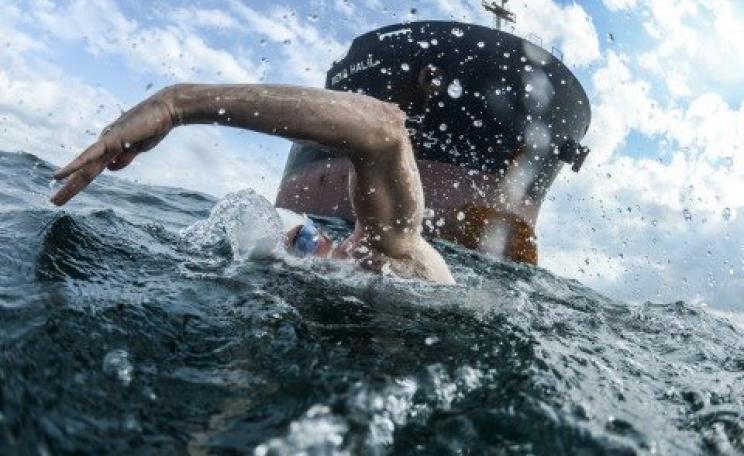
Lewis Pugh has completed long-distance swims in the 'seven seas' to promote his dream of a peaceful world of well-managed Marine Protected Areas, abundant oceans teeming with fish, turtles, whales, sea-birds and sharks. His shocking experiences in the water make that dream more urgent and compelling than ever.
Hawaii's salt-water aquarium trade is lucrative - but depends on the constant, scarcely regulated collection of wild fish, writes Elizabeth Claire Alberts. With 98% of fish in the trade taken from the wild, and high mortality rates from the moment of collection, Hawaii's coral reefs are experiencing a daily massacre.
Scotland's network of marine reserves doubled in area today with the designation of 30 new marine reserves. The move has been welcomed by green groups who have long campaigned on the issue - but they warn: this is where the real work begins.
A new report on the Channel's fisheries is a timely reminder of the ecological trend to 'simplification' as whole trophic levels are stripped away by over-exploitation, writes Horatio Morpurgo. Yet the government's profit-focused vision of 'sustainability' is missing the essential element - allowing the recovery of marine ecosystems.
The UK's coastal waters are producing little but tiddlers and scallops, writes Jason Hall-Spencer - and to blame is the endless gouging of the seabed by trawlers and dredgers - even in 'marine reserves'. We must allow our marine ecosystems to rebuild!
Fishing quotas were meant to conserve stocks and support fishing communities, writes Emma Cardwell. But they have achieved the reverse - rewarding the most rapacious fishing enterprises and leaving small scale fisherfolk with nothing.
Fish from the high seas are too valuable to be eaten, as they lessen climate change through the carbon they carry down to the ocean depths. The carbon benefits are worth $150 billion every year - almost ten times the value of high seas fish landings.
The Bering Sea is America's biggest fishery - but factory trawlers are ripping the guts out of the ecosystem, writes Jeffrey St.Clair, as they have already devastated fishing communities. Mix in nuclear bomb test fallout - an unlikely savior?
For just 8% of the fish landed, extraordinary, beautiful, ancient, diverse deep sea habitats are routinely destroyed by fishing gear. And as J. Murray Roberts writes, it's all for a one-off hit as the fish are so slow to grow and reproduce. If the same damage happened on land, there would be uproar.
A Pacific island paradise 340 miles from Costa Rica's coast should be the ideal place for marine conservation, write Julia Baum & Easton R. White. But while its waters are indeed teeming with life, steep population declines in key shark and ray species show that stronger protection is badly needed.
The International Court of Justice has ordered Japan to revoke its 'scientific whaling' permits in the Antarctic and cease to issue new ones as they are not for scientific purposes. Next, the North Pacific ...
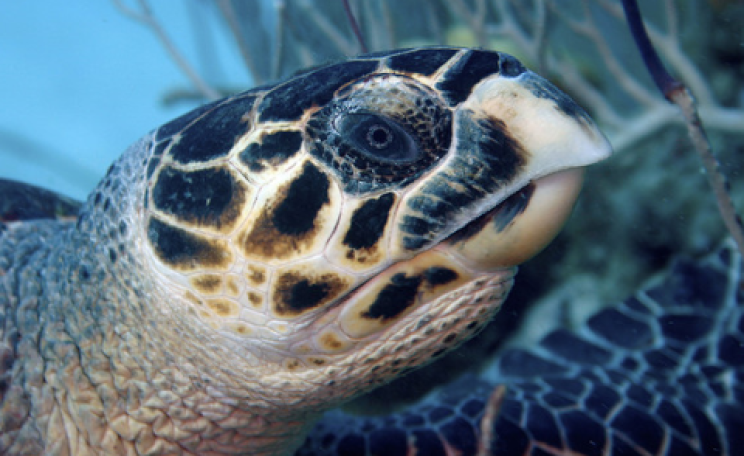
The Government of the Turks and Caicos Islands has adopted a new conservation plan for its sea turtles that will protect mature adults so they can breed, and so reverse population declines.
New figures show that three quarters of the sharks caught by Western Australia's shark baiting were undersize. All the more reason to halt the program, writes Elizabeth Claire Alberts - and to end similar programs elsewhere in Australia
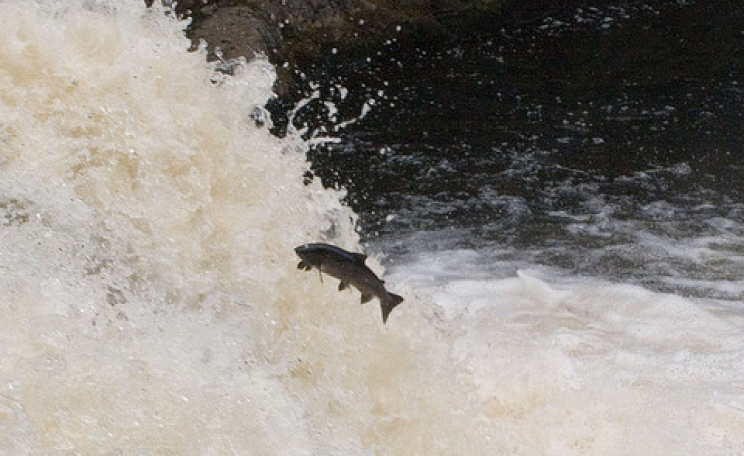
The migrations of wild salmon over thousands of kilometres are an enduring mystery, writes Chris Todd - as are the reasons for a steep and alarming decline in salmon weight, fat and overall condition.
The world's biggest slaughterhouse for endangered whale sharks has been uncovered in southeast China, writes Sophie Morlin-Yron. It's products are being traded across the world in health and cosmetic products.
The UK Government has recently expanded its network of marine protected areas. But as Horatio Morpurgo discovers, the focus on protecting only specific 'features' from intensive fishing is leaving entire ecosystems at risk.
ICCAT, the Atlantic tuna commission, sets science-based bluefin tuna catch quotas in the Mediterranean - but fails to protect for vulnerable sharks, or clamp down on rule breakers.