As Aung San Suu Kyi's National League for Democracy takes a strong lead in Burma's elections, Nafeez Ahmed warns that the military will remain the real power in the land. And as UK, EU, US, Chinese and Gulf state energy corporations compete to exploit Burma's hydrocarbons, don't expect them to denounce the ongoing genocide of the Rohingya, and anyone else in the way of their oil and gas infrastructure.
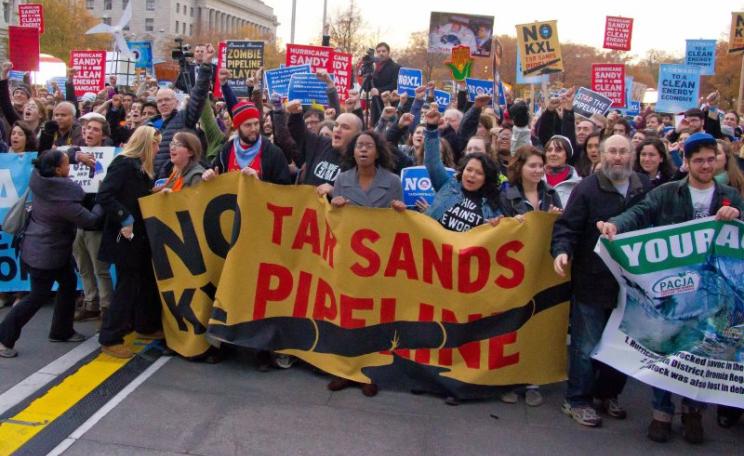
US President Obama today refused to permit the 1,200 mile Keystone XL pipeline from Alberta to Nebraska that would have carried 800,000 barrels of oil a year of tarsands oil into the US, citing climate concerns.
It was all going so well for Chevron - a New York court had ruled that a $9.5 billion judgment against it set by Ecuador's supreme court for massive pollution deep in the Amazon was corrupt and fraudulent. But then its star witness broke ranks and admitted, in another court, that he had lied, and the only bribes were coming from Chevron. Will Ecuador's pollution victims finally get justice?
The high oil prices that turned North Dakota into a boom state have turned, writes Joshua Frank. Now high-cost oil and gas are in the doldrums everywhere, production is falling - and even if prices do pick up one day, risk aversion and the relentless advance of renewables will leave lakes of oil and caverns of gas underground where they belong. Folks, the oil party really is over!
Last week BP's Peter Mather - who claims to have 'green and yellow oil' flowing in his veins - took to the airwaves on Radio 4's The Bottom Line'. Evan Davies asked some tough questions, writes Chris Garrard - but failed to mention the shocking case of Colombian trades unionist Gilberto Torres, kidnapped and tortured for 42 days by paramilitaries employed by BP's joint venture partner.
It's all change in Canada with the dramatic ousting of anti-environment Conservative Prime Minister Stephen Harper, writes Carol Linnitt. Under the new Liberal PM Justin Trudeau things are looking a lot better for climate, science, environment, transparency and First Nations. But Canada is still set to go into the Paris climate talks with the same weak level of commitment.
Large-scale oil extraction in the Arctic is irreconcilable with the 2C global warming limit, write Aleksander Melli, Pål W. Lorentzen, Mari Seilskjær, Hans Morten Haugen & Truls Gulowsen. And that puts Norway's dash to develop Arctic oil into direct conflict with its Constitution, which requires the state to try and secure climate stability for its citizens, present and future. A lawsuit is imminent.
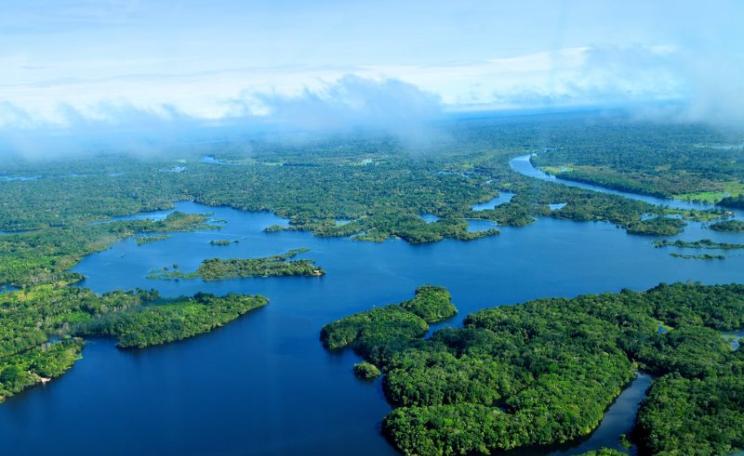
Brazil is about to auction hundreds of fracking blocks across the country - extending deep into the Amazon forest including the territories of remote and vulnerable indigenous peoples. Registered bidders include BP, Shell and ExxonMobil.
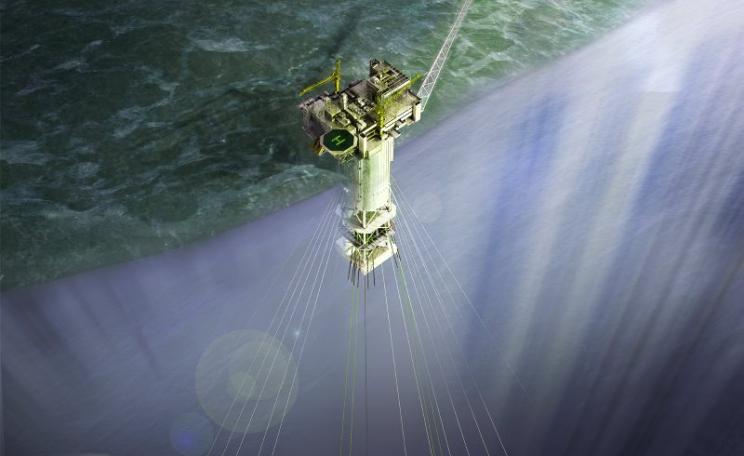
Shell's US president says the oil giant's unpopular drilling operations in Alaska's Chukchi Sea will stop for the 'foreseeable future' as exploratory drilling finds little oil and gas to justify its $7 billion investment.
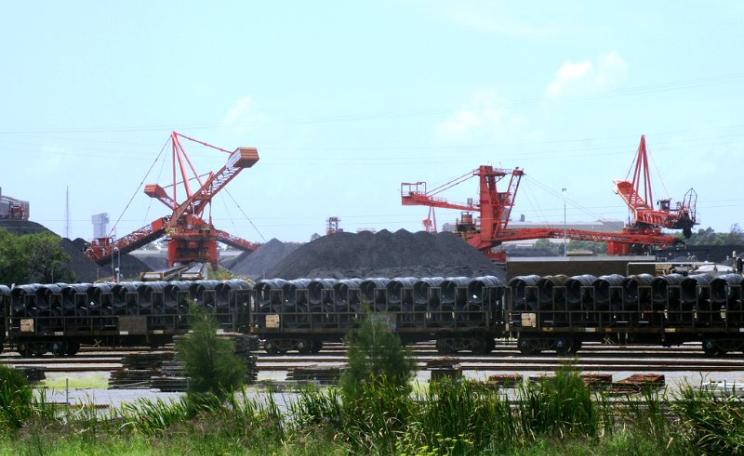
Pledges by investors to divest from fossil fuels have soared to $2.6 trillion - 50 times more than a year ago. 'Now is the time to divest', says Leonardo di Caprio, one of the latest to join the movement, which even includes Newcastle, Australia, home to the world's biggest coal port.
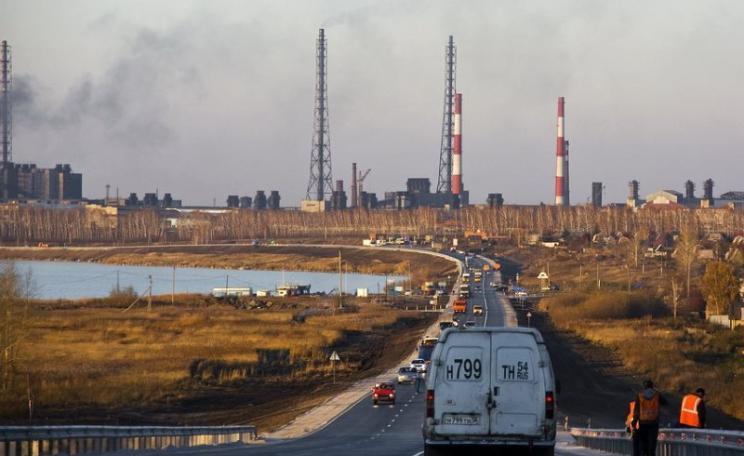
While other countries apply themselves to environmental challenges from climate change to nature protection, Russia - with its massive wealth of nature and natural resources - is stubbornly refusing to take part, writes Lucy E J Woods. And as the economy declines, the pressure is on: to ignore environmental regulations, and clamp down on environmental defenders.
The 14th Onshore Round of oil and gas licencing entirely avoided the Prime Minister's Witney constituency for reasons that clearly have nothing to do with geology, writes David Smythe. Is the little-known Frack-Free Witney the UK's most successful - and covert - anti-fracking organisation? Or are darker forces at work?
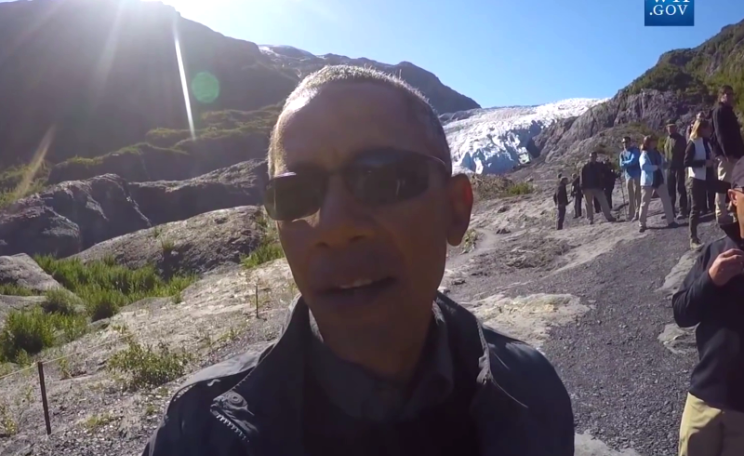
President Obama's whistlestop Alaskan tour highlighted his unique ability to believe in two completely contradictory ideas at once, writes Timothy Clark. On the one hand, the importance of climate change and the urgency of preventing dangerous warming. On the other, the importance of the Arctic's fossil energy and the urgent need to exploit it as rapidly and completely as possible.
For anyone who believes in the ineffable wisdom of 'free' markets, the current sinkaway oil price takes some explaining, writes James Meadway. Saudi Arabia's big gamble that it could put US shale oil out of business by over-pumping has now collided with China's falling demand for energy. Result: oil producers everywhere are swimming in red ink. Where will it all end?
After 20 years of oil spills, deforestation, waste dumping and ill health, farmers and indigenous people in the the Ecuadorian Amazon have been fighting the Chevron-Texaco corporation. But despite its three times conviction and a $9.5 billion damages award to the victims, the oil giant looks no closer to making good its damage.
Shell's Arctic drilling expedition is literally on the rocks after its icebreaker MSV Fennica suffering a metre-long gash to its hull below the waterline, writes Zachary Davies Boren.
Just when the UK's government might want to be boosting its green credentials it has chosen to do the precise opposite, writes Steffen Böhm: giving tax breaks and subsidies to oil and gas, while attacking renewables and energy efficiency. We must unite to oppose these destructive and short-sighted policies
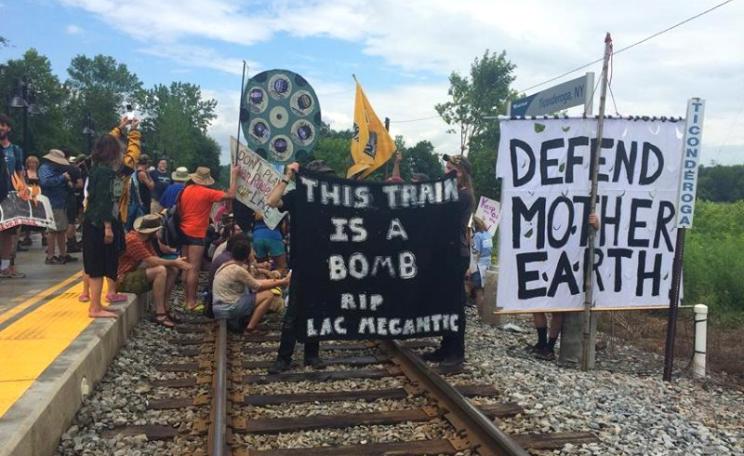
Two things are new in the Pacific Northwest, writes Stephyn Quirke: abnormally hot, dry weather that has even killed Chinook salmon on their run upriver to spawn; and 'bomb trains' a mile more long carrying thousands of tonnes of oil, with just a single sleep-deprived driver on board. What could possibly go wrong?
Faced with the double crisis of global warming and the decimation of marine wildlife, what does the Obama administration do? Open up the US's Atlantic and Arctic Ocean seafronts to oil and gas drilling, write Ralph Nader & David Helvarg. But this assault on our climate and cetaceans can be stopped, as a 'Sea Party Rebellion' prepares to fight it all the way in forthcoming Presidential elections.
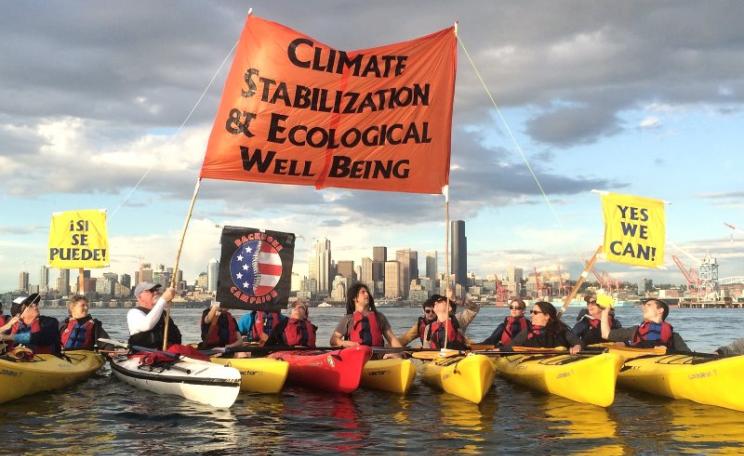
As Shell's Polar Pioneer drilling rig sails from Seattle into the north Pacific, Christine Ottery discovers that US federal regulators had serious concerns about the company's safety equipment designed to contain any oil spill.
Japan and Germany have much in common: both are major industrial countries that have gone nuclear-free, writes Peter Matanle - Germany by choice, Japan by necessity. But while Germany is actively pursuing its renewable energy revolution, or Energiewende, Japan, possessed of the richest renewable energy resources in East Asia, is stuck in a fossil fuel pit.
After six decades of oil exploitation, Nigeria's failure to provide for its citizens and develop its economy has exposed a hollowed-out state that benefits only the politicians and plutocrats, writes Joshua Goldfond. This is the environment in which Boko Haram has flourished, and as Nigeria proves incapable of effective action or reform, there's no end in sight to the nation's misery.
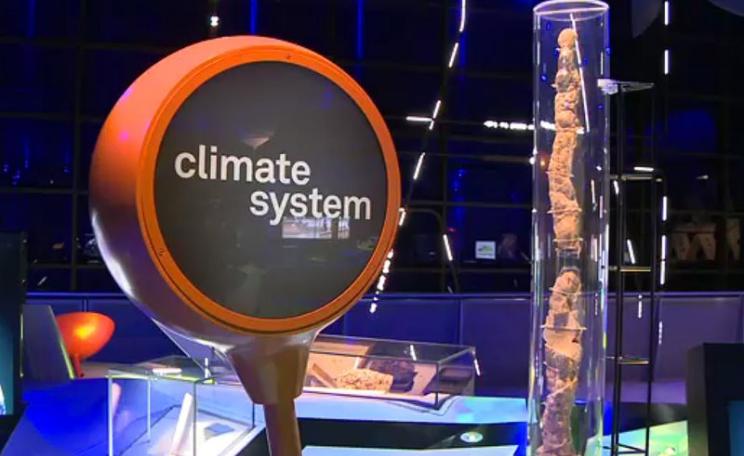
Emails released by the Science Museum show that Shell pressed its case to Museum staff to deny NGOs the opportunity to open up a debate on the company's operations in connection with an exhibition it had sponsored on waste and climate change, writes Terry Macalister.
Shell claims a third party audit into its plans to drill for Arctic oil and gas has found 'no issues of significance', writes Joe Sandler Clarke. But the audit remains under wraps, and may never be released in full. Now Obama pledges his support for the project - just as it turns out that Shell selected the 'independent' auditor.