Shell's senior management are treading an impossible path, writes Steffen Böhm. On the one hand they accept that climate change is real and serious, and that many of their fossil fuel assets may prove unburnable. On the other, they insist that business as usual will continue for decades to come. It's high time they smelt the coffee!
The widely touted 'carbon capture and storage' technology is much more expensive than wind and solar, says a Greenpeace report. It also represents a perverse subsidy to the fossil fuel sector that will only boost coal and oil, and delay the transition to a renewable energy system.
Food and water shortages and sharp price hikes in the necessities of life are driving civil unrest and rebellion across the Middle East and North Africa, writes Nafeez Ahmed. Adding to the problem, many of the afflicted countries are of strategic importance for their oil and gas, putting them on the front line of destabilizing 'counter-terrorism' operations.
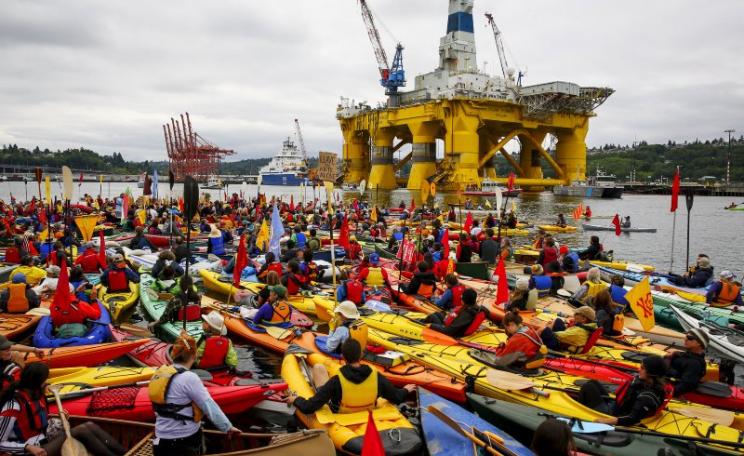
The Port of Seattle is violating its shoreline permit in allowing Shell to set up a 'home port' for its Arctic oil drilling fleet, according to Seattle officials. The finding could nix Shell's oil drilling plans for the 2015 season.
The 'death of peak oil' has been much exaggerated, writes Paul Mobbs. Take out high-cost 'unconventional' oil and production peaked ten years ago, and even North America's fracking and tar sands boom has failed to open up new resources both big enough to make good the shortfall, and cheap enough to reward investors. We really do need to be thinking 'beyond petroleum'.
The fracking boom has caused massive vegetation loss over North America's rangelands, writes Tim Radford, as 3 million hectares have been occupied by oil and gas infrastructure and 34 billion cubic metres of water have been pumped from semi-arid ecosystems.
The oil industry and oil producers have a long history of market manipulation, writes Karl Grossman, and we see it going on right now with the low oil price that's squeezing fracking and getting America back onto gas-guzzling SUV's. But longer term, solar power is going to win out, and even Saudi Arabia knows it. Its game? To make out big, while the going's good.
The dispersant used in the Deepwater Horizon clean-up appears to be more toxic to corals than crude oil, writes Danielle M DeLeo. It also increases the concentration of oil in seawater, leading to higher, more toxic exposures of oil components when they come into contact with corals and other marine organisms.
Hopes of strengthening Britain’s energy security are often pinned on the fossil fuel industry says Vicente López-Ibor Mayor, as exemplified by the hysteria over the claimed 'discovery' of 100 billion barrels of oil beneath Gatwick airport. But the real long-term solution lies with abundant and ever cheaper decentralised renewables.
Days after Shell received US Government backing for its plans to drill in the Chukchi Sea in the Alaskan Arctic, volunteers from Greenpeace have occupied its 'Polar Pioneer' oil rig in the Pacific Ocean to demand a halt to all Arctic oil exploration.
A deal to give up 500,000 acres of public lands in Utah to the tar sands industry in return for 1.5 million acres of industry is a sacrifice too far, writes Alexander Reid Ross, as it disclaims the wider costs of massive water use and contamination in the headwaters of the Colorado River, already seriously stressed by drought.
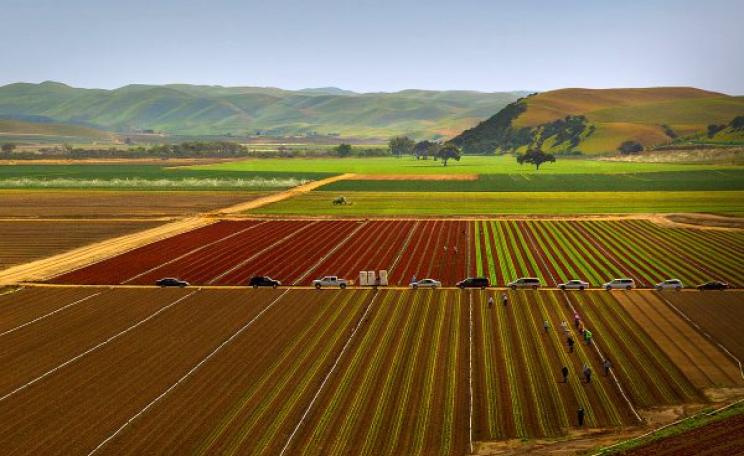
California has responded to the drought by rationing water, with $500 fines for domestic 'water wasters', writes Evan Blake. But agribusiness and water-intensive industries like fracking remain untouched by the restrictions, even though they consume over 90% of the state's water.
The Democratic Republic of Congo is to consult UNESCO, writes Melanie Gouby, over its wish to 'explore judiciously' for oil in Africa's first and most biodiverse National Park and World Heritage Site.
Mining corporations, politicians and big NGOs are meeting in London today to plan the future of extractive industries in Africa, write Nnimmo Bassey & Sheila Berry. Absent African civil society and impacted communities, delegates are setting an agenda for 'resource-led development' that will cook the continent in the greenhouse gases of its plundered oil, gas and coal.
A wide-ranging academic study of civil wars in 69 countries from 1945 to 1999 finds that the likelihood of outside intervention increases when the country at war has large reserves of oil, and a potential intervener needs to secure oil imports on favourable terms to meet domestic demand.
The rushed passage of the Infrastructure Bill with all its pro-fracking provisions and toothless 'safeguards' is an abuse of democracy. And as it's manifestly against the national and public interest, it's also in breach of both MPs' and Lords' legally binding Codes of Conduct. Now Jojo Mehta intends to hold them to account - in Court.
Montana legislators have brushed off the attempts of farmers, ranchers and landowners to effect 'zoning' regulations to protect them, their land, their water and their livestock from the toxic impacts of fracking. Now they say: 'See you in Court!'.
The oil and gas industry has admitted that its canals and drilling rigs have destroyed 1,900 square miles of coastal wetlands on the US Gulf Coast, but a Federal Judge with deep industry ties has ruled that 97 companies off have no liability for the $50 billion damage.
A month-long blockade of the Rio Tigre deep in the Peruvian Amazon has secured promises of compensation and cleanup for Peru's Kichwa communities who have suffered 40 years of contaminated waters from oil drilling operations in their remote Amazon region. But until the funds materialize, they are holding firm in their resolve.
Current oil price volatility is a symptom of the end of cheap oil, writes Nafeez Ahmed, and it's destablising the entire global economy. The answer is a major shift to renewables - but the the International Energy Agency, which should be leading the transition, is in the grip of nuclear and fossil fuel interests. Instead the leadership must come from us, the people!
Faced with climate change, economic doldrums and collapsing oil prices, the government has the perfect opportunity to put Britain on the right track, write Simon Bullock & Tony Bosworth - reduce our dependency on fossil fuels, and invest in renewables and efficiency. So what's it actually doing? The exact opposite.
North America's environment campaigners face a fearsome enemy in the 'Big Club', writes Alexander Reid Ross - the nexus of fossil fuel and infrastructure corporations, government, militarized police, private security contractors, PR agencies, astroturf NGOs and quasi-judicial bodies. But the activists are winning key victories in their battle to halt the industrialization of Cascadia.
In the face of environmental atrocities like the recent spill of crude oil into the Yellowstone River, writes Grant Mincy, quiescence be damned! To stop more of the same, we must reclaim from the corporate-captured state the rights of commons and community to decide on how local resources are used.
Tate, the leading London art gallery owner, has revealed the price of the BP logos that plaster its exhibitions: under 0.5% of its income - but only after a court order forced it to do so.