The Environmental Audit Committee today calls for shale fracking in the UK to be 'put on hold', writes Paul Mobbs. But the EAC is missing an even more dangerous technology that the Infrastructure Bill would support - underground coal gasification.
UK politicians and officials are studiously ignoring the growing evidence that fracking is an economic and environmental disaster, writes Paul Mobbs. As the circle of 'acceptable' view spins ever smaller, industry PR is dominating a phoney debate that's increasingly remote from reality, public opinion and core democratic principles.
The Information Tribunal has ordered Tate, the charity which runs two of London's biggest art galleries, to release details of financial support from the oil company BP, writes Richard Heasman - and they have until 27th January to comply.
The global economic shake-down of low oil prices continues apace, writes Alexander Reid Ross, causing environmentalists to celebrate the collapse of dirty energy projects. But the oil price collapse is the manifestation of a multi-layered conflict being fought out on the political, military and ideological battlefields of the Middle East - and it may not last much longer.
With 80% of the world's fossil fuel reserves 'unburnable' if the world is to meet its climate targets, writes Melanie Mattauch, the divestment movement is moving from strength to strength. As investor confidence in fossil energy ebbs away, 2015 is where the endgame for a dying industry begins.
The UK's financing of fossil fuels abroad increased tenfold in two years to exceed £1 billion in 2013 / 2014, writes Christine Ottery. Incredibly, the fossil fuel funding increase came after a government promise to use the money to support 'innovative and green technologies'.
Bangladesh's Sundarbans forest, home of incredibly rich biodiversity, is under unprecedented threat, writes ASMG Kibria. The recent oil tanker capsize on the Shela river puts the forest at risk of widespread biodiversity loss, but just this week, the authorities re-opened the Shela river to shipping with no restrictions on hazardous cargoes.
For the world to meet its climate goals, a third of the world's oil, half its gas and 80% of its coal must stay underground, writes Alex Kirby. And it's not us saying it - but scientists writing in the journal Nature.
Low oil prices are putting a stop to some of the world's most environmentally damaging 'extreme energy' projects, writes Paul Mobbs, and may close down the entire fracking and tar sands industries. So why are so many 'Greens' issuing dire warnings, instead of celebrating the good news?
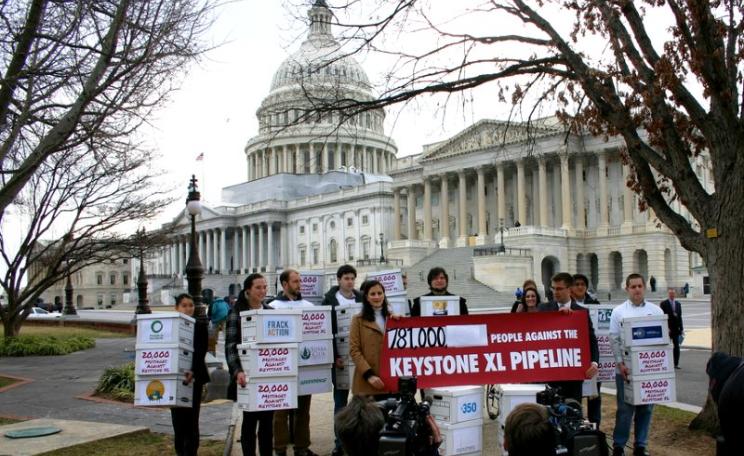
The US government is being sued for $15 billion for its cancellation of the Keystone XL tar sands pipeline last year in order to combat climate change. The legal challenge under NAFTA sends a warning to all countries contemplating similar 'free trade' agreements.
A massive oil spill in the oil-rich Niger Delta in 2008 has caused years of environmental and economic devastation. But only after legal action in London has Shell been forced to reveal the truth, admit liability, pay compensation, and begin the clean-up.
Increased production from US fracking operations is a major reason for the drop in oil prices, writes Kieran Cooke. But there are warnings that the industry now faces an existential crisis from which it may never recover, as the financial sector faces the prospect of worthless shares and $100s of billions of defaulted debt.
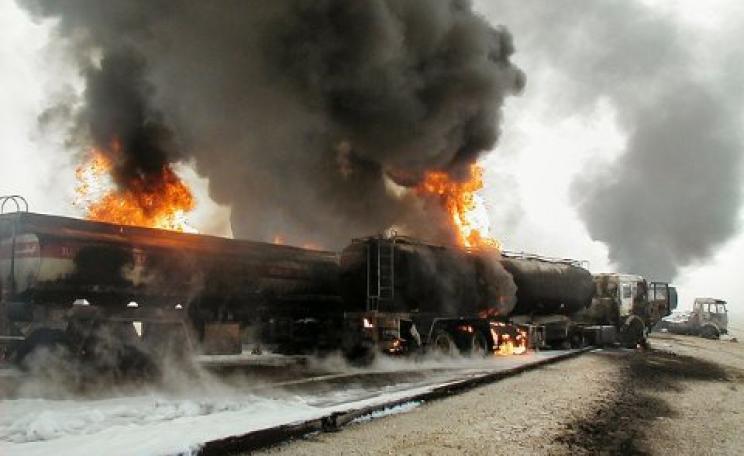
More than 25 million Americans live within an 'oil train blast zone', writes Ralph Nader. But as volumes of tar sands and shale oil carried by train soar, the oil cars identified as a 'substantial danger to life, property, and the environment' in 1991 remain in use. We must ban those dangerous railcars - and put an end to all 'extreme oil'.
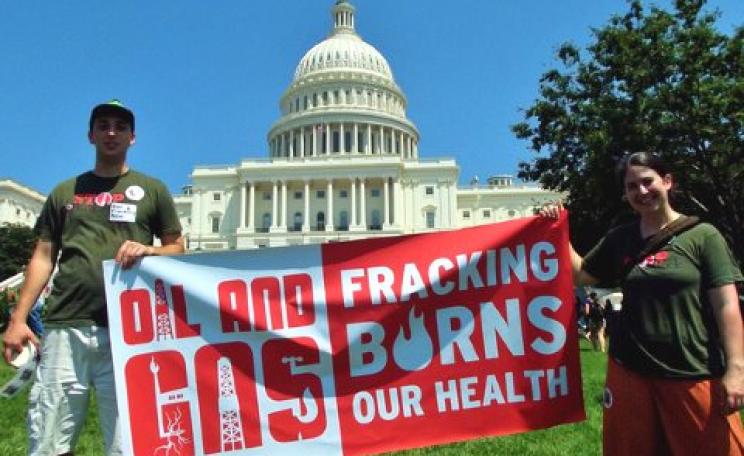
The government appears as determined as ever to push ahead with fracking as a central plank of its energy policy, writes Richard Heasman - ignoring growing evidence of health and environmental harm. But with the economics of fracking undermined by heavy energy price falls, the UK industry may never get off the ground.
Long-disused oil and gas wells in the US have been found to be a 'significant' source of the super greenhouse gas methane, writes Richard Heasman. The climate impact of oil and gas is underestimated, as this long term impact is not included in existing calculations.
Recent falls in oil prices give 'greens' cause to rethink arguments about 'peak oil' and get back to why they are really opposed to fossil fuels, writes Dr Steve Melia. Ultimately, it's not the economic evidence that drives government decisions - it's the politics!
A new financial crisis is threatening to dwarf the 'subprime' mortgage debacle, writes Paul Mobbs. Cheap money from central banks has fuelled some $1.3 trillion of risky investments in high-cost 'unconventional' oil and gas. Now, with oil sinking below $60, all that paper is turning to junk - and that's putting the entire economic system at risk.
Fracking for oil and gas uses a wide range of chemicals that disrupt reproductive function in both sexes, writes Tamsin Paternoster. Now an academic study has found a powerful correlation between stillbirth, miscarriage, low sperm count, and exposure to fracking chemicals.
It's the fossil fuel industry's latest stroke of genius - a coal substitute that's cheaper, dirtier and more toxic than coal itself, writes Ben Whitford. The waste product of refining heavy oil from Canada's tar sands, petcoke is stored in open mountains around Chicago's 'Slag Valley', sending plumes of sticky black dust over poor neighborhoods every time the wind blows.
Peru's government is actively undermining indigenous peoples' efforts to protect their forests - by refusing to title 20 million hectares of their lands and turning a blind eye to illegal logging. At the same time it's handing out vast concessions for oil, gas, mining and timber exploitation, expanding palm oil production and planning 50 major forest-flooding dams.
Peru - host of the COP20 UN climate conference now under way in Lima - is facing rebellion by a 3,500 strong indigenous people deep in the Amazon committed to fighting oil exploration in their forest territory, writes David Hill, following the government's failure to consult Matsés communities or respect their rights.
Are recent oil prices slumps caused by OPEC ganging up against tar sand and other high-cost producers? Or a sinister conspiracy to destabilise the Russian economy? Far from it, argue Jemma Green, Mark Andrich and Peter Newman - it's the simple result of an excess of supply over demand. And the low prices will be with us for some time to come.
The exploitation of Canada's tar sands is more than just an environmental catastrophe, writes Gregory McGann. It's also an turning into an economic disaster, with massive investments at risk as falling oil prices leave the tar sands stranded.
As the Arctic ice retreats, a fragile but resource-rich landscape replete with oil, minerals, fish and islands is opening up, writes Conn Hallinan. A new land-rush is on, and it could all lead to war. But it can be avoided provided states respect the rule of law and build on existing regimes of cooperation to protect the precious Arctic environment.