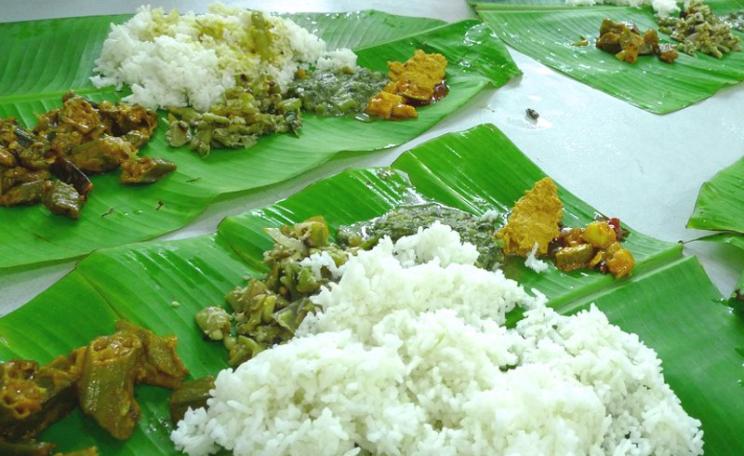
Rice-eating peoples are very particular about the rice their diets are based on, writes Ted Greiner. And they have a strong aversion to yellow grains, the tell-tale sign of the deadly mould that causes beri-beri disease. That alone makes GMO 'Golden Rice' a non starter; 107 Nobel Laureates had better start eating their words.
The main concerns that drove the Brexit vote - mass immigration and declining job prospects - must be taken seriously, writes Colin Hines, in the UK and across Europe. We need a new, cooperative union: of decentralised regional economies, with public investment in 'green' infrastructure driving our transition to a sustainable, low carbon future.
The first white people to encounter the Grand Canyon saw nothing but a gigantic obstruction, writes Stephen Pyne, devoid of any charm, beauty or value. That it is today an icon of American landscape, a 'natural wonder' known and revered around the world, creates hope for the long term preservation of the Grand Canyon itself, the wider National Park network, and wilderness everywhere.
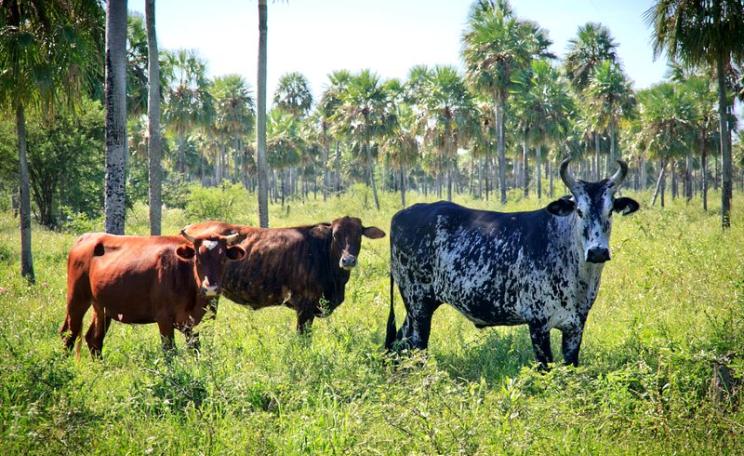
The closing down of a community radio station in eastern Paraguay is the latest example of political repression in the country with the most unequal land distribution in Latin America, writes Toby Hill, and in which the media are dominated by a tiny elite of the super-rich. As small farmers begin to reclaim the land that is rightfully theirs, landowners and the state they control are striking back.
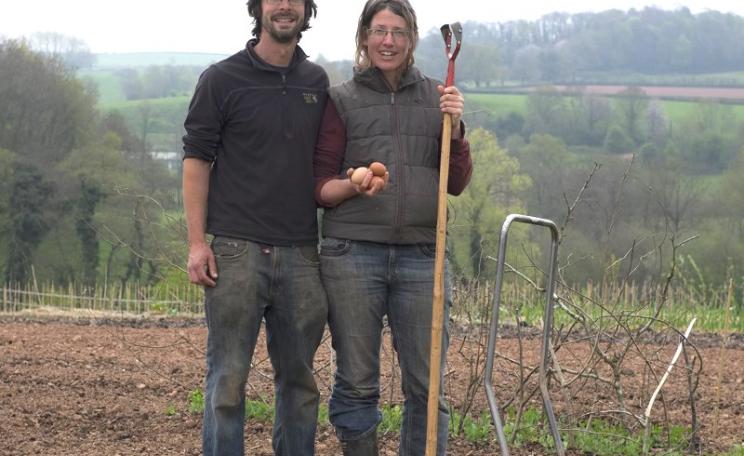
For most of 2015 Walter Lewis travelled around England and Wales meeting and photographing people producing food outside the confines of mainstream agriculture - working out of a passion for the earth and the Earth rather than for commercial gain. He completed his exploration inspired, and determined to spread word of quiet revolution under way across the fields of Britain.
The IUCN has mysteriously placed Homo sapiens outside its systems of thinking when defining the criteria for Critically Endangered, Endangered and Vulnerable Species, writes Willemijn Heideman: our collective inability to tackle our existential crises makes our survival on this planet a highly uncertain prospect.
A future of green abundance for all is possible, writes Glen Barry. Instead we are mired in the destruction of the Earth's vital ecosystems, divided by obscene wealth and shameful poverty, and pitted against each other in genocidal wars over energy, resources and global dominance. To make that alternative a living reality, we must shed our fears and come together in common purpose.
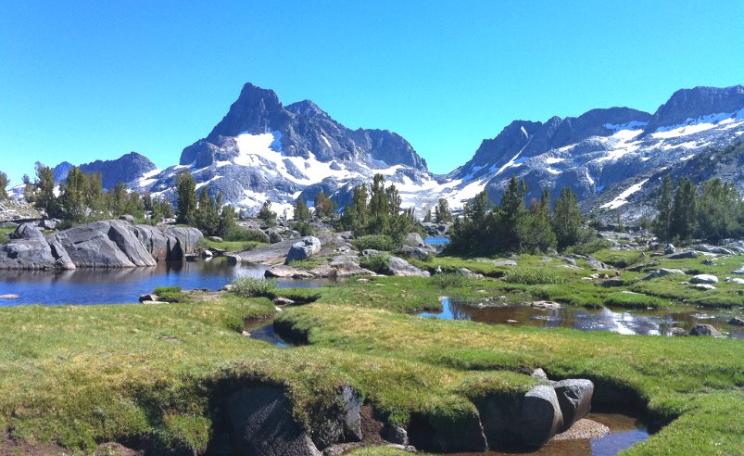
For John Muir, founder of America's national parks, immersion in nature was a blessing providing direct communion with divinity, writes Tim Flinders, and the cause of a spiritual awakening that inspired his life's work: to preserve wilderness and communicate the beauty, wonder and fragility of nature, sharing widely the source of his own enlightenment.
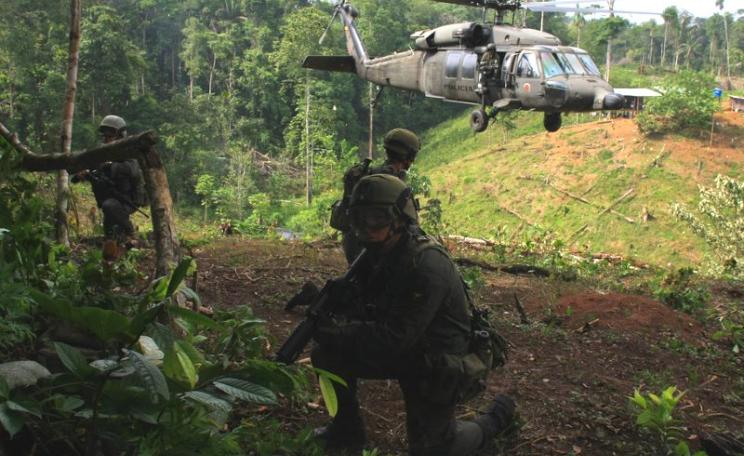
The 'war on drugs' is presented as a necessary battle against social evils, writes Benjamin Ramm. But from the Andes to the Caribbean, prohibition has criminalised both religious and cultural expression. And it's a war that is strictly for the global poor: people in Colorado can grow pot - so why not Colombians?
Since 1948 Jordan has taken in millions of refugees from Palestine, Iraq and most recently Syria, writes Doug Weir. Politically and economically the country has proved astonishingly resilient - but the population increase has caused huge damage to its fragile environment. Ecological degradation, pollution and resource scarcity may cause political instability unless more is done to tackle the problems.
We all know that coal and steam vanquished over water power in Britain's - and the world's - industrial revolution, writes Irma Allen. But as Andreas Malm sets out in his fascinating new book, the deciding factors in that victory were the unconstrained mastery over people and nature that coal provided mill owners. And so the model was set for the fossil age that may only now be coming to an end.
Faced with multiple converging crises humanity is challenged to redesign the human presence on Earth within the lifetime of present generations, writes Daniel Christian Wahl, and so transform our impact from degeneration to regeneration. We are capable of creating diverse creative cultures elegantly adapted to the uniqueness of place.
What's the point of farming? To produce an abundance of wholesome food, writes Colin Tudge, while supporting a flourishing rural economy and a sustainable, biodiverse countryside. Yet the powers that be, determined to advance industrial agriculture at all costs, are achieving the precise opposite. It's time for a revolution in our food and farming culture, led by the people at large.
The 'brutal savage' meme has enjoyed a resurgence in popular culture and establishment narratives, writes Stephen Corry, despite abundant evidence that it's fundamentally wrong. But it suits today's dominant mindset of conquest, conflict and colonialism all too well, and serves to justify the ongoing genocide and expropriation of surviving Indigenous Peoples today.
GMOs have been in our diets for about 20 years, writes Rupert Read. Proof that they are safe? No way - it took much, much longer to discover the dangers of cigarettes and transfats, dangers that are far more visible than those of GMOs. On the scale of nature and ecology, 20 years is a pitifully short time. To sustain our human future, we have to think long term.
An exciting new project has been launched to give children a chance to join in the GMO debate, writes Pat Thomas. With young people speaking up and becoming more aware of food, health and environmental issues, they deserve the platform to voice their concerns and join in a wider global network of youth working for positive change in the world they will inherit.
In trying to evaluate charitable interventions in 'value for money' terms, the movement for 'Effective Altruism' has lost its moral compass, Sam Earle & Rupert Read. The real changes the world needs are profound, systemic and political. There is no better example than the refugee crisis: the problem is not insufficient aid, but structural inequality, too many weapons, and too much war.
Five years after the Fukushima nuclear disaster began to unfold, the searing psychological effects are still being felt among the 160,000 refugees who fled the fallout, writes Linda Pentz Gunter. But now there's growing pressure to return to contaminated areas declared 'safe' in efforts to whitewash the disaster's impacts. Why the rush? To clear the way for the 2020 Tokyo Summer Olympics, complete with events in Fukushima City.
The lead poisoning crisis in Flint, Michigan is just the tip of a vast iceberg of lead contamination afflicting mainly urban black communities, writes Leif Fredrickson. A rigid 'race bar' on postwar suburban housing and mortgages left black families in inner cities, exposed to flaking lead paint in run down housing, leaded gasoline residues and lead pipework. Now is the time to correct this shocking historic injustice.
Agroecology is key to retaking control over food, farming and land from the 'monstrous machine' of agribusiness, biotech, big finance and 'free trade', writes Colin Todhunter, as it represents a truly viable alternative to agriculture for corporate profit. But such are the powers ranged against the world's small farmers that it must be supported by a broad-based, global people's movement.
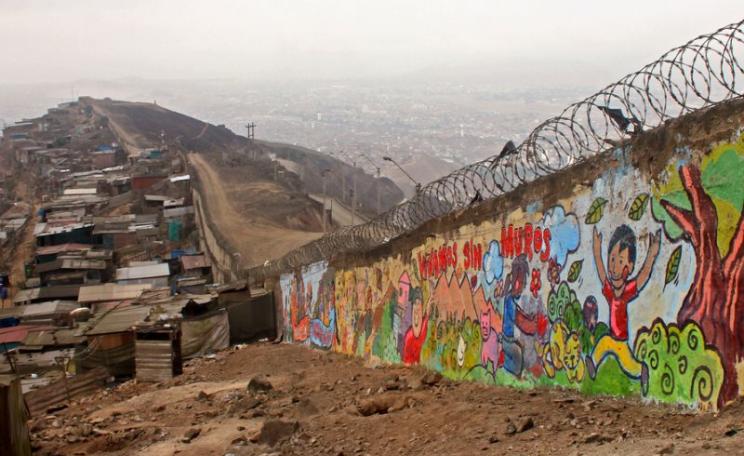
Just as rich and poor are separated by walls of money, the Latin American trend is to add physical walls to keep wealthy and deprived communities entirely apart, write Camillo Boano & Belen Desmaison. On the one side people enjoy lavish homes, security, public services and piped water. On the other residents live in tiny shacks built of scraps, in a desert landscape ruled by criminals.
The main engine of economic exploitation is the financial system's ever increasing extraction of value through interest payments, according to economist Michael Hudson. Paul Craig Roberts finds his analysis all too accurate, as the over-financialized economies of western countries head down a spiral of poverty, decline, injustice and despair.
Britain's 20th century architecture is in danger of obliteration, writes Sebastian Messer, with a 'new brutalism' that holds that socially deprived council estates are fit only for demolition. But these buildings are an important part of our cultural heritage, and more than that, they provide affordable housing to millions of people.
The Flint water crisis exposes like nothing else the toxic cynicism of America's ruling class, writes Jesse Jackson. In their privileged view, the victims of the lead poisoning are disposable 'unpersons' that matter less than General Motors' auto parts. But now they, and their peers in other poisoned communities, are fighting back.