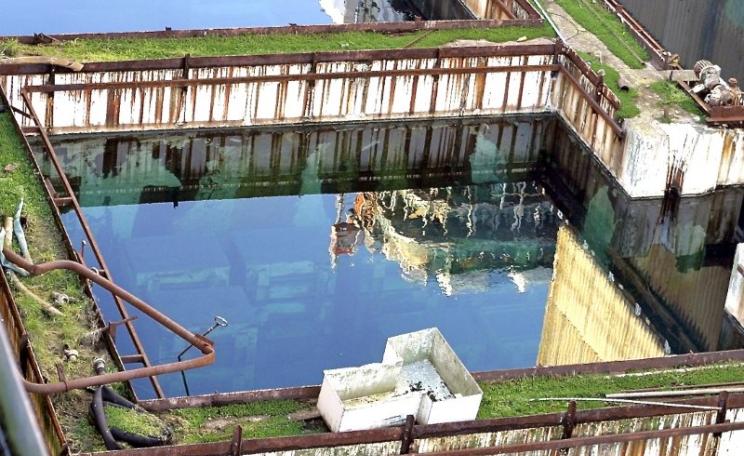
Bellona, a Norwegian group which campaigns against nuclear power and advocates clean energy generation, described the tanks as ‘a powder keg’ with a burning fuse.
A report distributed by Bellona states:
‘Ongoing degradation is causing fuel to split into small granules. Calculations show that the creation of a homogenous mixture of these particles with water can cause an uncontrolled chain reaction.’
The three tanks are reportedly filled with 21,000 spent nuclear fuel rods and are sited at Andreeva Bay, on the Russian Kola Peninsula. Until recently, they were thought to be dry, but new investigations have shown corrosive salt water leakage.
Both Russian and Norwegian authorities said that there was ‘no danger’, but that steps were being taken to improve the storage facilities.
This article first appeared in the Ecologist June 2007