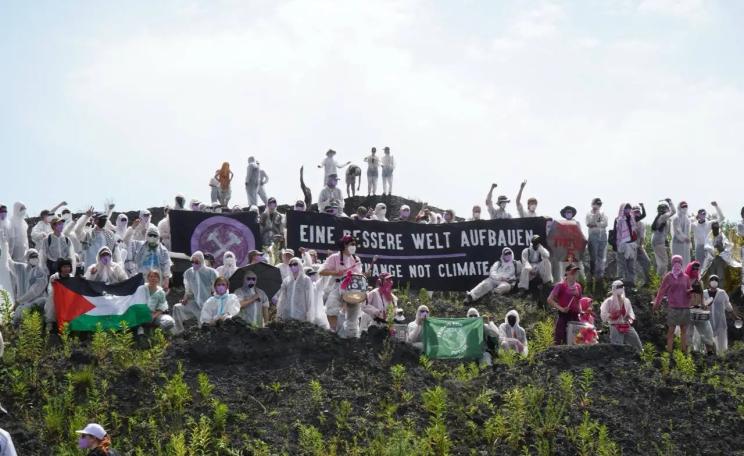
The arms industry enjoys unrestricted access to decision-makers, while advocates for environmental protection and peace remain largely excluded.
“Conflict aggravates climate change vulnerability, and vice versa," states the The International Institute for Sustainable Development (IISD), "each reinforcing the severity of the other and driving the state and its people into a cycle of fragility.”
A 2019 study by Stanford University found that climate change contributed to three to 20 per cent of global conflicts over the past century.
READ: Ecocide and resistance in Palestine
As global temperatures continue to rise, this influence is expected to increase. Reviewing 55 studies, Marshall Burke and colleagues found that a one-standard-deviation increase in local temperature raises the likelihood of intergroup conflict by 11 per cent.
Contaminates
The military forces of the world, in turn, feed the fire. The US Department of Defense alone is the world’s single largest institutional consumer of oil, and as a result, one of the world’s top greenhouse gas emitters.
According to reports, Israeli military operations in Gaza have generated more planet-heating emissions in just two months than the annual output of some 20 climate-vulnerable nations.
The vast majority of the 281,000 tonnes of carbon dioxide released in the first 60 days of the conflict – more than 99 per cent – stemmed from Israel’s aerial bombardments and ground intervention. That figure is equivalent to burning at least 150,000 tonnes of coal.
By contrast, Hamas rocket fire into Israel during the same period produced an estimated 713 tonnes of emissions – roughly the same as burning 300 tonnes of coal.
Reports have also pointed to Israel’s use of white phosphorus shells, a weapon that contaminates soil and can cause long-term environmental harm.
Cycle
Beyond the immediate destruction, experts warn that the climate costs of post-war reconstruction in Gaza will be immense, with rebuilding expected to lock in further emissions for years to come.
The Palestinian Institute for Climate Strategy report this September estimates that Israel and its allies owe $148 billion in climate reparations for military emissions since the Nakba. Israel is responsible for $103 billion, the US $40.8 billion, with the remainder attributed to European allies.
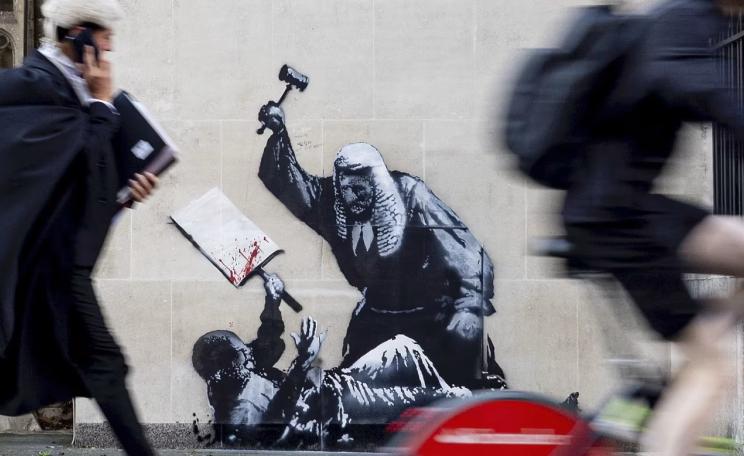
The arms industry enjoys unrestricted access to decision-makers, while advocates for environmental protection and peace remain largely excluded.
The Notre Dame Global Adaptation Initiative identifies Yemen, Mali, Afghanistan, the Democratic Republic of the Congo and Somalia – all conflict-ridden – as the least prepared to confront climate shocks.
In the Philippines, climate change, resulting in above-average rainfall during the wet season, has devastated crops, and herders, faced with barren pastures, are increasingly forced to migrate in search of viable land. This has led to conflict as rebel groups exploit hardship to win support.
In Sudan, desertification now affects 65 per cent of the territory locking the country into a vicious cycle where conflict and climate breakdown feed one another.
Famine
The Lake Chad Basin offers another stark warning: drought and extreme weather have destabilised farming communities leaving young men particularly vulnerable to recruitment by armed groups such as Boko Haram.
Similarly, Mali, two-thirds of which is desert or semi-desert, faces overlapping climate threats from prolonged drought, floods and locust invasions which in turn have led to political instability and violence.
In Iraq, ISIS seized on environmental and economic collapse to draw in followers. Syria’s years-long drought from 2006 to 2011 destroyed crops and killed livestock, driving rural communities into cities.
The resulting social strains were one of the sparks that helped ignite the civil war, which has since killed half a million people and displaced more than 11 million.
Yemen, meanwhile, endures what the UN has called the world’s worst humanitarian crisis. War has plunged the country into famine and disease, killing more than 10,000.
Vested
Persistent drought has compounded the emergency, leaving more than half the population facing extreme water scarcity. Afghanistan remains among the most climate-vulnerable states, again, devastated by droughts and floods.
The Climate Change and Sustainability Strategy from the British Ministry of Defence displays a dismaying cognitive dissonance.
It warns of the need to prepare military equipment and operations for a world that is between 2°C and 4°C warmer. It fails to recognise that the allocation of resources to military spending and arms exports significantly undermines global efforts to combat the climate crisis.
The arms manufacturing industry itself contributes substantially to environmental degradation, with its impact felt across the entire lifecycle of weapons production – from the extraction of raw materials to manufacturing, military use, and eventual disposal.
Meanwhile, those with vested interests in arms manufacturing maintain considerable influence over government policy and have benefited from a dedicated government department - The Defence & Security Exports (DSE) unit – which promotes its global sales.
Smoke
These industries enjoy unrestricted access to decision-makers, while advocates for environmental protection and peace remain largely excluded.
Since 2008, Britain has exported £1.5 billion worth of military equipment to 39 of the world’s 40 most climate-vulnerable countries.
Conflicts are frequently waged to control access to oil and gas reserves, while the profits from these resources often finance further violence.
During the Gulf War, as Iraqi troops retreated from Kuwait, they set 700 oil wells ablaze. The resulting smoke cloud stretched over 800 miles and around 11 million barrels of oil were spilled into the Persian Gulf.
Facilitators
The desert landscape was transformed by nearly 300 oil lakes, leaving behind environmental scars that remain visible more than three decades later.
Russia’s 2022 invasion of Ukraine led to the most severe energy crisis in the UK since the 1970s. With oil and gas supplying 78 per cent of its energy needs, the country was particularly vulnerable to the fossil fuel price shock. We are still in the middle of a political battle of wills as to whether we increase drilling as a response.
Today The Geneva Academy of International Humanitarian Law and Human Rights reports that there are 110 major conflicts around the world.
Conflict and climate are locked in a feedback loop, each intensifying the damage caused by the other. Taken together, these examples show that the fossil fuel industries are both drivers of climate change and facilitators of armed conflict.
Investigations
Addressing the climate crisis, therefore, requires confronting the geopolitical, economic, and military structures that sustain our reliance on oil and gas, and a media landscape that holds those vested interests to account.
Richard J Rogers, the executive director of Climate Counsel in the Netherlands, and Moneim Adam, the director of the Sudan Human Rights Hub in Sudan, wrote an open letter to Karim Khan, the prosecutor of the International Criminal Court.
“As the Earth gets hotter," it stated, "a greater appreciation of the interconnection between global warming, conflict, and mass crimes will help governments and the UN prepare for and prevent atrocities.
"By examining climate security issues as part of its investigations, the OTP (Office of of the International Criminal Court) can substantially contribute to this process and place its analysis of crimes within the proper context."
This Author
Tom Hardy has over 40 years’ experience in education as an editor, writer, and consultant. He has written for the Times Educational Supplement and the International Journal of Art and Design Education and advised the Department for Education. He now works with Media Revolution.