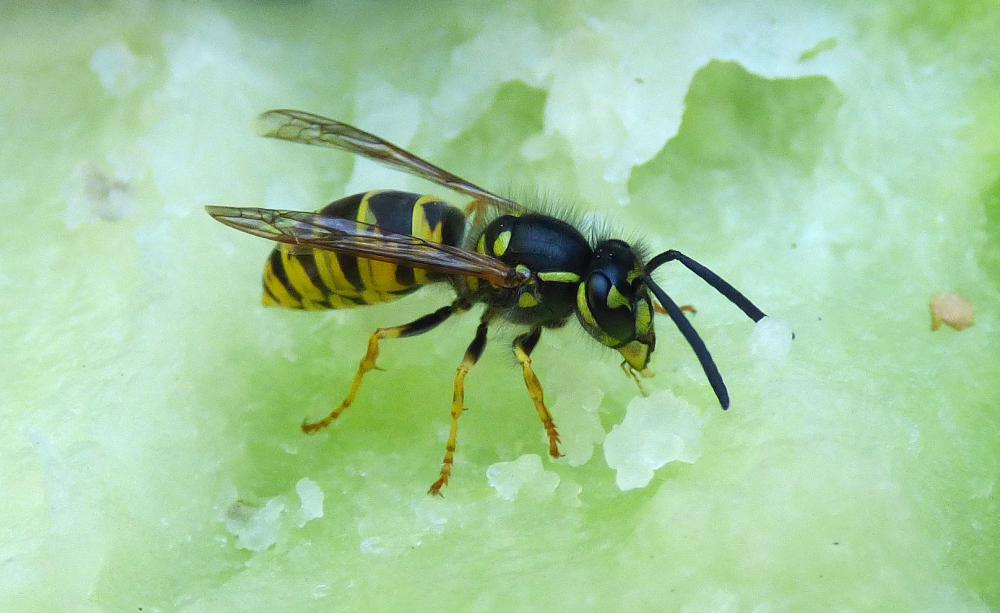
Spring clean-up does real damage to native wasps.
As wasp populations swing wildly between boom and bust years, scientists say climate volatility is behind Britain's disappearing stinging insects.
Every Summer, Britain reliably produces two things: warm weather complaints and wasp headlines. Last summer delivered both in force, with "plagues of wasps" reports across the press after a hot, dry spring favoured the insect colonies.
This summer, the wasps have simply not turned up. At the Sumner Lab in the Centre for Biodiversity and Environment Research (CBER), UCL, Professor Seirian Sumner reported that her students cannot find enough wasps for their own experiments – an odd problem for a wasp lab.
Workers
Pest controllers report a fall in nest callouts. The usual late-summer wasp panic hasn't materialised either, and its absence from the news agenda is itself a telling data point.
It's tempting to read this as one freak year following another.
But treated as a single event, rather than two isolated ones, the 2025 boom and the 2026 bust look like the same phenomenon: wasp populations swinging harder and less predictably as the climate they depend on becomes less stable.
Social wasp colonies begin with a single queen, who emerges from hibernation in spring, finds a nest site, and single-handedly raises the first batch of workers before the colony can grow.
That narrow founding window makes wasp populations unusually sensitive to short-term weather events and changes.
Boom-bust
A good early spring can produce a great colony season; a bad one can wipe out a large share of that year's queens before a single nest gets built.
It's a much steeper population bottleneck than most insects face, which is part of why wasp numbers swing so much harder between years.
Professor Seirian has described this as a "double-whammy" effect in poor years as cold, wet weather doesn't just hamper the queens directly - it also suppresses the flies, caterpillars and other prey they need to feed their first brood.
None of these makes boom-and-bust unusual in itself. A 2017 study analysed 39 years of wasp data from four English sites and found that spring weather alone explained most of the year-to-year swings, with a bumper year typically followed by a leaner one.
Boom-bust is simply how the population has always worked.
Whiplash
The problem is what is now feeding into that mechanism. A system built to respond sharply to spring conditions will respond just as sharply, and far less predictably, once spring itself stops following any settled pattern. This is what happened in 2025 and 2026.
Spring clean-up does real damage to native wasps.
Both years opened with near-identical warm, dry springs, the kind of start that should favour queens equally.
What came after diverged sharply: 2025 stayed warm through summer and produced a bumper year, while 2026 saw that same promising start interrupted by extreme heat spikes and sharp cold snaps.
Wasps are usually fairly heat-resilient. Colonies cool their brood by wing-fanning, nests are insulated, and cuticles contain waxy compounds that shift structure to limit water loss in heat.
But resilience has limits, and the whiplash between extremes rather than steady heat may be unsettling the delicate timing of the young colony in its first few vulnerable weeks.
Stress
Here's the problem: nobody can say with much confidence how badly this year's volatility has actually hit wasps, because comparatively little research effort has gone into finding out.
A 2024 study surveying wasp and bee researchers, found that media coverage of wasps skews far more negative than coverage of bees, with wasps' roles as pollinators and natural pest controllers largely overlooked. That imbalance runs deeper than press coverage.
Another study, which found wasps' pollination efficacy to be comparable to bees', also noted that public regard for wasps lags well behind other pollinators, and that this is mirrored in fewer published studies and fewer funding opportunities for wasp research specifically.
A broader review of bias in pollinator ecology reaches a similar conclusion: research effort clusters heavily around a small number of charismatic, commercially valuable species mostly honeybees and a handful of bumblebee species – while non-bee pollinators, wasps among them, remain comparatively under-studied.
Based on what the bee research has already found, heat stress hits bees adversely, even without killing them outright.
Threat
The clearest evidence comes from a trial holding bumblebee colonies at a sustained 35°C and found that the colonies couldn't hold their internal temperature down, and workers began abandoning the colony altogether.
The damage came not from the heat killing bees directly, but from the trade-off it forced between cooling the brood and continuing to forage.
If heat stress does this kind of damage to bees (the most-studied, most-protected insect group we have), it would be surprising if wasps, which share many of the same vulnerabilities as bees were simply immune. The more likely explanation is that we don't yet have the monitoring infrastructure to see it happening.
Climate volatility isn't the only pressure on spring queens.
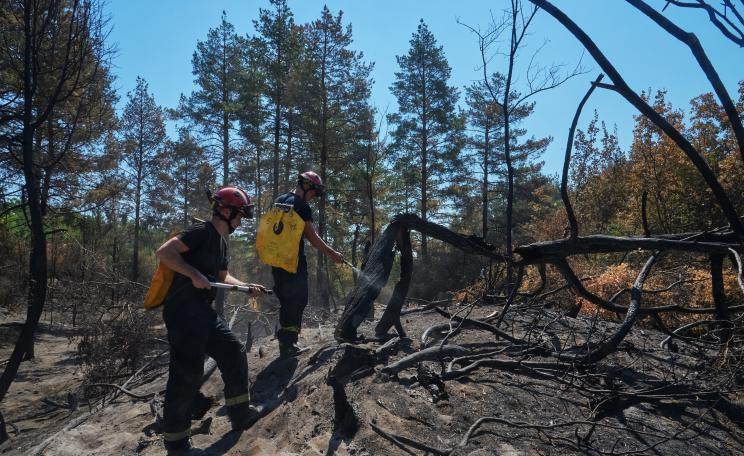
Efforts to control the invasive Asian hornet, which has been expanding across parts of Britain and poses a genuine threat to native pollinators, rely partly on spring cleaning – trapping queens in spring before they can found new colonies.
Pest
Those traps are not selective: they catch native wasp queens too, at exactly the point in the year when the whole population bottleneck already runs through a small number of individuals.
Simon Spratley, from Bounty Pest Control, said: “This spring clean-up is doing real damage to native wasps. While selective traps have been increasingly encouraged in recent years, plenty of local beekeepers still rely on older, traditional traps that catch and kill any queen that enters, native or not."
Nobody currently tracks how much this bycatch adds to losses already being driven by erratic weather, which leaves a genuine unresolved question about whether the trapping regime needs to be more targeted as climate pressure on native wasps intensifies.
There's a knock-on argument for taking any of this seriously, beyond wasps themselves. Wasps are effective, unpaid pest controllers, feeding meat and other insects, including flies, to their larvae throughout the summer.
Volatile
Pest controllers and some entomologists have anecdotally linked quiet wasp years to worse fly and midge problems, on the logic that one of the main things keeping fly populations in check has simply gone missing.
That connection hasn't been rigorously tested, but it's a plausible mechanism.
Sumner Lab at CBER, UCL is running a public wasp survey this summer – Ham or Jam Picnic Wasp Survey, asking people to observe what the wasps are after at their picnic and if they have observed differences in wasp populations across the years.
It's a low-cost way of building the kind of year-on-year dataset that currently doesn't exist for wasps at the scale it does for bees and given how erratic the last two summers have been, exactly the kind of data that would help answer whether 2026 is a one-off blip or the start of a more volatile pattern.
This Author
Femi Ezhuthupallickal Benny is a doctoral researcher studying wasp ecology at the Center for Biodiversity and Environment Research (CBER), University College London.