Short-term pursuit of profit has overwhelmed what are essentially ineffective legal provisions.
Historians of environmental law date its modern development back five decades.
By 2019, the UN Environment Programme found a total of 150 countries with environmental protection or the right to a healthy environment in their constitutions, 176 countries with environmental framework laws and 164 countries having cabinet-level bodies for environmental protection.
And yet still environmental degradation continues at shattering scale on our battered planet, with, as the Stockholm Resilience Centre tallies it, both genetic and functional biosphere integrity far beyond the safe operating limits.
NEW BOOK: GREEN THINKING: UNLEARNING OUTDATED IDEAS IN SCIENCE, ECONOMICS AND POLITICS
Strategy
Short-term pursuit of profit, usually by giant powerful companies and nations pushing to exploit and extract resources from states unable or unwilling to resist, has overwhelmed what are essentially ineffective legal provisions.
Those laws come from an anthropocentric world view, as the Parliamentary Office of Science and Technology briefing on my Nature’s Rights Bill notes. They start from the position that “nature is a resource to be protected primarily because of the benefits it provides to people”.
Unsurprisingly then, lawyers and campaigns have been looking for a different approach, and have found it in Rights of Nature, an ecocentric approach that draws heavily on many strands of indigenous thinking – from cultures that have a track record of not trashing the planet going back thousands, and sometimes tens of thousands, of years.
That’s a perspective that’s taking off. As a scholar writing in 2021 concluded, Rights of Nature “has gone from being a radical idea espoused only by a handful of marginalised actors to a legal strategy seriously considered in a wide variety of domestic and international policy arenas”.
That’s the foundation of my private members’ bill on Nature’s Rights in the House of Lords, which had its second reading last week. The Bill as drafted by Mumta Ito of Nature’s Rights.
Protecting
It is, as one Instagram commentator beautifully labelled it, a Green Magna Carta. It goes further than other global efforts – such as well-known implementations in the Treaty of Waitangi settlements in New Zealand and the constitution of Ecuador - drawing on experience working with the UN Harmony With Nature programme and the European Economic and Social Committee, Towards an EU Fundamental Charter for the Rights of Nature.
Short-term pursuit of profit has overwhelmed what are essentially ineffective legal provisions.
It puts the rights of nature above all other rights, acknowledging that human and economic rights can only be a subset of them, for as I said in the debate, we must acknowledge the scientific reality “that our life is dependent on all other life”.
In the debate I received strong support from Baroness Smith of Llanfaes (who acknowledged the similarities with the Wales Wellbeing of Future Generations Act), and Lord Lebedev.
I also received challenge from particularly Lord Frost and former Tory Environment Secretary Baroness Coffey.
Both those speakers, however, acknowledged reasons for concern about nature. In the case of the former, that “we should not be casual, therefore, or casually mistreating of our natural environment” and the latter that the Environment Act is “still only an element along the way” on protecting nature on these depleted islands.
Systems
Lord Frost and Labour IVF pioneer Lord Winston both questioned the ability of law to balance the differing interests of different parts of nature - the latter pointing to bacteria that might harm us, and the former to “the trade-offs and conflicts that arise” within nature and, as he saw it, between humans and economic interests and nature.
In the limited space of a wrap-up speech at a second reading, I didn’t have space to engage fully with these questions – academics and lawyers have spent lifetimes debunking them – although I did point out to Lord Winston that we are of course holobionts, and dependent for our existence and flourishing on tens of thousands of species that make up our microbiome.
I could agree with Lord Frost on one thing, however: that we were debating profound philosophical questions, and that’s something within the House, and more broadly in our politics, we need to do a lot more of.
As I say in my newly published book Green Thinking, we need to examine, and unlearn, the reductionist, mechanistic paradigms that since the 17th century have dominated our thinking.
The Bill does not, however, as Lord Frost suggested, introduce “confessionalism” by the back door, but rather is grounded in 21st century Earth systems science, the understanding that led Oxford geographer Jamie Lorimer to call for a probiotic approach to securing our future.
Fast-growing
The government response, from Baroness Hayman of Ullock, predictable defended the current approaches, while acknowledging the “sincerity, intellectual rigour and energy” of the Bill effort.
But encouragingly, this government had a more positive approach than the previous Tory government regarding international attempts to establish these rights, the minister saying, as one report highlighted: “I would like to clarify that the UK is open in principle to exploring a new instrument to enshrine the right.”
What’s next? The Bill passed its second reading, and with several members of the House indicating their intention to post amendments, is likely to have a committee stage at a timing to be determined by the government. That’s subject, as all parliamentary events are now, to considerable uncertainty.
In the meantime, I’m seeing fast-growing support from campaigners – on social media and elsewhere, on national and local scales (such as with fast-growing rights of rivers campaigns) – and I welcome the important job of education and expansion of the concept of nature’s rights that they are engaging in.
This Author
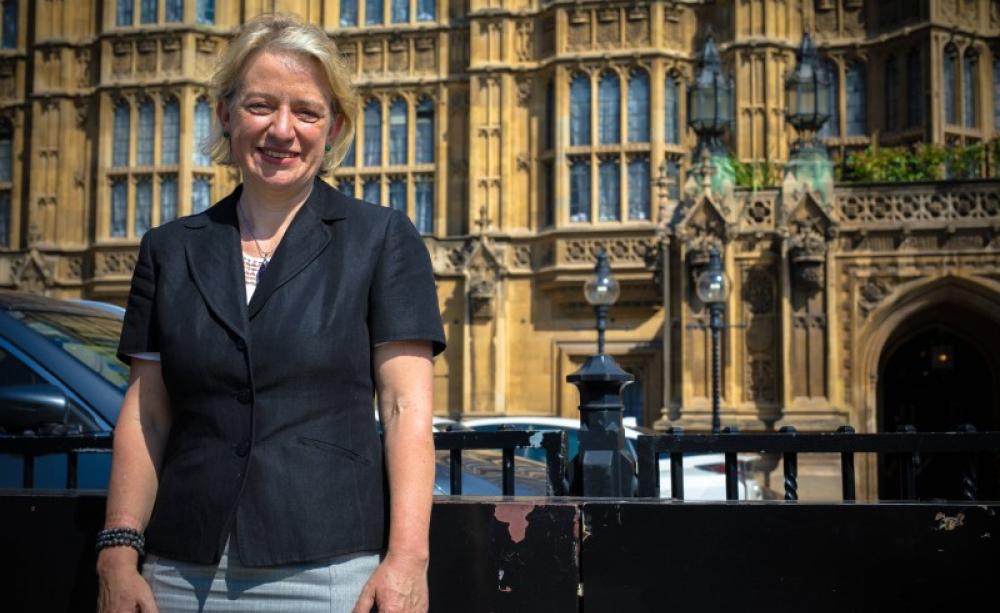
Baroness Natalie Bennet is a member of the Green party and a member of the House of Lords. Her new book, Green Thinking: Unlearning Outdated Ideas in Science, Economics and Politics, is available now.