Accelerated deployment of solar, wind, batteries, and electric vehicles are pushing emissions down in dozens of countries.
Global carbon emissions from fossil fuels are projected to decrease by 0.4 per cent in 2026 – driven by expansion of solar and wind power and the Iran conflict – according to new research by the Global Carbon Project.
The 2026 Global Carbon Budget projects 38.2 billion tonnes of fossil carbon dioxide emissions this year.
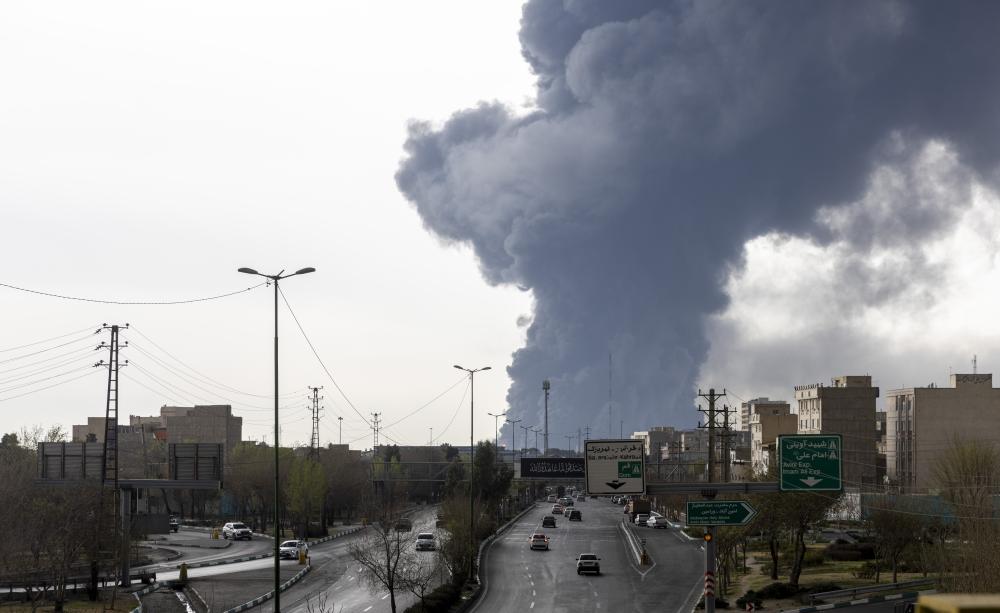
Emissions from oil are projected to decrease by 1.9 per cent – likely a short-term response to the energy shock triggered by the Iran conflict.
Accumulating
While global energy demand continues to rise, two thirds of the increase is being met by increased solar and wind power and electric vehicles.
However, the report finds that clean energy growth is not yet fast enough for a durable decline in global fossil carbon dioxide emissions.
With emissions from land-use change (such as deforestation) projected to increase slightly this year, total carbon dioxide emissions are projected to be 43.3 billion tonnes in 2026 – up from 42.8 billion tonnes last year.
The remaining carbon budget (the amount of carbon dioxide that can be emitted before warming reaches 1.5°C above pre-industrial levels) is now 150 billion tonnes – equivalent to less than four years of emissions at the current rate.
With carbon dioxide still rapidly accumulating in the atmosphere, the dangerous impacts of climate change continue to increase.
Shocks
The report also assesses natural “sinks” (absorption of carbon dioxide by land and ocean). It finds that the land sink returned to former levels after a severe weakening during the 2023-24 El Niño weather pattern.
However, the powerful 2026 El Niño is expected to have a significant impact in the coming year.
The research team included the University of Exeter, the University of East Anglia (UEA), CICERO Center for International Climate Research, Ludwig-Maximilian-University Munich (LMU), Alfred-Wegener-Institut and more than 90 other institutions around the world.
Professor Pierre Friedlingstein is the director of the Global Carbon Budget Office at the University of Exeter’s and led the study.
He said: "A decline in fossil carbon dioxide emissions is encouraging, but a reduction driven partly by geopolitical shocks is not a sustainable climate solution.
Deployment
“The long-term answer remains the rapid deployment of clean energy technologies. While renewables and electric vehicles are increasingly offsetting growth in energy demand, further acceleration is needed if global emissions are to peak and enter a sustained decline."
Accelerated deployment of solar, wind, batteries, and electric vehicles are pushing emissions down in dozens of countries.
Professor Corinne Le Quéré, Royal Society Research Professor at UEA’s School of Environmental Sciences, said: “Clean technologies are making a real difference in reducing global emissions.
Solar and wind power and electric vehicles are expanding rapidly, led by China. Countries on every continent are decreasing their emissions while growing their economies. A further acceleration could turn the tide on global emissions within a few years.”
Glen Peters, Research Professor at the CICERO Center for International Climate Research, said: “A drop in emissions in one year is not a peak unless it is driven by structural change.
"Accelerated deployment of solar, wind, batteries, and electric vehicles are pushing emissions down in dozens of countries, and slowing emissions growth in many more, but the changes are not sufficient to lock in a peak in global emissions.”
Gains
Professor Julia Pongratz, at LMU’s Department of Geography, said: “Alongside reducing emissions, we need to scale up carbon dioxide removal to reach greenhouse gas neutrality.
"Afforestation and reforestation already remove substantial amounts of carbon dioxide, but these gains are still more than offset by emissions from deforestation, and novel carbon removal remains very limited. We need to act on all these fronts now.”
The Global Carbon Budget report, produced by an international team of more than 140 scientists, provides an annual, peer-reviewed update, building on established methodologies in a fully transparent manner.
The 2026 edition was published in the journal Earth System Science Data on Tuesday, 10 November 2026 as a pre-print, and later as a peer-reviewed paper.
This Author
Brendan Montague is an editor of The Ecologist online. This article is based on a press release from Exeter University.