While the government is cutting vital public expenditure across the board there's one industry for which no costs are too great, writes Martin Forwood. The price of an 'evaporator' at the Sellafield nuclear complex is escalating towards £1 billion, while billions more of taxpayer finance are being lined up to finance cooling systems, power lines and transport links for the adjacent Moorside new-build nuclear power plant.
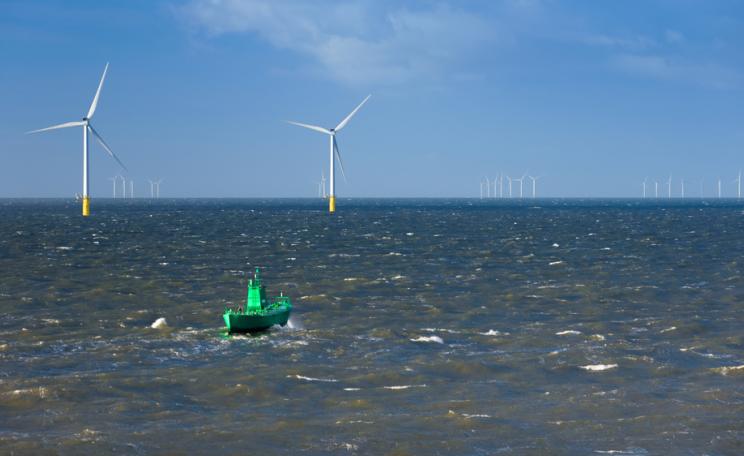
Marine ecologists have shown how noise pollution is changing the behaviour of marine animals - and how its elimination will significantly help build their resilience. LAURA BRIGGS reports
The US is a party to the International Covenant on Civil and Political Rights and the UN Declaration on the Rights of Indigenous Peoples, write Colin Samson & Øyvind Ravna. Both require free, prior and informed consent for any intrusions on indigenous lands and stipulate that indigenous peoples shall own and control their traditional lands. The US is violating both at Standing Rock.
Nuclear giant EDF could be heading towards bankruptcy, writes Paul Brown, as it faces a perfect storm of under-estimated costs for decommissioning, waste disposal and Hinkley C. Meanwhile income from power sales is lagging behind costs, and 17 of its reactors are off-line for safety tests. Yet French and UK governments are turning a blind eye to the looming financial crisis.
The world's poorest and most vulnerable countries are doing their bit to promote the expansion of renewable energy. The least we can do in the developed world is to ensure the money in our bank account helps rather than hinders their efforts, writes JOE WARE
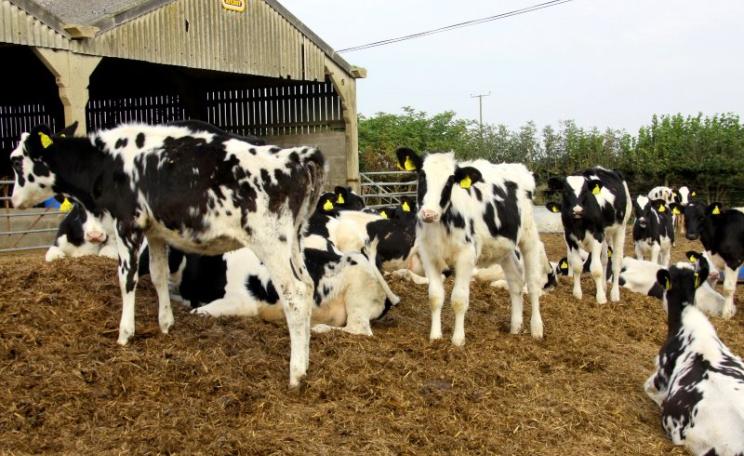
Al available science indicates that badgers have little if anything to do with bovine TB in cattle, writes Lesley Docksey. This is reflected in Wales's consultation on its 'refreshed TB Eradication Programme'. We must hope that Northern Ireland's bTB Eradication Strategy will be equally science based - and ready to campaign hard if it relies on cruel, ineffective and expensive badger culls.
It's now clear what place government ministers and senior officials want for the UK in a post-Brexit world, writes Mark Curtis - and it's not pretty! A new era of corporate 'free trade' colonialism looms, spearheaded by aid spending, with ramped-up arms exports to the world's most corrupt and repressive regimes, all backed up by military force to project the Britain's global financial interests.
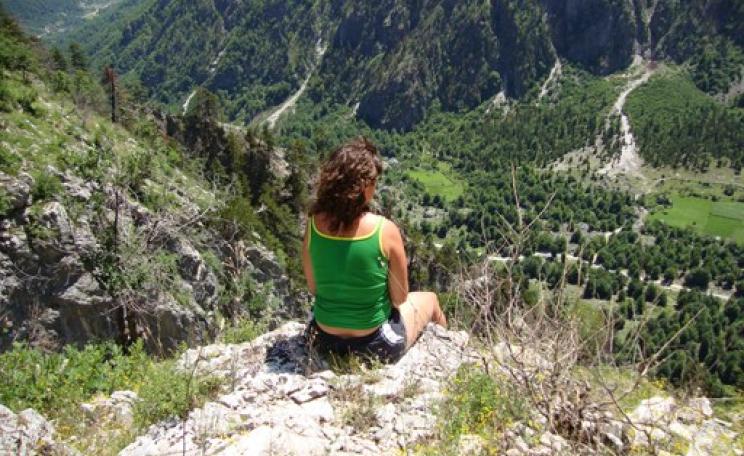
The Valbona Valley in northern Albania faces destruction from the planned works, despite being within the protected area of the Valbona National Park. LAURA BRIGGS reports
Hundreds of square kilometres of Iraq are eclipsed by dense clouds of toxic smoke from fires at oil facilities and a sulphur factory blown up by 'Islamic State' terrorists, writes Doug Weir. With the fires left to burn for months on end, entire towns are suffering a public health catastrophe. But the Iraqi government is slow to act, or even collect vital health and environmental data.
Australian Greens' Leader Richard Di Natale has called for the prospect of a Trump Presidency and a post-Brexit Britain to be the chance to break old alliances and forge new deals to save the planet. MAXINE NEWLANDS reports
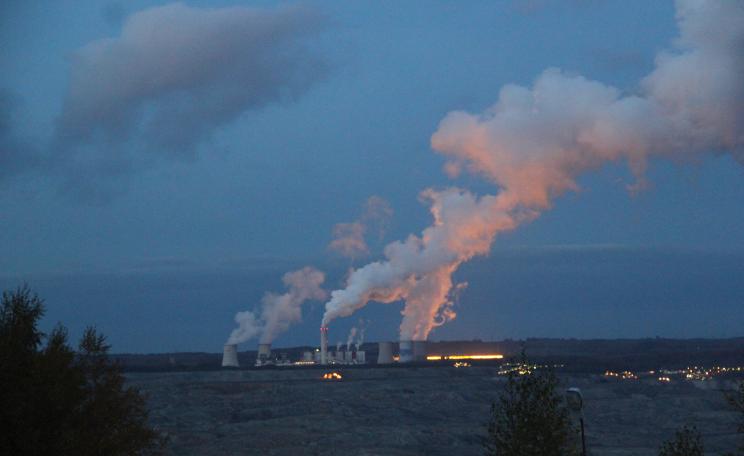
The Turow open-pit lignite mine is drying up water sources on both sides of the Polish-Czech border. In light of plans to expand mining at Turow, Czechs are now rebelling against putting up with damages from a foreign mine they get no benefits from CLAUDIA CIOBANU reports
Malawi is a country on the front line of climate change. Unlike nations ravaged by a typhoon or rich western cities swamped with floodwater, the kind of impacts Malawians face barely raise a flicker of interest in the media. Compared to a hurricane, a few degrees of temperature rise and shifting rainfall patterns sound mild, but in reality they have the potential to be far more devastating writes JOE WARE
A study of GMO cotton varieties shows they disrupt an important beneficial soil fungus, writes Eva Sirinathsinghji, apparently due to the Bt insecticide they are engineered to express. Disruption caused by the transgenic cotton to mycorrhizal fungi, and the wider soil ecosystem, may underlie the low yields and poor pest resistance now endemic among Bt GM crops.
The COP22 climate conference in Marrakech was given an impossible mandate: to make the Paris Agreement happen, write Alexander Pfeiffer, Elizabeth Dirth & Alex Clark. But it failed. The task now falls to civil society - and to succeed we must move beyond the alienating discourse of science and diplomacy, and show marginalised communities that climate solutions can also deliver for them.
Both Trump and Brexit can be explained by the failure of mainstream political elites to address the pain inflicted on ordinary citizens in the neoliberal era, write Helena Norberg-Hodge & Rupert Read. In the US and the UK, working class voters rightly rejected the corporate globalisation that has created so much poverty and insecurity. But the real solutions lie not in hatred, but relocalisation.
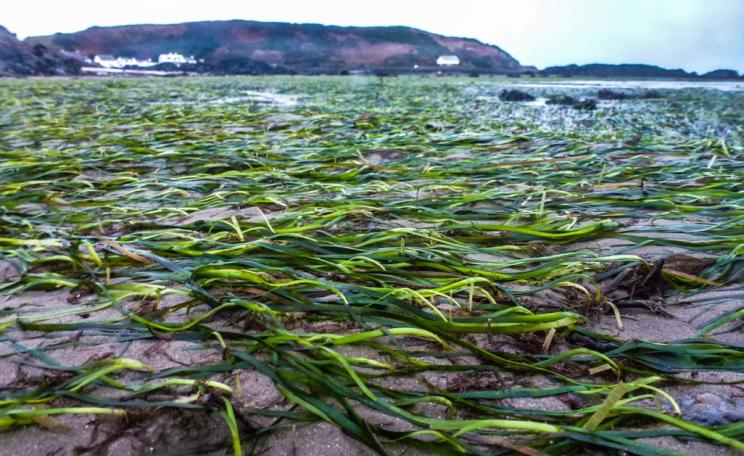
A unified scientific approach has been called for to help protect one of the most threatened ecosystems on earth. LAURA BRIGGS learns more about the unique ecosystem known as seagrass beds
This World Fisheries Day, a new report shows how the 'rights-based approach' to fisheries governance is in fact a mechanism for depriving indigenous and subsistence fisherfolk of their traditional waters, write Astrid Alexandersen, Sif Juhl & Jonathan Munk Nielsen, and transferring them to corporations and economic elites. It must be replaced with a 'human rights approach'.
Limiting climate change is just the start of what we need to do to forestall a runaway cascade of species extinctions, write Bill Laurance & Paul Ehrlich. We must also reverse the destruction and fragmentation of key wildlife habitats, constrain our over-consumption of natural resources, stabilise human numbers - and elect leaders determined to prioritise these issues.
A government-led shrimp farming project meant to tackle extreme poverty in northern Sabah, Malaysian, won local support in 2010 by promising job opportunities for impoverished indigenous communities. Six years on, mangrove forests local people depend on for food, materials and income are closed off and being cleared - but the jobs have yet to materialise.
The long term problems of what to do with nuclear waste remain entirely unsolved, writes Andrew Blowers. Yet governments and the nuclear industry continue to peddle their untenable 'bury and forget' policy of deep geological disposal, which only unloads the toxic legacy of modern day nuclear power and weapons onto uncountable future generations.
With European climate policy in post-Brexit lockdown, and US delegates gripped by uncertainty (even for their own jobs) following Trump's election, a new global climate leader is emerging, writes Natalie Bennett. China is stepping up as the country with the finance, technology and industrial might to take forward the Paris Agreement - and for its companies to reap the benefits.
President Obama faced reality last Friday when he conceded that the TPP would not be ratified by this Congress, write Kevin Zeese & Margaret Flowers. It was a massive victory for a people power: the culmination of a years-long campaign to expose the corporate depravity at TPP's heart, and turn it into political poison. Trump's victory was just the last straw that broke TPP's back.
This summer families of atom bomb test veterans who have died of cancer took the UK government to the High Court for its failure to compensate them, writes Chris Busby. Also on trial was the 'official' radiation risk model, which understates the true health hazards of internal exposures by a factor of 1,000. But 17 weeks after the case, litigants and veterans are still awaiting judgment.
Trump has pledged to ditch the Paris Agreement, scrap Obama's clean power plan, get coal miners back to work, and 'make America great again' on the back of a huge expansion of fossil fuel production, writes Mark Barteau. But he will run into serious difficulties, not least states going their own renewable ways, cheap natural gas, and weak international demand for coal.