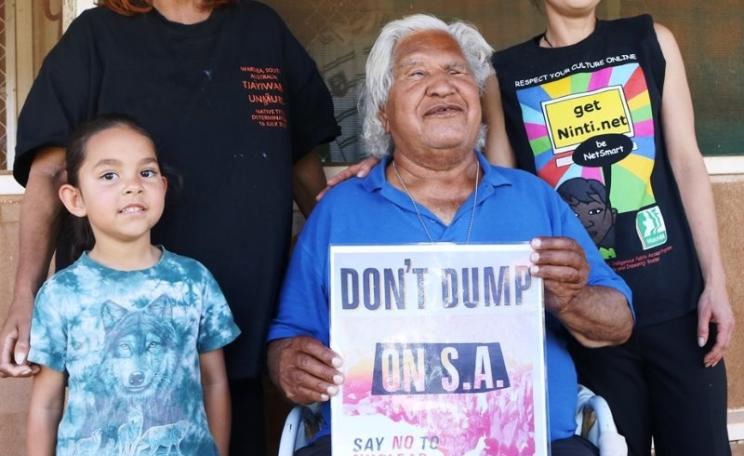
An officially convened 350-strong Citizens' Jury has decisively rejected South Australia's plans to import over half a million tonnes of high and intermediate level nuclear waste for long term storage, writes Jim Green. This has dealt a powerful blow against the project from which it is unlikely to ever recover, and represents a major victory for campaigners, indigenous Australians and economic sanity.
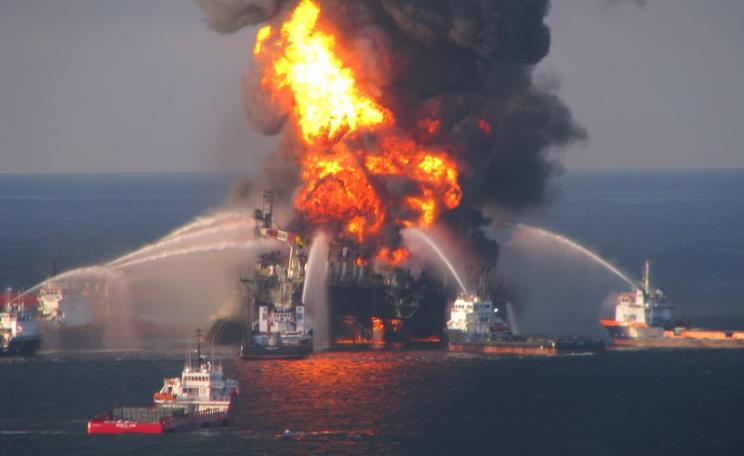
We must coldly examine how inherently dangerous systems work and how they fail, writes Earl Boebert, and then apply those insights to reducing the risk of failure through systems design, regulation, and education. That examination must apply the most modern and effective analytic tools. To do otherwise is to almost guarantee a repeat catastrophe.
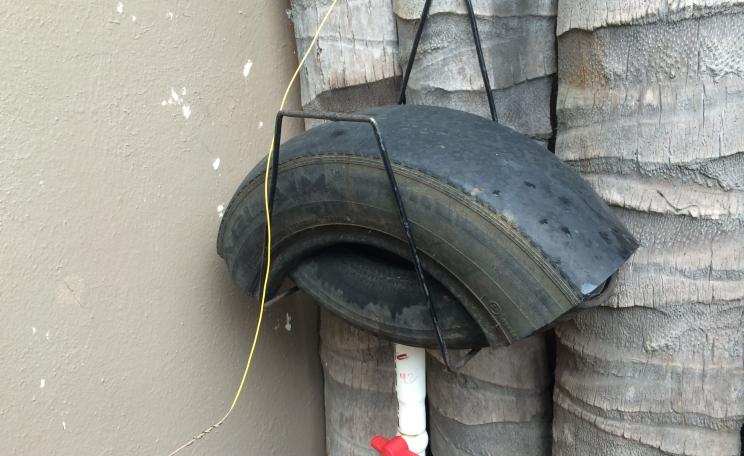
The Mexican Government spends millions trying to stop the spread of mosquito-borne viruses like dengue, chikungunya and - more recently - zika. Could the solution be as simple as a kind of mosquito ‘hatchery' made of old tyres to create an inviting breeding ground from which eggs and larvae can be destroyed? FOREST RAY reports.
Forty years ago workers at Lucas Aerospace created a detailed plan to transition out of the arms industry and into green, sustainable products and technologies, writes David King. it never happened, yet the Lucas Plan provides a blueprint for similar initiatives today to build a deep-rooted, broad-based movement for social, economic and ecological progress.
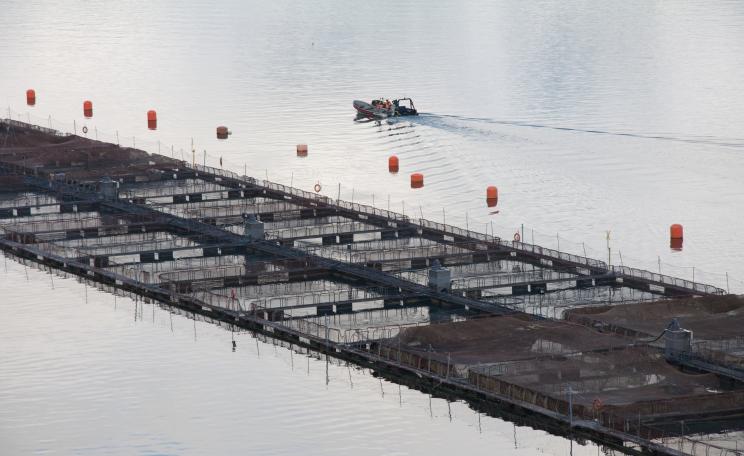
There are currently over 3,000 applications to establish new salmon farms in the Patagonian regions of Magallanes and Aysen waiting for approval. Have we leaned nothing from the damage to the environment caused by Chile's salmon farms asks Florencia Ortúzar
Last week the UN General Assembly's Disarmament and Security Committee voted for negotiations to begin next year on a new international treaty to prohibit nuclear weapons, writes Rebecca Johnson, bypassing the stalled Non Proliferation Treaty. One immediate consequence is to make the UK's plans to replace its Trident nuclear missile system 'completely untenable'.
With the UK's Digital Economy Bill set to be finalised today, new 5G microwave spectra are about to be released across the planet without adequate safety testing, writes Lynne Wycherley. Global neglect of the Precautionary Principle is opening the way to corporate profit but placing humans and ecosystems at risk, and delaying a paradigm shift towards safer connectivity.
The NHS is buying drugs from pharmaceutical companies in India whose dirty production methods are fuelling the rise of superbugs, write Andrew Wasley & Madlen Davies. There are no checks or regulations in place to stop this happening - even though the rapid growth in antibiotic resistant bacteria in India is spreading across the world, including to the UK and NHS hospitals.
The UK government today announced that Heathrow, already the UK's busiest airport, is its 'preferred option' for a new runway in southeast England, writes Simon Evans. It's just too bad about the climate: the airport expansion implies that aviation emissions alone could take up half to two thirds of the UK's 'carbon budget' for the country to comply with its 1.5C Paris Agreement target.
The UK government's insistence of pursuing fracking is based on a flawed and utterly misinformed vision of our future, write Alex Russell and Peter Strachan. Rather than delivering the prosperity they promise, large scale fracking would cause massive pollution of air and water, undermine vital export industries, and leave us with an irretrievably damaged economy and natural environment.
Today, the Chief of the Paiter Surui indigenous people in the state of Rondônia, Brazil has issued the following plea for help to stop illegal logging and mining on their lands. The letter is unedited.
Regulatory failures are allowing Danish pigs infected with lethal antibiotic-resistant bacteria into British farms, writes Andrew Wasley, with contaminated pork found in UK supermarkets, and three human infections recorded. The official response? Deny there's a problem, take no action, and hope for the best. Six people may have died from the bug in Denmark, but the UK is safe, surely?
There are 48 mapped struggles against the fossil fuel industry in India And whilst families run from justice for trying to protect their lands, it's the coal mining companies and police chiefs that should be brought to justice writes NICK MEYNEN
This week in the Rwandan capital, Kigali, nations are meeting to hammer out a plan to phase out Hydrofluorocarbons (HFCs) which are guilty of accelerating climate change. At the heart of the talks will be the date at which the world will end their use. JOE WARE reports
With the International Monsanto Tribunal beginning this week (14-16 October) in The Hague, MICK GRANT reports from Vietnam with this special investigation for The Ecologist five decades after the company's lethal herbicide Agent Orange first devastated the country - and discovers the agribusiness giant is sneaking its way back into Vietnam with modern herbicides and 'Roundup-Ready' GMO crops.
Violent expansion of the agricultural frontier in Nicaragua has produced devastating consequences for Indigenous Peoples and is fostering destructive long-term climate change impacts. COURTNEY PARKER reports
'Fast breeder' reactors are promoted by nuclear enthusiasts as the clean, green energy technology of the future, writes Jim Green. But all the evidence tells us they are a catastrophic failure: complex, expensive, unreliable and accident-prone. Is Japan's decision to abandon its Monju reactor the latest nail in the coffin of a dead technology? Or the final stake through its rotten heart?
Off-grid renewable energy is key to achieving the global goal of 100% electricity access by 2030, writes Adnan Z. Amin, and to achieving the emissions reductions enshrined in the Paris Agreement. Thankfully, a confluence of factors - including rapid cost declines and impressive technology innovations - are making this goal more achievable than ever, and investment in the sector is taking off.
Campaigners fighting a development for an 18-hole golf course on a pristine part of the Moray Firth are planning to launch a legal challenge against the plans with £10,000 they have sourced through crowdfunding. LAURA BRIGGS reports
A new report finds that 28 nuclear reactors, 18 of them EDF plants in France and one at Sizewell in the UK, are at risk of failure 'including core meltdown' due to flaws in safety-critical components in reactor vessels and steam generators, writes Oliver Tickell. The news comes as EDF credit is downgraded due to a growing cash flow crisis and its decision to press on with Hinkley C.
With its choice of Hinkley Point C - a £100 billion nuclear boondoggle - its enthusiastic support for expensive and environmentally harmful fracking, and its relentless attack on renewable energy, the UK government's energy policy is both morally and economically bankrupt, write Peter Strachan & Alex Russell. It must urgently reconsider this folly and embrace the renewable energy transition.
The Trade in Services Agreement is a multilateral deal like TPP, TTIP and CETA, writes Zachary Davies Boren. But while the 50-nation negotiations are even more secretive, its impacts could be even greater: undermining national sovereignty; allowing only corporate regulation deemed 'necessary' by a panel of WTO lawyers; and allowing no rollback on trade liberalisation.
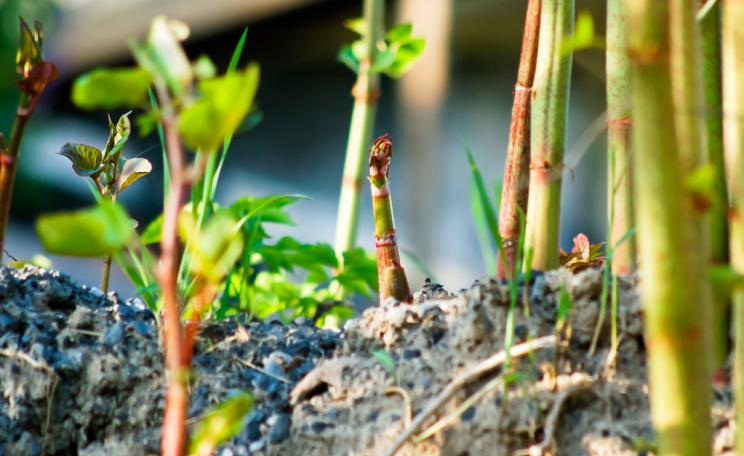
As leading figures from the world of law, ecology and technology prepare to come together and discuss how best to deal with non-native invasive plants in the UK, more research is still needed on how best to manage these species taking over the countryside writes LAURA BRIGGS
While the confrontation at Standing Rock has galvanized Indians and non-native supporters from across the continent, writes Stanley L. Cohen, it's but a symptom of a much deeper crises facing several million Indians holding on to endangered traditions and cultures that predate 'our' arrival by several thousand years. We may call Indian people sovereign. But it's all a grand, perverse lie.