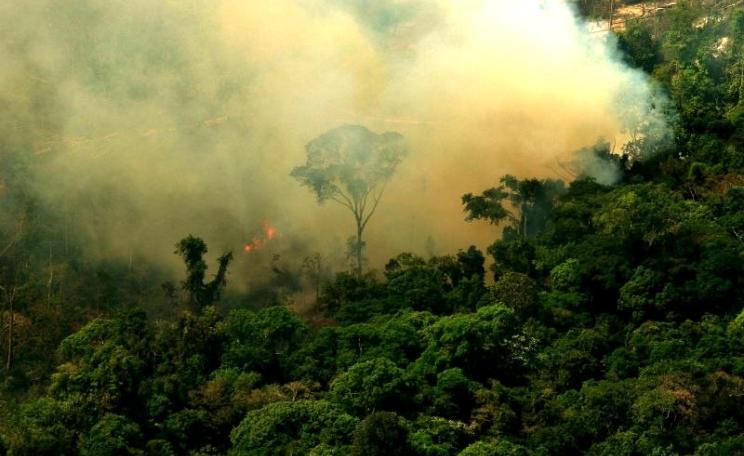
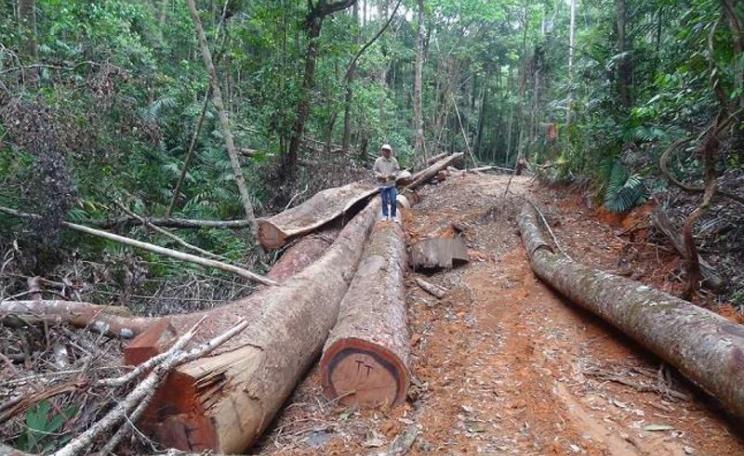
Deep in the Brazilian Amazon indigenous people have been protecting their reserve from illegal loggers, writes Luana Lila. The loggers took their revenge by kindling one of the Amazon's biggest fires ever, destroying almost 200,000 hectares of rainforest.
It was all going so well for Chevron - a New York court had ruled that a $9.5 billion judgment against it set by Ecuador's supreme court for massive pollution deep in the Amazon was corrupt and fraudulent. But then its star witness broke ranks and admitted, in another court, that he had lied, and the only bribes were coming from Chevron. Will Ecuador's pollution victims finally get justice?
Climate protestors claimed a big win after a successful 48-hour vigil outside the Daily Mail's London offices with Green Party Leader Natalie Bennett that won wide support from the Mail's own journalists. More events will follow in the run up to COP21.
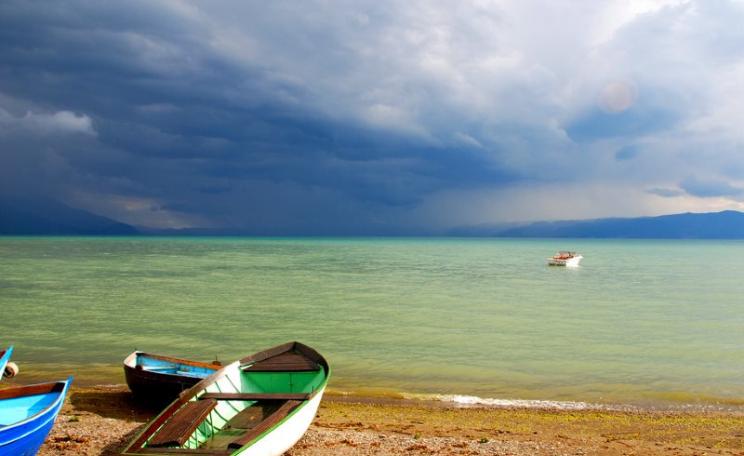
UNESCO's Lake Ohrid-Prespa Biosphere Reserve at Mount Galicica, Macedonia, is at risk from a raft of aggressive developments, write Elena Nikolovska & Daniel Scarry: tourism complexes, a new expressway and ski resort all threaten its tranquility and stunning diversity of wildlife, backed by loans from the EU's taxpayer-funded Bank, the EBRD.
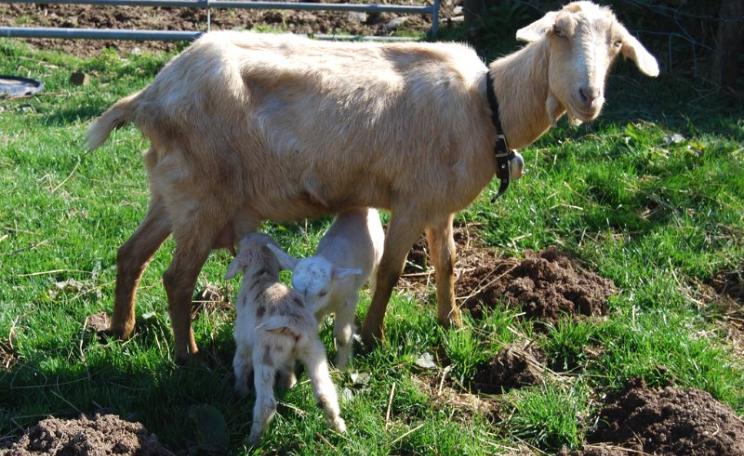
Mother goats fed on 'Roundup-ready' GMO soy produce milk that's much lower in fat, protein and antibodies than non-GMO controls, writes Jonathan Latham, and contains traces of GE DNA. The milk also stunts their kids' growth.
The high oil prices that turned North Dakota into a boom state have turned, writes Joshua Frank. Now high-cost oil and gas are in the doldrums everywhere, production is falling - and even if prices do pick up one day, risk aversion and the relentless advance of renewables will leave lakes of oil and caverns of gas underground where they belong. Folks, the oil party really is over!
Just as the UK's entire renewable energy industry is up in arms against fierce cuts to support for the sector, energy Minister Andrea Leadsom suggested to MPs that the measures were supported by solar firms in her constituency. They beg to differ.
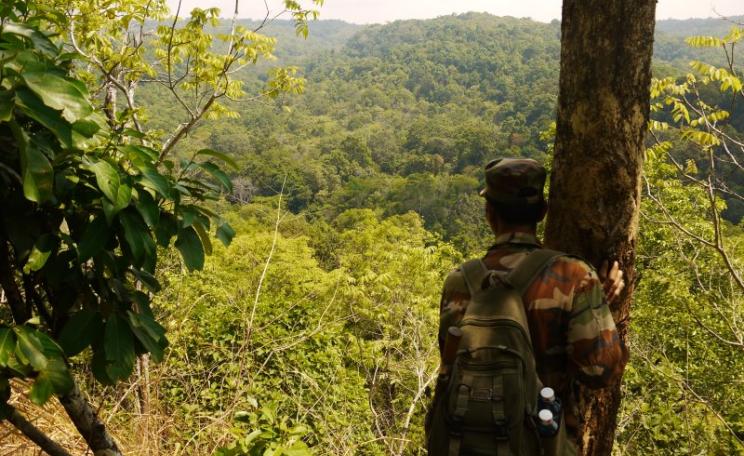
An initiative to re-home abused, over-worked domestic elephants is supporting the conservation of one of Cambodia's last and most species-rich rainforests, writes William Laurance. Growing ecotourism in the area, attracted by the elephants, is engaging indigenous communities in forest protection and helping to stave off the pressure from loggers and plantations.
Economist Nicholas Stern warns that the stakes have never been higher for radical action to be agreed at the Paris summit, writes Kieran Cooke: while we have the capacity to do all that's needed, it's far from clear that we will actually will.
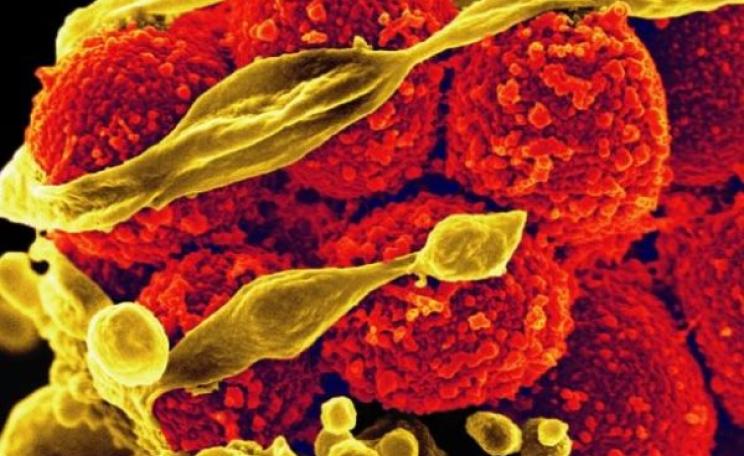
Antibiotics have saved countless millions of lives since the 1930s, but their power is failing due to their massive use in factory farming, horticulture, aquaculture and industry, says a new report from the All Party Parliamentary Group on Antibiotics. We must stop all inessential uses of antibiotics, or face a future where we risk death from minor injuries and routine surgery.
Forests in Laos are disappearing at a ferocious rate under the impact of rampant illegal logging which accounts for 90% or more of the industry, with lucrative export markets in Vietnam and China, writes Chris Lang.
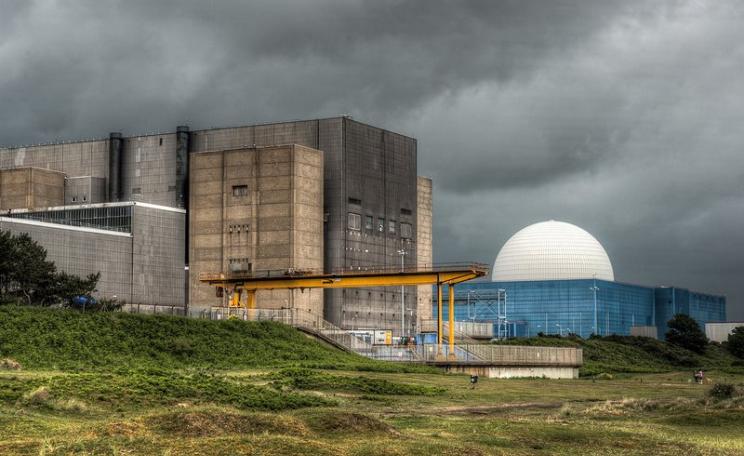
China's nuclear investment into the UK raises more questions than it answers, writes Oliver Tickell. The £6bn committed is nowhere near enough to see Hinkley C to completion, and EDF has few options for raising the rest elsewhere. The only answer is more Chinese money, and it won't come cheap - not for Britain, nor indeed for France's vulnerable nuclear corporations.
Austrian timber company Schweighofer is linked to large-scale illegal logging which accounts for half of Romania's timber production. An EIA investigation finds that almost all the illegal timber ends up in the company's mills.
It's all change in Canada with the dramatic ousting of anti-environment Conservative Prime Minister Stephen Harper, writes Carol Linnitt. Under the new Liberal PM Justin Trudeau things are looking a lot better for climate, science, environment, transparency and First Nations. But Canada is still set to go into the Paris climate talks with the same weak level of commitment.
As a first 'official' cancer case is admitted at Fukushima, a study of over 400,000 young people in the prefecture identifies a 30-fold excess of thyroid cancer, writes Oliver Tickell. With the high rate and early onset of the disease the scientists fear many more cases to come - and that WHO underestimated the scale of radiation release.
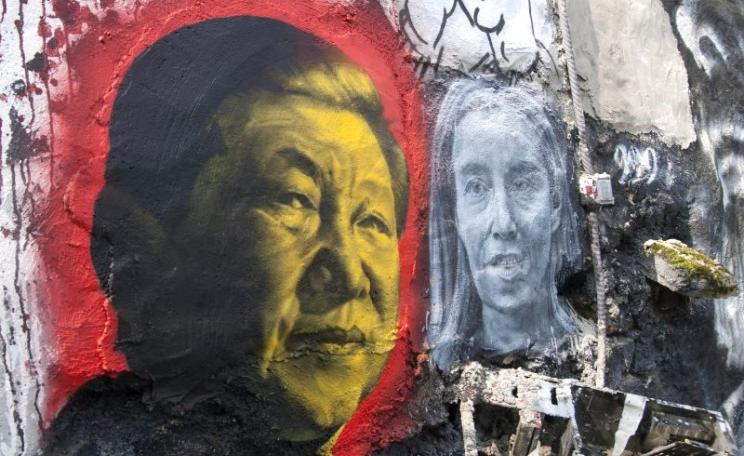
The UK is embarking on a reckless endeavour in its attempted nuclear union with China, write David Lowry & Oliver Tickell. China's investments will come at a high price, one that transcends mere money and the undoubted security risk inherent in its control of key elements of our energy infrastructure. At risk is the UK's very future as a sovereign, independent nation.
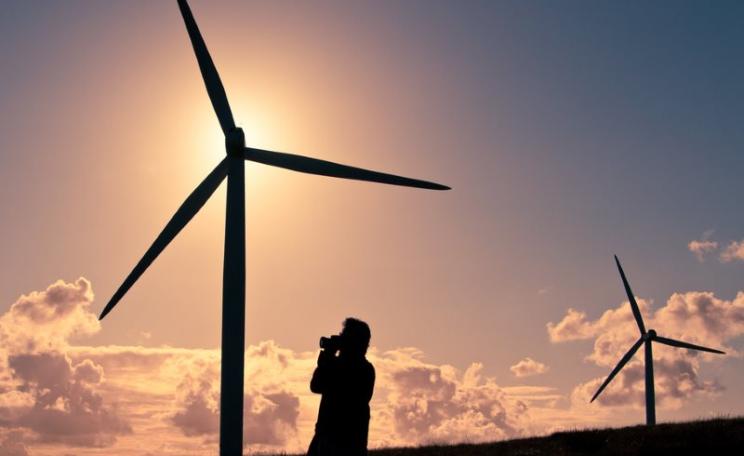
The effect of wind and solar generation in the UK is to push down wholesale power prices, writes Oliver Tickell, taking over £1.5 billion off our bills in 2014 - that's 58% of the subsidies paid to renewable generators. Keep it up and the benefit will rise to over 100% of cost.
China's smog is an increasing cause of public discontent, writes Oliver Wild - and no wonder! New research shows that the country's air pollution is killing over a million people every year. Thanks to China's geography the problem is hard to solve, but the rapid rise of renewables and the slow demise of coal do offer the promise of cleaner, healthier future.
Evidence stretching back 40,000 years shows that global warming will increase drying in a region of East Africa where drought already causes humanitarian crises, writes Alex Kirby - dashing earlier hopes of increased rainfall.
It may not be on tonight's telly, but there's only one story on the lips of SNP members at their party's conference in Aberdeen, writes Jen Stout - the grassroots revolt against the feeble land reform bill advanced by the party leadership, rejected outright by members in a decisive vote. Now the SNP must come up with a bill that's as 'radical' as Nicola Sturgeon's speeches.
Large-scale oil extraction in the Arctic is irreconcilable with the 2C global warming limit, write Aleksander Melli, Pål W. Lorentzen, Mari Seilskjær, Hans Morten Haugen & Truls Gulowsen. And that puts Norway's dash to develop Arctic oil into direct conflict with its Constitution, which requires the state to try and secure climate stability for its citizens, present and future. A lawsuit is imminent.
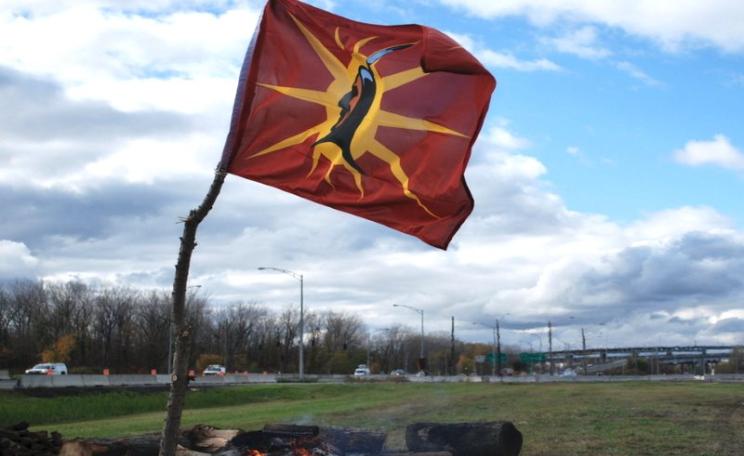
Members of the Mohawk Warrior Society have intervened to stop the dumping of raw sewage in Canada's St Lawrence river, lighting a large bonfire at a key railway junction to warn Montreal's Mayor off his plan.
The UK government is punishing renewable energy for its success in generating 25% of the country's electricity, writes Stuart Parkinson. But there's no austerity when it comes to the bloated military-nuclear industrial sector, no matter how egregious its failures or extreme its cost overruns. Our future prosperity is being sacrificed - and its costing taxpayers billions.
Wild flower margins around arable fields can funnel deadly pesticides into the bees, wild pollinators and other insects they are intended to benefit, writes Oliver Tickell. Neonic pesticides are often far more concentrated in the wild flowers than in the crop itself.