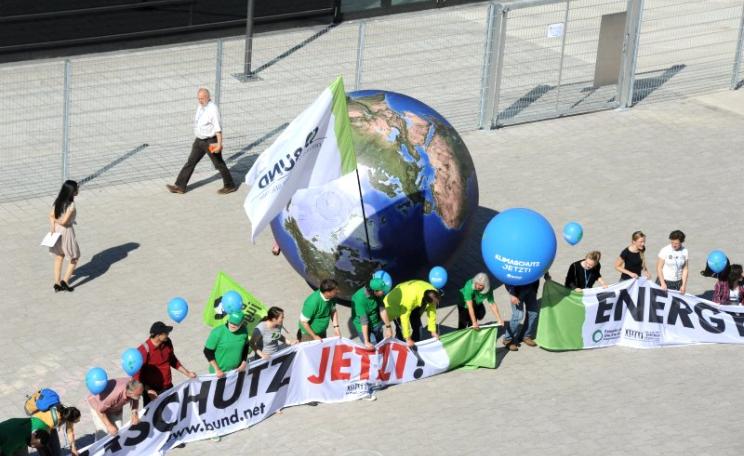
'Unbearably tardy' climate negotiations have ended in failure, writes Henner Weithöner. Without even a draft text at this late stage, the chances of a meaningful deal emerging from the crucial UN summit in Paris are looking paper-thin.
The well-founded idea that nuclear radiation is dangerous even at the lowest levels is under attack, writes Karl Grossman. Three determined nuclear enthusiasts have filed petitions to the NRC calling on it to apply the doctrine of 'radiation hormesis' - that low levels of radiation actually stimulate the immune system and promote better health. Disagree? You'd better act fast.
For anyone who believes in the ineffable wisdom of 'free' markets, the current sinkaway oil price takes some explaining, writes James Meadway. Saudi Arabia's big gamble that it could put US shale oil out of business by over-pumping has now collided with China's falling demand for energy. Result: oil producers everywhere are swimming in red ink. Where will it all end?
A new study on the spread of bovine TB shows that only with more frequent testing of cattle will the disease be defeated in England, writes Oliver Tickell. It has already worked in Scotland, and is on the way to doing in Wales - where some herds are tested every six months.
India's decision to release GMO cotton seeds that incorporate genes for Bt toxins into indigenous 'desi' varieties threatens disaster for the country's small and organic cotton farmers, writes Vandana Shiva. The danger is that the GMO characteristics will spread rapidly into the gene pool, contaminating India's unique heritage of cotton seed diversity.
The NYT's expose of Kevin Folta's PR role as a pro-GMO shill in the employ of Monsanto barely scratched the surface of a huge web of corporate money, influence and intrigue that permeates the US's premier universities and scientific institutions, writes Jonathan Latham - from Harvard and Cornell to the AAAS. Why the reticence to name all the names?
The 'Kevin Folta affair' has cast the hard light of day into the dubious PR tactics of the GMO industry, writes Claire Robinson - recruiting and paying scientists as secret shills to promulgate a pro-GM message without revealing their funding sources.
Nuclear power advocates cling like limpets to the idea of 'baseload' power, writes Michael Mariotte. No surprise there - it's the only selling point they've got. It's just too bad the idea is obsolete. Variable renewables combined with stronger grids, energy storage and responsive demand can do a better job for less money. No wonder the shills are getting desperate.
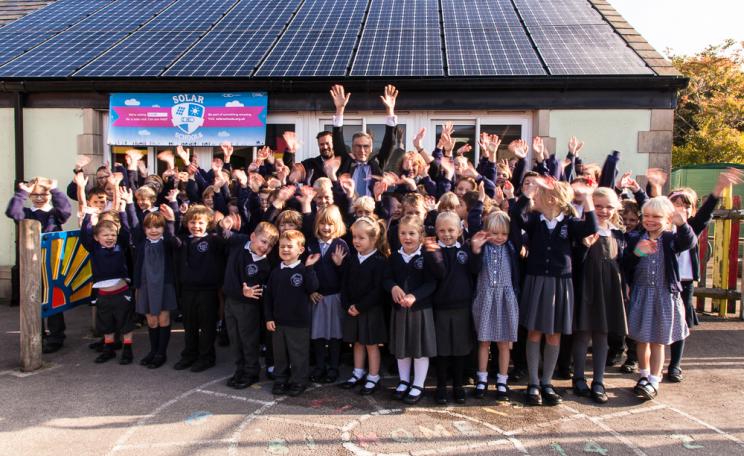
How comes doing 'the right thing' comes with hidden costs? For state schools planning to go solar this year the business rate hike would reduce the lifetime return of the panels to zero or even negative, while those that have have already installed solar panels face an unexpected tax bill in excess of £800 a year.
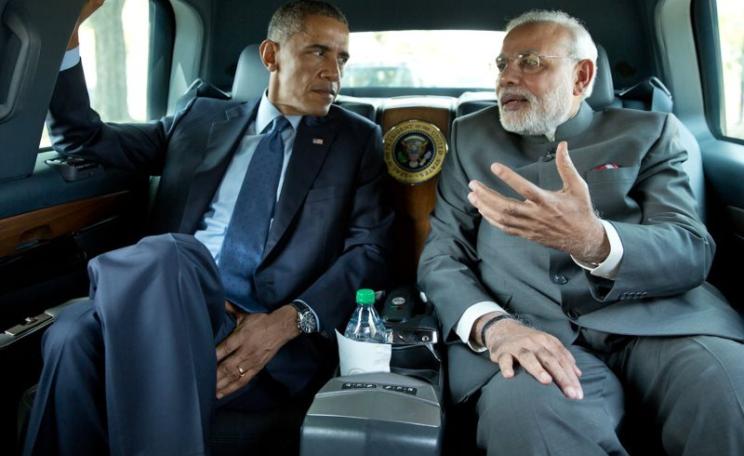
President Obama and India's Prime Minister Modi are best of friends - aren't they? So how come the US took India to the WTO's trade court - and just won a resounding victory? And why isn't India challenging the US's own discriminatory solar subsidies? It's because of the money, writes Charles Pierson. And poor India has no choice but to play by Washington's rules.
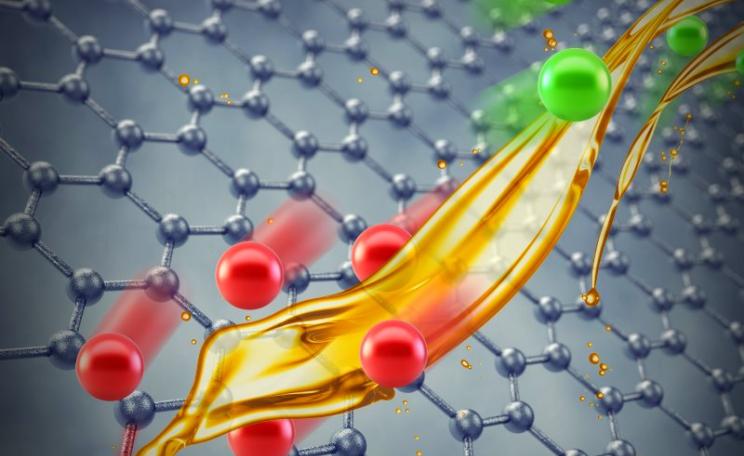
A new generation of energy storage devices is on its way, writes Mark Douthwaite: small, lightweight, efficient, long lived. Just what we need to unleash the potential of renewable energy, electric cars and a decentralised power grid. And it's all thanks to graphene.
EDF has indefinitely postponed its Hinkley C nuclear plant in Somerset, England, as a new IEA analysis shows that its power will cost UK energy users three times more than it should, writes Oliver Tickell. A similar reactor in France is running six years late and three times over budget - and may never be completed.
Indonesia's murderous campaign of military repression in its stolen territory of West Papua continues, writes Jason MacLeod. But a courageous 50-year struggle for human rights and freedom is finally bearing fruit, with growing recognition of West Papua's right to nationhood among its Pacific neighbours. Real hopes of a better future are rising above the blood and pain.
Promises made by governments to cut their greenhouse emissions come nowhere near stopping global warming rising above the 2C danger level, writes Alex Kirby. And in many cases the laws and policies needed to deliver them are absent.
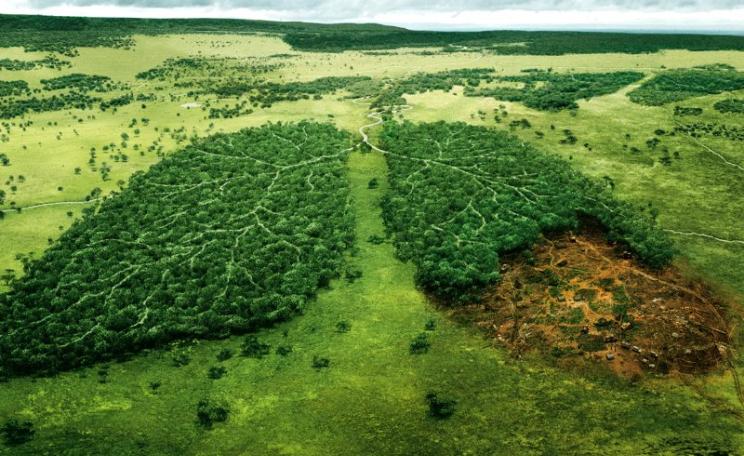
Isn't three trillion trees enough to keep our planet healthy? It sounds like a lot, writes James Dyke, but they are under threat as never before, from deliberate deforestation and climate change. Many of the 1.5 billion trees we are losing a year are in the last great rainforests - key ecosystems under threat of drying out forever under our escalating double onslaught.
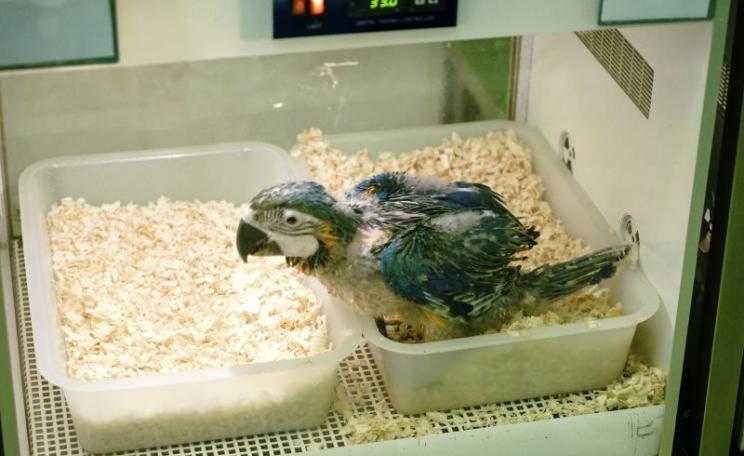
The international pet trade presents itself as responsible and conservation-aware, writes Clifford Warwick - and a key part of the message is the idea that its animals are captive bred. But the truth is very different. Quite apart from the routine cruelty and high mortality, the trade continues to depend on captive wild animals and contributes only negatively to wildlife survival.
Guarani man Semião Vilhalva was murdered by ranchers' gunmen last weekend after his community reoccupied parts of their ancestral land from ranchers. Thousands of Guarani Indians holding on to tiny patches of their ancestral land are living in constant fear of forcible eviction.
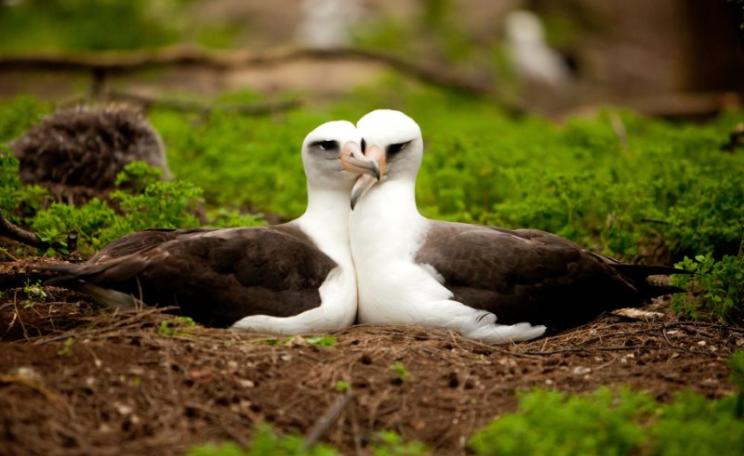
Already 60% of seabird species have plastic in their guts, often as much as 8% of their body weight. And with ocean plastic increasing exponentially, that figure will rise to 99% by 2050, threatening some birds' survival. Unless we act.
Confronted with climate change, disasters and their human victims, governments are all to quick to adopt a security response, write Nick Buxton & Ben Hayes. We saw it in the US after Hurricane Katrina. We see it now in Europe. And there's a host of powerful corporations keen to cash in on the opportunities. But the solutions they offer will only deepen the crises we face.
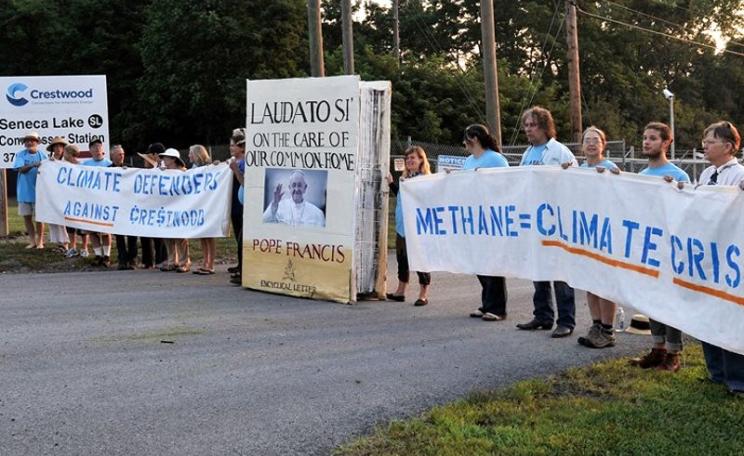
Protests against plans to make an enormous storage site for fracked gas at Seneca Lake in New York state seven times bigger are gathering pace, writes Ashoka Jegroo, with 13 arrests at a gate blockade last week. But is the company, Crestwood, getting the message?
Are GMOs safe? Up to a point, writes Jonathan Latham - provided you're not eating them. That's certainly not proven to be safe, indeed the hazards are numerous: protein encoding viral DNA fragments, herbicide metabolites, biotoxins whose operation is not understood, poorly conducted experiments ... and those are just the ones we know about.
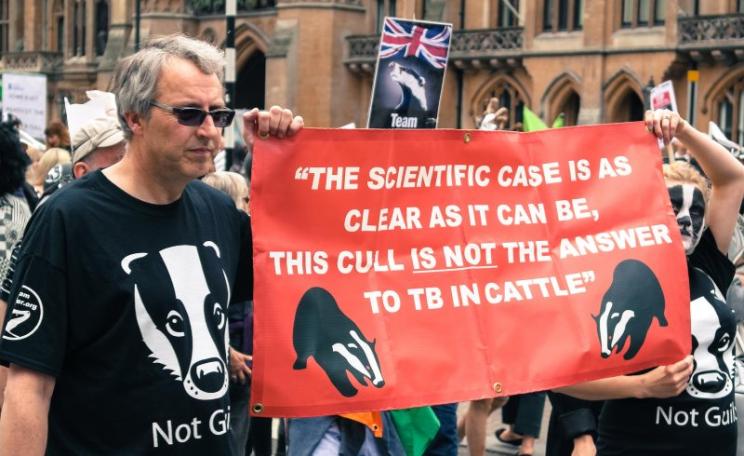
The government's decision of extend the badger cull to Dorset, and persist with the Somerset and Gloucestershire culls, is 'completely irrational', say badger protection groups - and now they intend to prove it in a High Court legal action, forcing an end to the killing.
Greens are united in opposing neoliberal 'austerity', write Rupert Read & Sandy Irvine. But there's another kind of austerity to which we are committed - that of living within ecological limits. But base the transition on social, economic and environmental justice, and there will be nothing austere about it. The future we're working for is one of sustainable, life-enhancing abundance.
Ukraine's state-owned nuclear generator is suing anti-nuclear activists in its latest attempt to stifle public debate over the country's ageing fleet of 15 nuclear reactors, while refusing to release information in breach of international obligations.