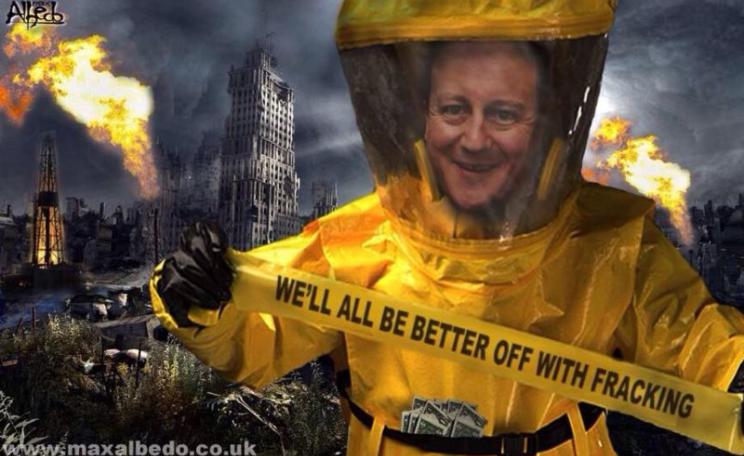
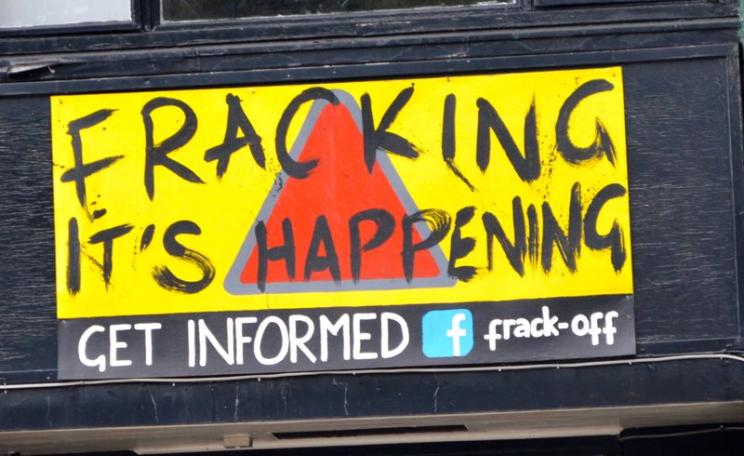
Independent legal advice shows that Lancashire councillors can refuse Cuadrilla's application for planning permission to frack at the Preston New Road site in Lancashire - contrary to advice from the Council's officers.
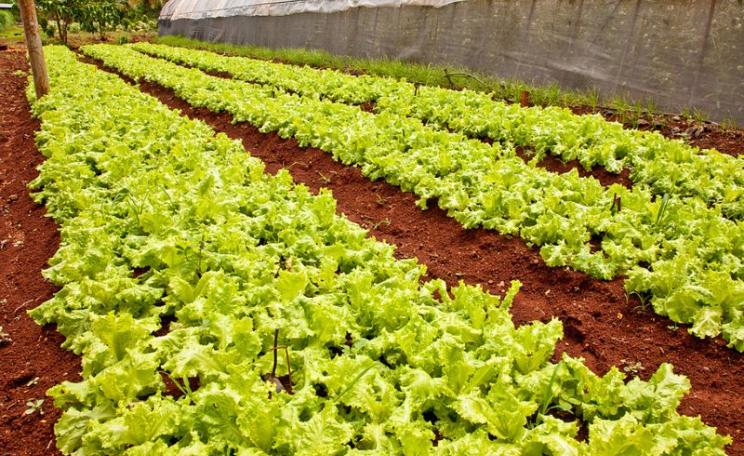
Cuba is a global exemplar of organic, agroecological farming, taking place on broad swathes of land in and around its cities, write Julia Wright & Emily Morris. These farms cover 14% of the country's agricultural land, employ 350,000 people, and produce half the country's fruit and vegetables. But can they survive exposure to US agribusiness?
After four years of low rainfall Brazil's commercial capital, Sao Paulo, is suffering from a grim combination of high temperatures and water shortages, writes Leila Carvalho. And now the drought has given rise to a lethal plague of dengue fever.
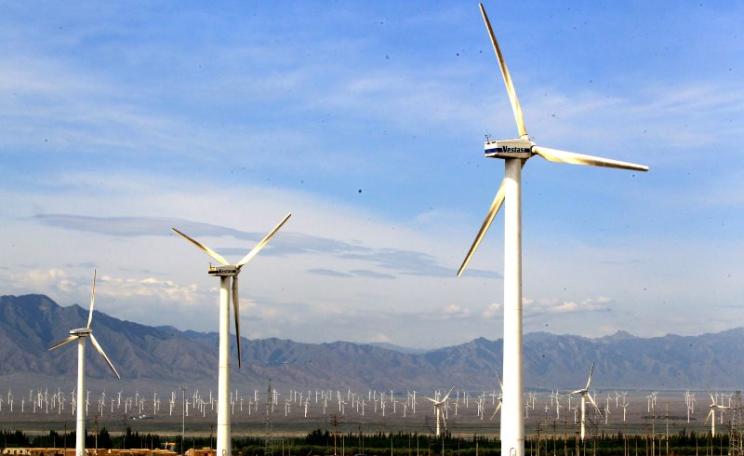
Following premature cutbacks to onshore wind farms the UK's energy security will increasingly depend on large scale offshore wind power, write Ian Broadbent & Peter Strachan. But while energy secretary Amber Rudd talked the sector up in her speech yesterday, she revealed feeble ambition, and said nothing to overcome investors' fears of being left out in the cold.
In a landmark ruling, judges have ordered the Netherlands to do more to tackle the 'imminent danger' of climate change. Meanwhile an expert commission reports of an impending global health breakdown from unmitigated global warming.
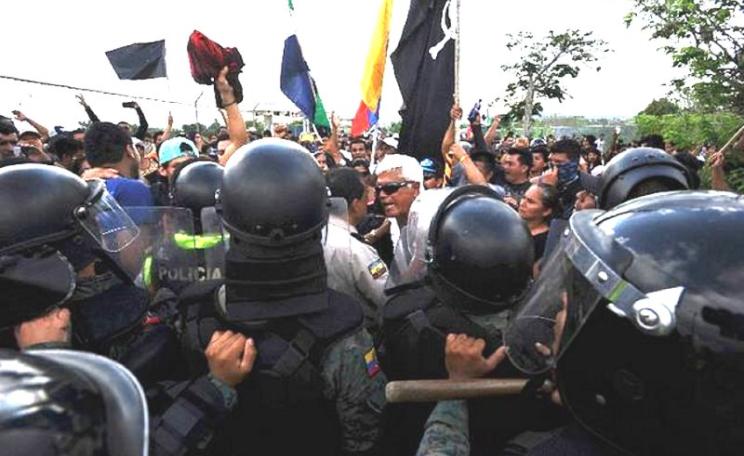
Residents of Ecuador's Galápagos islands are mounting angry protests against government plans to open the World Heritage Site to foreign investment in luxury tourism and hotels, writes Jane Shaw. They fear for the fragile ecology of the islands, for water shortages caused by golf courses and swimming pools, and for their livelihoods which depend on current 'low intensity' tourism.
A legal judgment in Australia has fatally damaged the 'official' ICRP model of health damage by nuclear radiation, writes Chris Busby - reflecting the fact that cancer originates through the mutation of individual cells, not whole organs or organisms. The ruling is good news for Britain's bomb test veterans whose day in court is coming up; and for all who suffer radiation induced cancers.
Soon after Devon's wild beavers on the River Otter escaped capture by zealous officials, they have given birth to two or even three kits - a clear indicator that they are happy in their habitat, and there to stay!
As Michael Gove gives his first speech as Justice Secretary, promising to update our 'creaking and outdated' courts, Paul Mobbs writes that 'reforms' to date have only deepened the injustice that afflicts poor defendants: penalising the innocent, burdening those who plead 'not guilty' with heavy charges regardless of ability to pay, cutting legal aid, and halving the number of duty solicitors.
As Lancashire councillors prepare to decide the planning application to frack in the county, writes Kyla Mandel, the UK's transparency watchdog has ordered the government to publish in full a report on the impacts of fracking, previously published only in a heavily redacted version.
The previous government came in on a bold promise to be the 'greenest ever', writes Jonathon Porritt. But what we got was a shameful record of ideologically driven policies that promoted fossil fuels, undermined action on climate, obsessed over nuclear power, did nothing to arrest the decline in the nation's wildlife and biodiversity - and suggest even worse to come.
The discovery of a secret 'fox farm' apparently linked to the Middleton Hunt exposes the lie that is used to justify fox hunting, writes, Dr Toni Shephard: that it's a legitimate means of wildlife control. On the contrary, foxes are deliberately fattened up for the kill, also indicating possible violations of the 2004 Hunting Act, which prohibits the hunting of wild animals, including foxes, with dogs.
As Shell's Polar Pioneer drilling rig sails from Seattle into the north Pacific, Christine Ottery discovers that US federal regulators had serious concerns about the company's safety equipment designed to contain any oil spill.
The discovery of antibiotic-resistant bacteria in pork products in UK supermarkets is a call to action, writes Peter Melchett. We must end the unhygienic farming practices that only work with constant antibiotic use, and reserve the most valuable antibiotics for human use only - or face a world in which routine surgery and infections bring serious risk of death.
The Encyclical published today by Pope Francis represents a profound religious and philosophical challenge to the mainstream narratives of our times, writes Steffen Böhm, and a major confrontation with the great corporate, economic and political powers, as it spells out the potential of a new world order rooted in love, compassion, and care for the natural world.
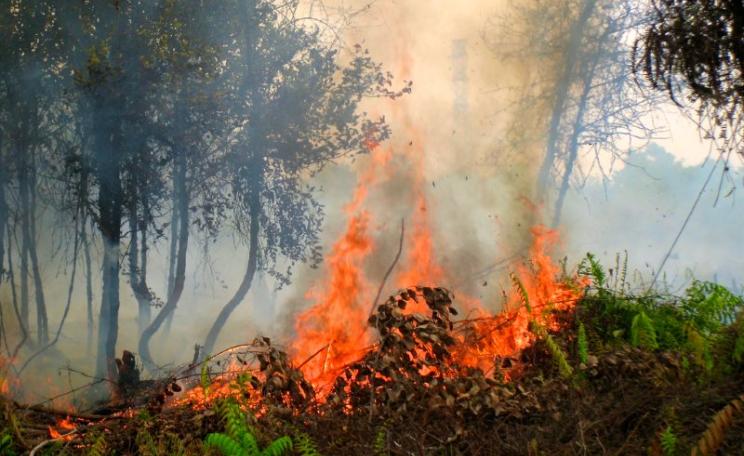
The conditions for an 'El Niño' climate perturbation over the Pacific appear to be in place, write Allan Spessa & Robert Field - and that means there's a high risk of large scale fires in Indonesia's forests and peatlands in coming months.
As Paris prepares for COP21 in Paris, Marc Brightman finds that the city is in the grip of a benign but ignorant authoritarianism that is ready to trample on much-loved green spaces like the Bois Dormoy, reclaimed from dereliction by the multicultural local community, which represent real solutions to the global problems of food, climate, the future of our cities, and our place in nature.
A proposed $30 billion railway line linking the the Peruvian and Brazilian coasts threatens devastation to forests and indigenous tribes that lie along its route, and will add to wider pressures on land and forests.
Japan and Germany have much in common: both are major industrial countries that have gone nuclear-free, writes Peter Matanle - Germany by choice, Japan by necessity. But while Germany is actively pursuing its renewable energy revolution, or Energiewende, Japan, possessed of the richest renewable energy resources in East Asia, is stuck in a fossil fuel pit.
The Government is struggling to spin its policy to fast track fracking, writes Paul Mobbs. So as it cuts the public out of the regulatory process, exempts exploratory wells from controls, and forces the Environment Agency to issue permits with 1-2 weeks, its spin machine has resorted to outright lies and misinformation to conceal the scale of the attack on our environmental rights.
China's success in driving down its fossil fuel burn will raise chances of a success at this year's Paris climate talks, writes Kieran Cooke - but first the world must appreciate the changes China is making, and how clean energy is catalysing a broader economic transformation.
The Midwest's largest ever anti-tar sands demonstration took place in Minnesota last weekend, writes David Goodner, cementing a new alliance of diverse communities united in resisting the pollution and destruction of tar sands exploitation, processing and transportation.
A project to mine 225,000 acres of seabed in Baja California's San Ignacio lagoon threatens the myriad sea life of the area, writes Haydée Rodríguez: not just Gray whales but Blues, Humpbacks and Loggerhead turtles, from noise, disturbance and radioactive releases.
WHO's official recognition of the health damage caused by glyphosate, the world's most widely used herbicide, is having ramifications around the world, writes Dr Eva Sirinathsinghji. National governments are moving to restrict the chemical, campaigns to ban it are intensifying, and now 'Roundup Ready' GMO crops are coming under the regulatory spotlight.