As the nuclear juggernaut drives the destruction of the Cumbria coast at Sellafield with nuclear waste dumps, boreholes, dredged-out rivers and a massive new nuclear power station, Marianne Birkby recalls ancient legends of the Woodwose, the Green Man, and the Beast of Beckermet. Can these forces of untamed nature be called upon to combat the growing nuclear menace?
Last week the UN General Assembly's Disarmament and Security Committee voted for negotiations to begin next year on a new international treaty to prohibit nuclear weapons, writes Rebecca Johnson, bypassing the stalled Non Proliferation Treaty. One immediate consequence is to make the UK's plans to replace its Trident nuclear missile system 'completely untenable'.
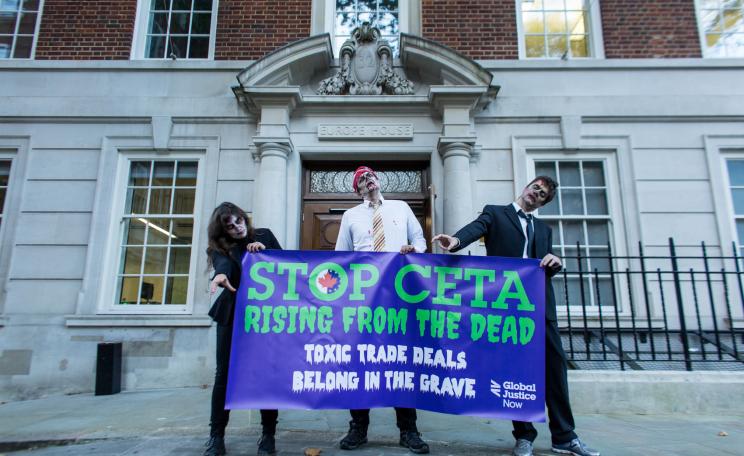
This morning (28 October) in London, protesters dressed as Hallowe'en Zombies posed outside the European Commission office in London with a banner saying "Stop CETA rising from the dead - Toxic trade deals belong in the grave."
British impressionist, comedian, actor and musician Alistair McGowan is also a staunch environmentalist - he doesn't even drive a car. He tells TIM SAUNDERS we should all be doing more to help save the planet and that the environmental costs of the proposed new runway at Heathrow are not worth the promised economic benefits
Efforts to clean up the Jukskei River are to be applauded but fall far short of what's really needed to return it to the former glory so many Johannesburg residents still remember writes LELYZAVETA IVANOVA
Contrary to arguments advanced in a recent Ecologist article, the biomass industry supplying the Drax power station in North Yorkshire is a model of sustainability, writes Nina Skorupska, and delivers genuine, substantial emissions reductions compared to coal.
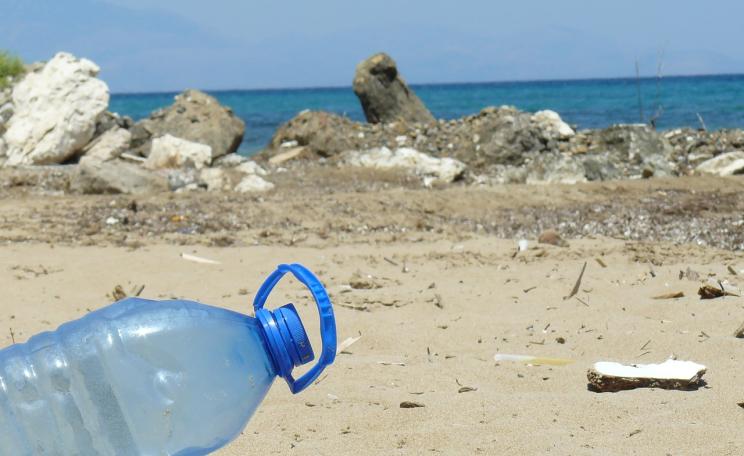
An estimated 12 million tonnes of plastic flows into our oceans each year so no wonder we're facing one of the biggest litter crises our planet has ever seen. LAURA BRIGGS reports
Today's Living Planet Report details the ongoing destruction of our natural environment, writes Alistair Currie. One solution that is necessary, realistic, ethical and ultimately unavoidable is to reduce the pressure on our planet caused by population growth.
With the UK's Digital Economy Bill set to be finalised today, new 5G microwave spectra are about to be released across the planet without adequate safety testing, writes Lynne Wycherley. Global neglect of the Precautionary Principle is opening the way to corporate profit but placing humans and ecosystems at risk, and delaying a paradigm shift towards safer connectivity.
In one reality, the government recognises climate change, signs the Paris agreement, and commits to its 1.5C target, writes Matthew Adams. In another, it promises a new London runway that's predicated on sending aviation emissions soaring for decades to come. Now repeat after me: 'Everything will be fine!'
The NHS is buying drugs from pharmaceutical companies in India whose dirty production methods are fuelling the rise of superbugs, write Andrew Wasley & Madlen Davies. There are no checks or regulations in place to stop this happening - even though the rapid growth in antibiotic resistant bacteria in India is spreading across the world, including to the UK and NHS hospitals.
Global CO2 concentrations have reached a historic new base of 400 parts per million, writes Alex Kirby, and are unlikely to fall below that level - 40% higher than the pre-industrial era - for many centuries to come. The WMO released the news just as the UK commits to a new London runway.
The UK government today announced that Heathrow, already the UK's busiest airport, is its 'preferred option' for a new runway in southeast England, writes Simon Evans. It's just too bad about the climate: the airport expansion implies that aviation emissions alone could take up half to two thirds of the UK's 'carbon budget' for the country to comply with its 1.5C Paris Agreement target.
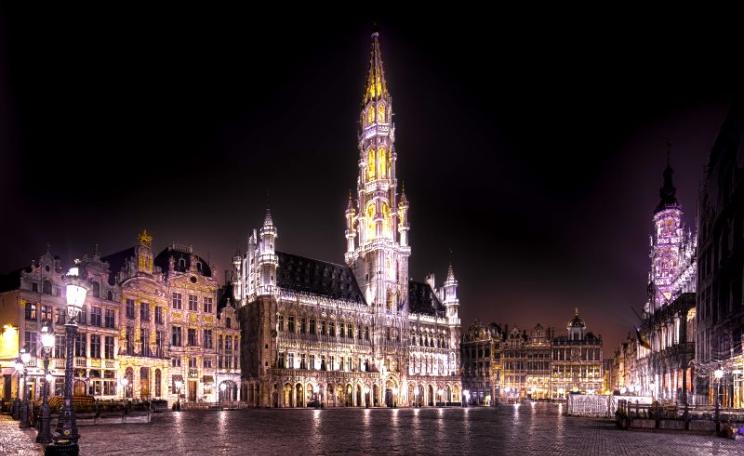
The city of Brussels, capital of Europe, has joined with other Belgian regions to defeat the CETA 'free trade' deal between the EU and Canada, in an unprecedented victory for civil society and campaigners against the EU's 'by the corporations, for the corporations' trade agenda.
Should it be Heathrow or Gatwick? The answer, writes Keith Taylor, is neither. For climate and pollution reasons alone the UK should be scaling back on aviation, and in any case projections of future demand have been monstrously exaggerated. Step 1: a 'frequent flyer' tax on the 15% of people who take 70% of flights.