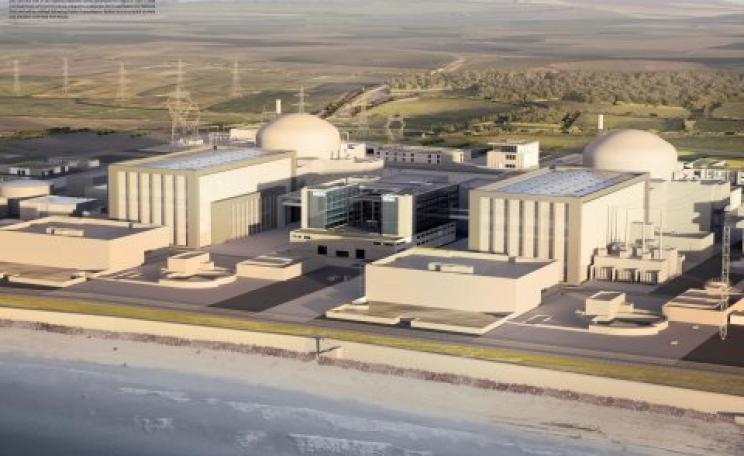
The UK is bidding for a massive €46 billion loan from the European Investment Bank to finance the construction of three new nuclear power stations at Hinkley Point, Wylfa and Moorside - while Poland is seeking €8bn for huge new coal mines and power plants and €12bn for new nuclear.
East Liverpool, a small city by the Ohio river, is a cancer-ridden dumping ground for the detritus of the global economy, writes Caitlin Johnson. With its filthy power station, coal ash lake, 1,300 fracking wells, silica sand mountains and a huge toxic waste incinerator, the city's people need your help in their fight for environmental justice.
The UK Government plans to lock consumers into a 2.5bn a year, 15-year spend to support peak-time fossil power generation - while undermining energy demand savings capable of achieving the same purpose more cleanly and cheaply. But today the 'unlawful' system has been hit by an ECJ lawsuit.
Las Casitas is a small community living on the edge of one of the world's largest coal mines, writes Richard Solly - one inhabited by the descendants of escaped slaves, located in the poorest region of Colombia. The village is under imminent threat of forced displacement by the brutal corporation that runs the Cerrejón coal mine.
With continuing Coalition in-fighting over the troubled 'zero carbon homes' programme, writes Alex Stevenson, a plan is afoot to allow homes on smaller developments to meet a less demanding energy performance standard - but still carry the 'zero-carbon' label. Critics denounce the plan as 'nonsensical'.
Australia is betting the farm on huge increases in coal exports, writes Stephen Bygrave - just as key markets in China, India, Korea and Japan are drying up, with rising tariffs and huge renewable energy and efficiency programs. The policy is totally out of touch with reality - and will lead to revenue shortfalls in the AU$100 billions.
Small scale renewables are - almost un-noticed by policy makers - providing a quarter of the world's electricity, up from 10% in 2000, writes Morgan Saletta. Forget fracking and nuclear - this is the real energy revolution that's under way, and it's cutting big fossil fuel and centralised power grids out of the picture, while reducing emissions and delivering energy security and resilience.
The EPA's plan for 'clean power' are welcome, writes Tim Judson - except for its inclusion of nuclear, and economic distortions and serious omissions that favour the technology. In this open letter to EPA Administrator Gina McCarthy, he and co-signatories call on her to ditch the 'false and irrational assumptions' used to justify both new and existing nuclear power.
A new report shows that the UK's farms can easily generate as much power as the proposed Hinkley C nuclear plant, writes Jonathan Porritt. Not only would it all be renewable, but if could all be in place by 2020. Here he offers some friendly - but strictly confidential - advice for Energy Secretary Ed Davey.
Doubts are growing doubts that the Hinkley C nuclear power station, the EU's biggest construction project, will get the final go-ahead from the UK government, writes Paul Brown. And that's leaving the European nuclear industry, already in serious financial difficulties, facing a struggle for survival.
The president of the World Bank has promised to back out of financing coal developments, and instead target its finance at 'every dimension of renewable energy' under a new climate-friendly strategy.
The Walton family, owners of Walmart and Asda, project a 'public environmentalism', writes Mike Gaworecki. But their real agenda is to advance a monopolistic corporate economic model that is threatened by decentralised energy solutions like rooftop solar. The answer? Exterminate!
EDF has already moved heavy earth moving gear onto the Hinkley C nuclear power station construction site, writes Doug Parr - but that doesn't mean it's a done deal. On the contrary, a host of intractable problems are coming home to roost, and the increasingly troubled project is looking shakier than ever.
With unidentified drones regularly overflying French nuclear power plants, Daniel Salisbury and Christopher Hobbs warn that despite the dismissive responses of nuclear operators, they have cause for concern: the drones may be unable to cause serious damage in themselves, but they compromise site security and open the way to future attacks.
The enabling bill for Keystone XL failed yesterday in the US Senate. Supported by all 45 Republican senators, it fell one vote short of the required 60-vote threshold. But the victory will be a temporary one, writes Alexander Reid Ross. The final battle can only be won by massive grassroots engagement and protest in communities across North America.
Who has the longest nose of them all? Worthy winners of France's fiercely contested 'Prix Pinocchio' 2014 were selected last night, recognising corporate greed, hypocrisy and malfeasance, based on a record vote since the awards began.
The Leader of the US Senate says that under the China-US climate deal, China can 'do nothing at all for 16 years'. John Mathews and Hao Tan examine the claim - and find it's the very reverse of the truth. China is leading the world in greening its energy supply, and has committed to add a massive 1.3GW of renewable power capacity every week for 15 years. Now Mitch - beat that!
Democratising energy would save thousands of lives a year in Britain alone - releasing us from the clutches of corporate utilities, and building an energy commons in which we are all owners and participants, no longer captive, exploited consumers. More than that, it would be a big step forward in saving the planet.
As the governing conservative party lurches ever further to the right, writes Kyla Mandel, it feels like UKIP has already won the election - six months before it's even happened. Tory ministers are already executing UKIP policies, with their ignorant but implacable hatred of renewable energy in all its forms.
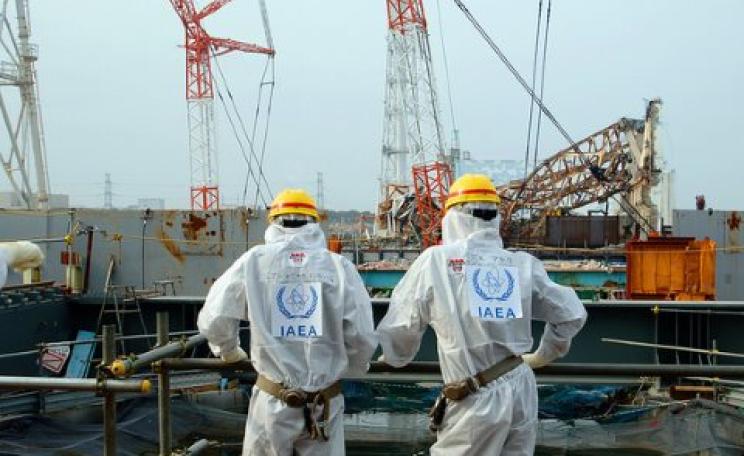
The clean up at Fukushima faces enormous challenges, writes Justin McCurry. First, managing 500,000 tonnes of contaminated water stored onsite. Next, removing molten fuel from reactors 1, 2 and 3, a task so hazardous that it's been put off until 2025. Even robots have been unable to enter the reactor buildings - and no one knows where the molten fuel has gone.
This is an exciting time for community energy, writes Julia Groves. New guidance will make it easier for local people to invest in local renewable power projects, while other opportunities are opening up for risk averse investors. And the more of us join in, the sooner we can displace the Big Six who dominate UK energy markets.
The National Grid's forecast for UK power supply this winter relies on overstating the availability of increasingly unreliable nuclear power stations, writes Chris Goodall. Realistic estimates of nuclear, gas and coal power station availability shrink the 'safety margin' to zero.
Extreme energy in the UK is arousing extreme reactions, write Jess Elliot & Damien Short. On the one side stand citizens committed to preserving the quality of the local and global environment. And against them, a government determined to let fracking rip, and police forces prepared to ignore legal norms to suppress the growing popular resistance.
Opponents of nuclear power hold up the planned Hinkley C as an examplar of waste and idiocy that could cost the UK over £30 billion in subsidies. Chris Goodall agrees - and fears that an impending fiasco with the 'unconstructable' and commercially disastrous EPR design may kill off the UK's nuclear aspirations for a generation.