Keith Barnham's new book reveals the giddying and glorious plethora of the solar technologies that lie at the heart of the all-renewable energy system that awaits us, writes Jonathan Porritt - making it 'one of the most exciting and genuinely hopeful books' that I've read in a long time'.
Brazil's newly elected Dilma Rousseff is committed to completing the disastrous Belo Monte dam, writes Helle Abelvik-Lawson. Worse, she looks certain to press ahead with the industrialisation of the Amazon, with 61 hydroprojects in the pipeline. And new scientific findings about the massive climate impacts of tropical forest dams are not about to stop her.
Dilapidated nuclear waste storage ponds abandoned 40 years ago containing hundreds of tonnes of fuel rods pose an immediate danger to public safety, photographs sent to The Ecologist reveal. The fuel and sludge in the ponds could spontaneously ignite if exposed to air, spreading intense radiation over a wide area.
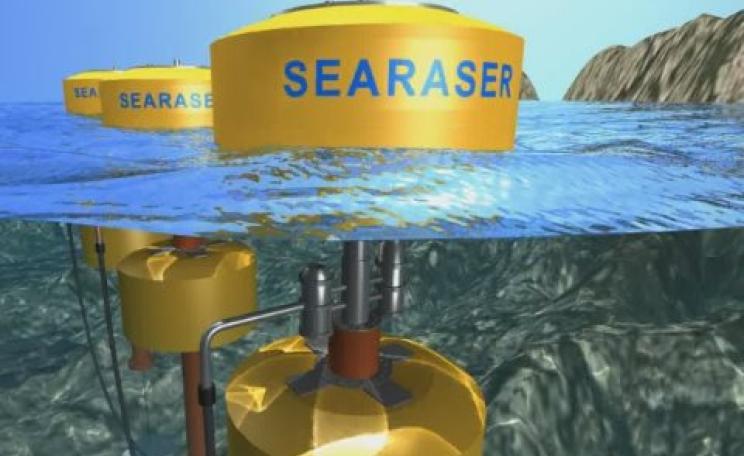
A new wave power generator has moved closer to reality after successful testing in simulated marine conditions. An array of the 1.5MW 'Searaser' devices could be deployed on Britain's coast within a few years.
Germany's transition to a renewable power system is on track, writes Gert Brunekreeft. But it's costing households €218 a year in surcharges, causing voter enthusiasm to wane. That may be about to change though. The surcharge is about to fall, while targets stay the same - a sign that renewable energy costs may be falling faster than expected.
Hinkley C's subsidy package may have won European Commission approval - but now it faces a National Audit Office 'value for money' investigation, following a demand from a powerful Parliamentary committee.
A full-scale rush for shale gas would increase emissions, writes Erik Bichard, giving the lie to politicians' claims that fracking is 'climate friendly'. A new study in Nature shows that abundant shale gas would cause CO2 emissions to rise by a median 4.5%. When 'fugitive' methane is included the figure rises to 9.5%.
Last night's speech on Britain's energy choices by former environment secretary Owen Paterson's caused widespread outrage long before it was delivered. But what exactly did he say on the night? Read on, and be surprised to discover that it makes excellent sense - in parts.
The UK Government promises that the Hinkley C 'EPR' nuclear reactor will lower electricity bills, but Keith Barnham shows that this is the very reverse of the truth. Our best hope is that it will never be built. Legal challenges aside, no sane investor will commit until one of the two EPR prototypes is working, which will be in 2016 at the earliest.
The first ever global life-cycle assessment of clean energy sources shows that a renewable system could supply the world's entire electricity needs by mid-century, writes Tim Radford.
Solar power could be producing over a quarter of the world's electricity within 35 years, according to the International Energy Agency. But in the US, Congress's failure to extend solar tax credits is causing projects to be withdrawn.
The UK's political mainstream has performed a complete U-Turn in policy on nuclear power, culminating yesterday in the European Commission's approval of a £15-20 billion subsidy package for the Hinckley C project. Donnachadh McCarthy delves into the nuclear industry's deep and far-reaching political links.
The outgoing European Commission has just given the UK's controversial Hinkley C nuclear project the go-ahead, writes Paul Dorfman - approving a deal that will cost the UK public tens of billions of pounds. But now the deal faces a legal challenge in the European Court of Justice.
There's a simple thing we can do to cut everybody's electricity bills, reduce pollution and 'keep the lights on' when demand peaks on dark winter evenings, writes Chris Goodall - phase out power-guzzling halogen bulbs and replace them with LEDs that use a fraction of the power. So let's do it!
There's an Alice in Wonderland flavour to the nuclear power debate, writes Jim Green. Lobbyists are promoting all sorts of new reactor types - an implicit admission that existing reactors aren't up to the job. But the designs they are promoting have two severe problems. They don't exist. And they have no customers.
When Shell decided to quit its Arctic oil exploration it cited 'insufficient quantities' of oil and gas, writes Louise Rouse. But that was not the whole story: what tipped the balance was a combination of investor discontent, reputational damage and public opposition on an unprecedented scale.
Japan's government is trying to get its failing nuclear power industry up and running, write Jim Green and Peer de Rijk. But in the post-Fukushima world, it faces formidable obstacles. Experts believe most reactors will never restart - and Japan's stricken utilities may have to find $30 billion or more to finance their decommissioning.
Energy efficiency in office buildings struggles to gain the attention of top management, writes John Alker - because energy is too cheap to really matter. But with 90% of operating costs spent on staff, show that green building design makes employees happier and more productive, and you're really onto something ...
A report published ahead of tomorrow's UN Climate Summit shows that we can meet all our energy needs from renewables, writes Paul Brown - poor nations and prosperous, tiny islands and great cities, in any part of the globe. And some are doing it already ....
A review of the 66 nuclear reactors 'under construction' worldwide shows that 49 are running behind schedule, including all five in the US and most in China. The long and unpredictable build times of nuclear plants, and the extra costs that ensue, are a compelling reason not to depend on the technology for either power or to mitigate climate change.
Nuclear power exists for one reason only, writes Ralph Nader - government support. Without the taxpayer subsidies, accident liability waivers and exploited consumers, nuclear power wouldn't exist. And even with all the above, it can barely hold on. It's time to end the nuclear boondoggle for once and for all.
There are hopeful signs that China, the world's biggest emitter of greenhouse gases, is becoming less reliant on the polluting coal that powered its rapid economic rise, writes Kieran Cooke. Great news for China, and the planet - but worrying for coal exporters!
We have a new European Commission - so what does it mean for the environment, GMOs and trade negotiations? Lawrence Woodward can't help feeling that the best part of the package is Commission President Juncker himself. Now, will his 'team' pull together and work to deliver his vision? We can't quite count on it.
The EU, nervous about disruption to gas supplies across an increasingly unstable Ukraine, is planning a European 'supergrid' linking all 28 member states to increase resilience, writes Paul Brown. The development will be a boon to renewable energy generation, and cut emissions from fossil fuels.