Thirty years after Chernobyl former Soviet leader Mikhail Gorbachev remains haunted by the world's greatest ever industrial catastrophe, writes Linda Pentz Gunter. Now 85 and a committed environmentalist, he's still campaigning to bring the failed nuclear experiment to an end before further disasters follow, and encouraging a clean, efficient and renewable global energy economy.
Belarus may have taken the brunt of the fallout from the Chernobyl nuclear disaster in Ukraine, writes Kieran Cooke. But now it's pushing ahead with its own nuclear power station at Ostrovets - just 50km from Lithuania's capital, Vilnius, where the project is causing widespread public concern.
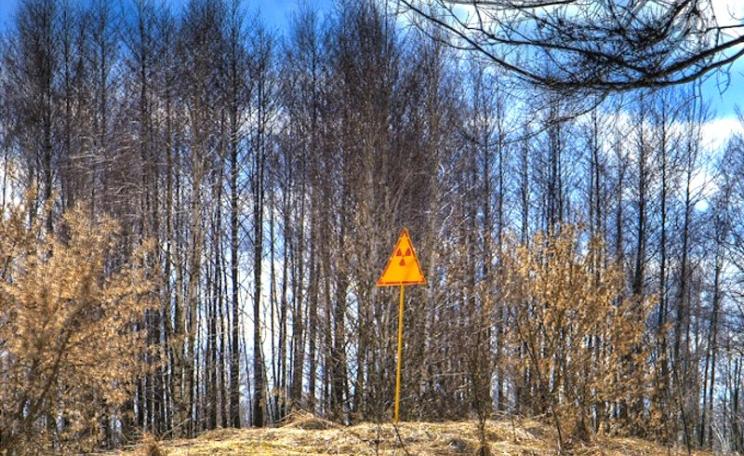
Evolutionary biologist Timothy Mousseau and his colleagues have published 90 studies that prove beyond all doubt the deleterious genetic and developmental effects on wildlife of exposure to radiation from both the Chernobyl and Fukushima nuclear disasters, writes Linda Pentz Gunter. But all that peer-reviewed science has done little to dampen the 'official' perception of Chernobyl's silent forests as a thriving nature reserve.
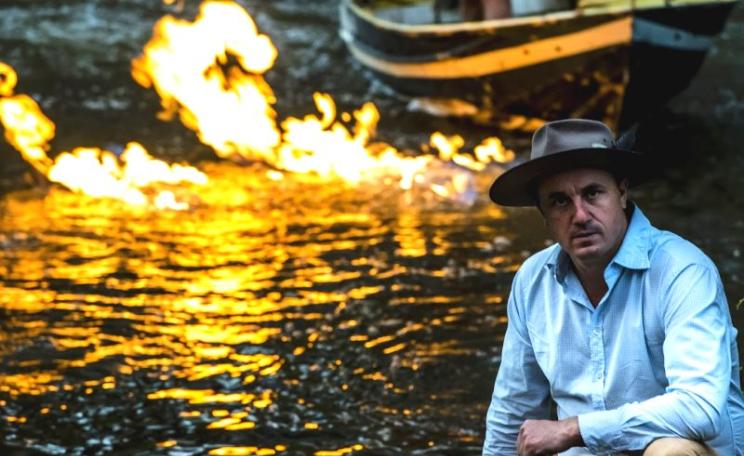
So much methane is bubbling into a river surrounded by hundreds of fracking wells that it's a fire hazard! Local campaigners blame the coal seam gas industry for the gas releases which are spreading along Queensland's river Condamine and gaining in intensity.
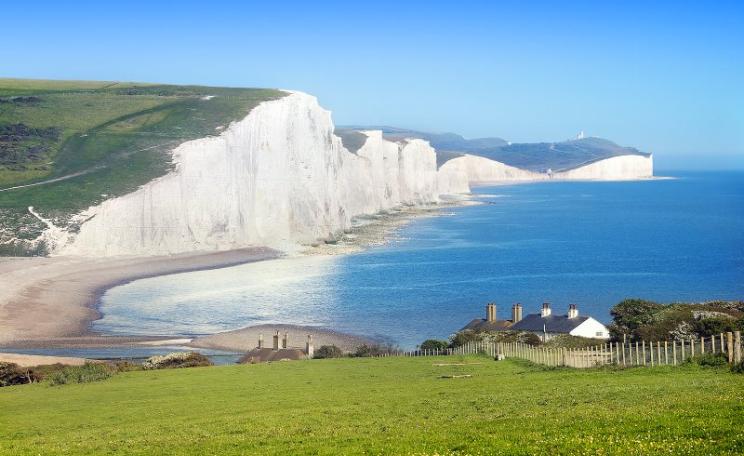
Remember when the UK was the 'dirty man of Europe'? What has changed since then, writes Caroline Lucas, is our membership of the EU - which has made us raise our environmental performance on everything from fisheries to air pollution, nature conservation, clean bathing waters and renewable energy. Leave, and it could all go into reverse.
Don't believe the spurious claims of nuclear shills constantly doing down renewables, writes Mark Diesendorf. Clean, safe renewable energy technologies have the potential to supply 100% of the world's electricity needs - but the first hurdle is to refute the deliberately misleading myths designed to promote the politically powerful but ultimately doomed nuclear industry.
Pope Francis's famous encyclical on climate change is part of a broad global shift to environmental awareness among faith communities, writes Tim Gee. Christian churches and congregations are among those joining the fast growing fossil fuel divestment movement, switching to renewable energy, and reaching out to wider society to help protect our home planet, Earth.
Next month thousands will gather in Wales to shut down the UK's open cast coal mine at Ffosyfran, whose 3,500 acres abut both Merthyr Tydfil, one of Britain's most deprived communities, and the glorious Brecon Beacons national park. It will be one of dozens of coordinated actions across the UK, and around the world, to bring the age of coal to the rapid end it so richly deserves.
BP's plans to explore for oil in the deep seas of the Great Australian Bight came under fire today at the company's Annual General Meeting in London, writes Graham Readfearn. The drilling would risk the ocean's rich marine wildlife - while blowing a massive hole in Australia's COP21 emissions targets.
Disregarding revelations of systemic political corruption in Brazil's hydropower sector, President Dilma Rousseff is ploughing ahead with a cascade of giant dams on the mighty Tapajos river. Among the companies touting to win huge construction contracts are France's EDF and Engie, and Germany's Voith and Siemens - in a consortium led by Brazil's Electrobras, which stands accused of high-level corruption over four other dam projects.
The nuclear industry is forever reinventing itself with one brilliant 'new' idea after another, Amory Lovins wrote in this classic 2009 essay. But whether it's touting the wonders of future SMRs, IFRs or LFTRs, the reality never changes: the reactors they are building right now are over time, over budget and beset by serious, entirely unforeseen technical problems.
How to dissent peacefully from the corruption, waste and destruction of the world? By a mindful disengagement from evil, writes Julian Rose: from fossil fuel energy to propagandist media, from sweatshop clothing to the predatory financial system. Some of the steps we can take are easy, others very difficult - but what ultimately matters is the direction of travel.
France's energy minister Ségolène Royal has backed union demands for the EDF's Hinkley C project in Somerset to be re-examined, write Angelique Chrisafis & Chris Johnston - adding that the project must not go ahead if it would 'dry out' funds needed for EDF's renewable energy program.
Precious World Heritage Sites that protect vital biodiversity and human cultures are at risk from oil decelopment and other industries. Under threat are not just nature, wildlife, land and water but the 11 million people who depend on the 114 sites' environmental quality for their livelihoods.
Tesla's Powerwall battery may be the poster-boy of the forthcoming dynamic power grid, writes Margaret McAll. But a far more accessible, low cost solution beckons: grid-interactive water heaters can soak up excess power from peaking renewables, reduce expensive peak demand, and cut power companies' need to invest in generation and distribution.
EDF in the UK may be propelled by its disastrous nuclear ambitions, writes Chris Goodall. But across the Atlantic it's another story: the company is the US's biggest wind developer, and selling its power, profitably, for under 40% of the price it has been promised for Hinkley C, including federal tax credits.
Campaigners are celebrating after defeating plans to build America’s largest open pit coal mine, writes Nick Engelfriend. In an epic 'David and Goliath' battle, Montana activists challenged the project, and all the politicians and businessmen that supported it, with fierce opposition, protests and demonstrations. The outcome spells hope for all in the fight against dirty energy.
MPs today grilled EDF Energy supremo Vincent de Rivaz over the troubled Hinkley C nuclear plant in Somerset. He insisted that the project was definitely going ahead - but refused to say when the 'final investment decision' was due. Confused? Bewildered? Frustrated? So were the MPs.
Backed up the Information Commissioner, DECC refuses to release the documents it sent to the European Commission to support its massive subsidy package for the Hinkley C nuclear plant, writes Terry McAlister. But now the case will go before a tribunal which could order their release.
For the second year running CO2 emissions flatlined even as the global economy was growing at around 3%, writes Alex Kirby. But sharply rising temperatures show the need for further massive renewable energy deployment to actually bring emissions down.
It will take decades to completely leave fossil fuels, writes Richard Heinberg. But we can do it, starting with the easy stuff: going big time for wind and solar, raising energy efficiency, replacing oil-fuelled vehicles, and moving to organic farming. But deeper changes will follow as we transition to a more enduring sustainability - consuming better, and much less.
Barring a miracle Marco Rubio is set to be Trumped in the Republican primary tomorrow in Florida, his home state, putting an effective end to his campaign. But it's not for want of support from one of the US's biggest frackers, Devon energy, and its politically active CEO Larry Nichols. And with or without Rubio, Nichols's influence on the red states' energy policy is only going to get bigger.
Five years after the Fukushima nuclear disaster began to unfold, the searing psychological effects are still being felt among the 160,000 refugees who fled the fallout, writes Linda Pentz Gunter. But now there's growing pressure to return to contaminated areas declared 'safe' in efforts to whitewash the disaster's impacts. Why the rush? To clear the way for the 2020 Tokyo Summer Olympics, complete with events in Fukushima City.
Improved technology and falling costs are moving electric car sales into the fast lane as manufacturers seek achieve significant economies of scale, writes Kieran Cooke. And now China is leading the EV charge with its plans for 5 million plug-in vehicles by 2020.