The European Investment Bank is set to offer €3 billion to build the 3,500 km Southern Gas Corridor pipeline from the South Caucasus to the EU, writes Terry Macalister - even though it would undermine EU climate change targets and exacerbate serious human rights abuses.
The EU's food and farming safety regulator is trying to create a 'back door' system to licence the use of herbicides that have been banned for their toxic impacts on people and wildlife - under a clearly inapplicable 'plant health' exemption.
Brexit gives the UK the chance to reform the system of agricultural subsidies that rewards wealthy landowners at the expense of taxpayers, the global south, the environment, and small scale sustainable farmers, writes Alex Scrivener. But strong, effective campaigning will be needed to bring about the changes we desperately need.
Key to the Leave campaign's success was its focus on 'core values' like patriotism, independence and cultural purity, writes George Marshall, summed up in simple memes like 'defending our borders'. The Remainers' reliance on elite and expert opinion was hopelessly flat-footed - and went against everything climate campaigners have learned about winning over public opinion.
Instead of leaching the world's resources to support out-of-control consumerism, EU leaders could do worse than ponder novelist Victor Hugo's claim that whilst "you can kill people, you can't kill an idea whose time has come", writes NICK MEYNEN
The UK imports millions of tons of American wood pellets every year to be burned in power stations for 'climate friendly' electricity, writes Matt Williams. But his recent visit to the southern US showed him that this practice is devastating beautiful, natural forests rich in wildlife - while the UK government's own research shows that it's worse for the climate than the coal it replaces.
The winning Brexit slogan was 'Take Back Control', write Victor Anderson & Rupert Read. But leaving the EU will only increase the power of corrupt elites unless the UK reforms its own democratic governance, combats the excessive power of corporations, upholds the rights of all its citizens, decentralises its economy, and forges progressive alliances with its European partners.
In its decision to leave the EU, the UK is cutting itself off from one of the world's most effective systems of climate governance, write Tim Rayner & Brendan Moore. But we still have our own Climate Change Act and can lead the EU, if not as a member, at least by example - provided current and future Conservative Party leadership make their commitment clear, and implement their promises.
The political vacuum left by the Iraq war provided the space for radical extremism to take root in the Middle East and rampage across the region, writes Dr Robert Dover. That makes Tony Blair directly responsible for the refugee crisis that is destabilising Europe today, reflected in the UK's Brexit vote. And it fatally wounded the credibility of his 'third way' social democratic politics across the EU.
The UK's exit from the EU won't deliver for the 'victims of globalisation' whose votes were decisive in the referendum result, writes Pete Dolack. All the economic scenarios advanced to date envisage more of the 'free trade' and neoliberalism that has global empowered capital against communities and the well-paid jobs that once sustained them. Plus ca change ...
Following the vote to leave the EU, the UK's energy and climate change policy faces major challenges, writes Paul Brown, with new nuclear power and a third London runway at Heathrow runway looking like the first casualties.
The economic impacts of the Brexit vote will very soon make themselves felt to British consumers, writes Chris Goodall - kicking off with higher fuel bills and pump prices. The good news is that nuclear power is now looking increasingly unaffordable. But renewables and green energy research are also likely to suffer, especially if under a right-wing Brexit government.
We have a serious responsibility to fight the more unsavoury symptoms of Brexit, writes Alex Scrivener - making the case for free movement for people, defending the regulations that protect our environment and workers' rights, resisting imperialism abroad and racism on our streets.
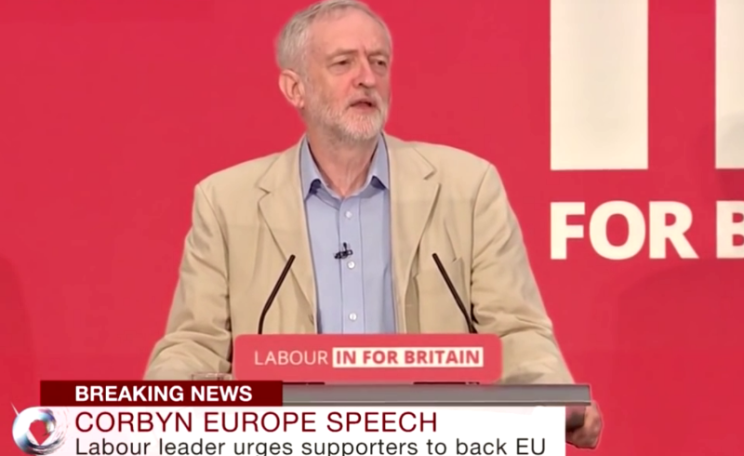
Depressed at the Breferendum result? So you might be, if you are bothered by the environment, social justice and a successful economy, writes Oliver Tickell. But it may never come to that. In fact it's just possible that the Brexit vote could deliver us a reformed 'peoples' EU' that includes the UK, under a progressive government led by Jeremy Corbyn. Here's how.
Last week, as the UK voted itself out of the European Union, Greenpeace called for another exit strategy - a glyphosate exit plan. Nick Mole from PAN UK explains how we can all get involved in a campaign to ban all pesticides - not just glyphosate - in our towns and cities
Almost all UK laws that regulate fracking's impact on the environment emanate from EU directives and regulations, writes Zachary Davies Boren. Once out of the EU, the UK would be free to amend them, scrap them or simply ignore them. And given the UK's record of support for fracking and lobbying in Brussels for deregulation, that may be exactly what the Brexiteers have planned.
Britain's bees are under threat from Brexit and moves to allow farmers to use banned bee-harming 'neonictinoid' pesticides, warns Dave Timms, Bees Campaigner with Friends of the Earth. With 20 species extinct since 1900 and a further 35 under threat, how much more can our bees take?
As the EU prepares to vote on whether to re-authorise glyphosate this week, a new study finds that commercial formulations of the herbicide alter the development of rats' uteruses, potentially causing cancer and affecting fertility.
The official 'fitness test' on the EU's nature directives carried out for the EU Commission under its 'better regulation' initiative finds that the laws are 'fit for purpose' in every respect, writes Oliver Tickell. But there's a mystery: the report was completed in January, yet it remains unpublished. Did it reach the 'wrong' conclusion for a Commission intent on a bonfire of red tape?
The campaign to Remain cannot be left to the grey men of British politics, writes Alan Simpson. The Labour leadership must proclaim the case for a green Europe that belongs to its people not its corporations, inspiring voters with a positive vision of the EU as it ought to be - and that we can bring about only as fully engaged members.
The European Parliament has had a great week, writes Molly Scott Cato MEP - for those who oppose GMOs in food and farming. MEPs voted on five occasions to say no to GMOs, and gave their support to agroecology as the only sustainable way to feed the world.
The European Parliament today called on the Commission and member states like the UK to stop funding the 'New Alliance' plan to force export-oriented agribusiness onto Africa. Instead they want support for small-scale family farms and agroecology.
The mainstream British media have long acted as cheerleaders for GMOs, but none quite so much as The Times and its disgraced correspondent Matt Ridley, writes Colin Todhunter. His most recent article on the topic is a strange concoction of misrepresentations, falsehoods and blunders dressed up as science, and reflects both his ignorance of the real facts and his deep ideological commitment to corporate profit and power.
The EU referendum debate is taking place between different wings of the corporate elite, dominated by assumptions in favour of big business, free trade and endless economic growth, write Helena Norberg-Hodge, Rupert Read & Thomas Wallgren. But to vote for a sustainable future we must adopt a very different, local perspective - one you'll never find in UK's 'mainstream' media.