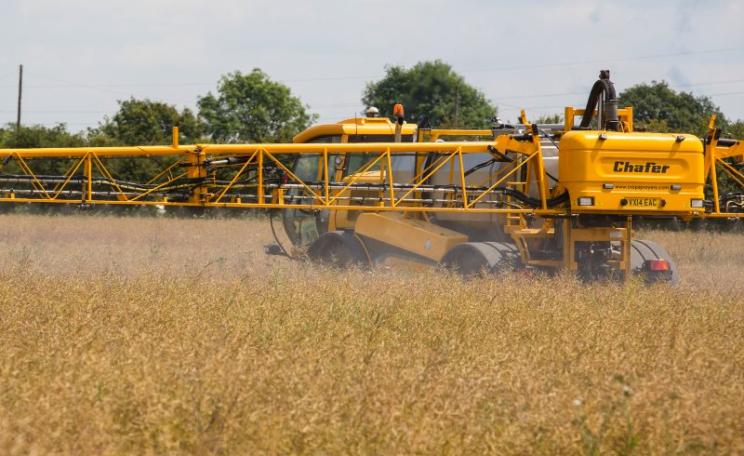
With EU ministers due to decide tomorrow on the future of the glyphosate in the EU, Colin Todhunter finds evidence of collusion between regulators and the corporations whose sales of the 'probably carcinogenic' herbicide add up to many billions of dollars a year - evidence that underlies a legal action alleging fraud by the European Food Safety Authority against the EU's 508 million citizens.
The leaked chapters of the EU-US TTIP 'free trade' deal reveal a shredding of health, environmental and other protections for consumers and citizens, writes Pete Dolack. It's a wet dream for corporate monopolists and profiteers, and the elite bureaucrats that serve them. But for civil society it represents an irreversible destruction of democracy itself.
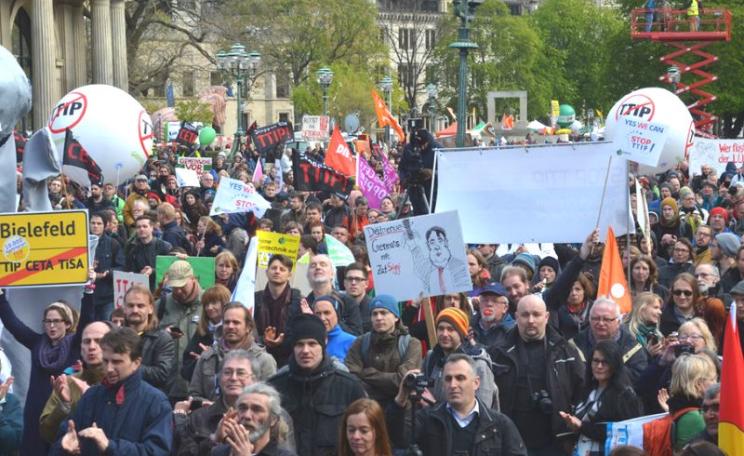
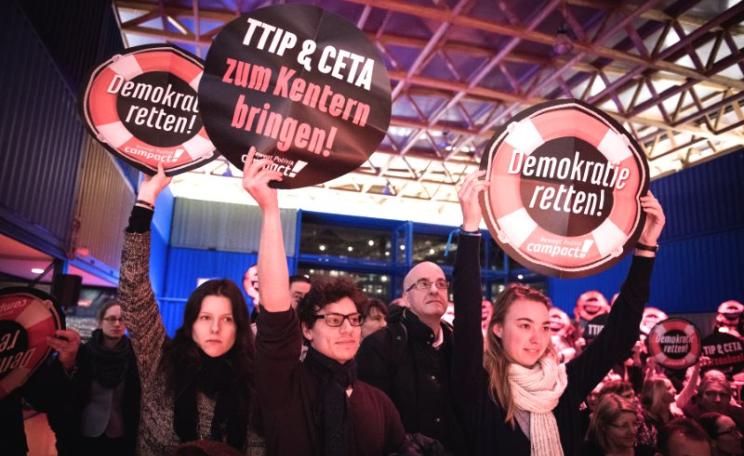
The TTIP EU-US trade deal has finally hit the rocks with massive popular opposition on both sides of the Atlantic gaining serious political traction, write Guy Taylor & Nick Dearden. There's now a good chance that TTIP will be defeated - but first we must make sure that CETA, the equally toxic EU-Canada 'Trojan Horse' deal, bites the dust.
The British establishment does nothing quite so well as lies, cover-ups and high-level corruption, writes Georgina Downs - whether it's the Hillsborough disaster or permitting polluters to poison us. Georgina won her own High Court legal victory protecting rural residents from pesticide exposure as long ago as 2008 - only to have it snatched away as Court of Appeal judges closed ranks.
Secret documents leaked to Greenpeace from the EU-US TTIP negotiations show that environmental protection, climate change mitigation, consumer protection, public health and sustainability are sacrificed throughout to corporate profit and commercial interests.
Maude Barlow, Chair of the Council for Canadians, has dedicated her life to fighting injustice, and so-called 'free trade' deals in particular. In this interview with Nick Dearden, Maude explained how CETA, the Canada-EU trade and investment agreement, is every bit as dangerous as TTIP, but has somehow escaped the same level of media and campaign focus - and what we can do about it.
Little Vermont is having a big impact on GMO food labeling across the US, writes Lawrence Woodward. And with 'regulatory cooperation' under TTIP that influence could reach into the EU. Trouble is, Vermont's labeling law contains major exemptions - on meat products, take-aways and restaurant food, as well as products from animals fed GM feeds. The US, and the EU, deserve better.
The EU Commission has caved in to US pressure in TTIP trade talks by deciding to consider organisms modified by new 'gene editing' techniques as non-GM - in violation of the EU's own laws. The move could make the 'new GMOs' exempt from labeling and from health and environmental testing.
The Reuters news organisation has just sullied its reputation with a disgraceful attack on the WHO's specialist body on cancer, the IARC, writes Claire Robinson. Resorting to smear, innuendo and anonymous critics, it relies heavily on discredited industry sources including tobacco defenders in its attempt to undermine IARC's view that glyphosate probably causes cancer.
Remember when the UK was the 'dirty man of Europe'? What has changed since then, writes Caroline Lucas, is our membership of the EU - which has made us raise our environmental performance on everything from fisheries to air pollution, nature conservation, clean bathing waters and renewable energy. Leave, and it could all go into reverse.
The Stop TTIP coalition is warning that under a 'stealth clause' in CETA the trade deal could come into force without a single parliamentary vote - including its ISDS provisions allowing investors to sue governments in secret courts. US corporations would then be able to sue EU nations - even if TTIP fails.
The European Parliament just voted to re-authorise glyphosate, writes Peter Melchett - but with significant restrictions on its use. So what does the vote mean for the world's biggest selling herbicide? And how come the UK's National Farmers' Union welcomed the decision as an unqualified victory?
Environmentalists are near unanimous in believing the UK should remain in the EU, writes Harry Blain. Yet that puts us in the same camp as many of our fiercest enemies - neoliberal governments and corporate lobbyists for fossil fuels, cars and other polluting industries. Meanwhile the EU itself is increasingly undermining its own environmental protections as it pursues 'free trade' agreements around the world. Time for a rethink? You bet!
The 'cancer industry', including charities with close links to chemicals corporations, is always keen to blame cancer victims for their morally deficient lifestyles, writes Colin Todhunter. But the real fault lies with the commercial interests touting bad food, nutritionally unbalanced and laced with toxic agrochemicals - like the ubiquitous glyphosate - and their residues.
The proposed Directive on Trade Secrets Protection is meant to repress industrial espionage, write Corporate Europe Observatory & Co-signatories. But under its Draconian provisions, punitive lawsuits, jail sentences and €350,000 fines await journalists, campaigners and whistle-blowers. The European Parliament must reject this wicked law tomorrow!
The EU Parliament has responded to the health concerns of millions by calling on the Commission to severely restrict permitted uses of the toxic herbicide glyphosate, including an effective ban on pre-harvest dessication of crops.
Nuclear power sites in Belgium have been targetted by Daesh radicals seeking radioactive materials to use in terrorist attacks, write Robert J Downes & Daniel Salisbury. One top nuclear researcher has come under hostile surveillance, while 'insider threats' have led to 11 workers being excluded from nuclear sites. But despite increased security, the threat has not gone away.
Poland is intent on a huge increase in logging in Europe's greatest ancient forest, writes Lucinda Kirkpatrick. The government says it's needed to control spruce bark beetles. But the insect is a key part of the ecosystem, creating woodpecker nest sites and habitat for other endangered species. In truth it's just a big timber grab that must be strongly resisted.
The much-derided Common Fisheries Policy must be one of the EU's most unpopular aspects, write Bryce Stewart & Griffin Carpenter. But in fact it has been a notable success, reflecting public concern over bycatch discards and restoring sustainability to Europe's fishing grounds, and profitability to a long declining industry.
Backed up the Information Commissioner, DECC refuses to release the documents it sent to the European Commission to support its massive subsidy package for the Hinkley C nuclear plant, writes Terry McAlister. But now the case will go before a tribunal which could order their release.
The European Union's carbon market, the EU ETS, is meant to cut pollution in a cost effective way. But a new report shows that it handed the EU's biggest emitters a €24bn bumper payout over six years. Not so much the 'polluter pays' principle but the precise opposite: people pay, and polluters profit.
With industry spinning that glyphosate is harmful to health, if at all, only with co-formulants like tallowamine, the World Health Organisation's cancer agency IARC has just released a Q&A document (below) stating that 'pure' glyphosate poses similar cancer and genotoxicity risks as its formulations. Banning particular co-formulants, as proposed by some EU countries, does not solve the problem.
Labels on meat, egg and dairy products are often the only clue we have into the lives of the animals they came from, writes Philip Lymbery. But they are often confusing or even misleading about the truth of cruel farming practices. Labelling needs to be clearer to allow ethical consumers to make the right choices.
It has been an epic battle, writes Aisha Dodwell. Monsanto and other corporations are desperate to get the world's number one herbicide, glyphosate, relicenced in the EU. But their network of power has been challenged by doctors, scientists and a global movement of people. With today's postponement of the EU's decision, we have just scored a major victory.