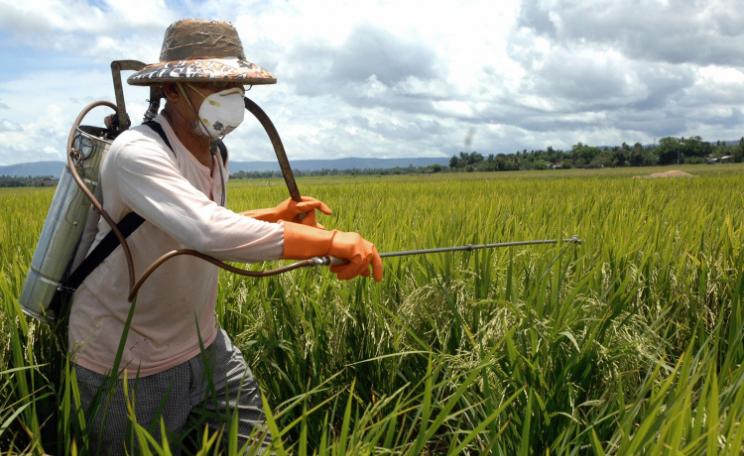
Monarch butterfly numbers are dwindling despite protection of their wintering forests in Mexico, and voluntary schemes to restore their food plant, milkweed, in US field margins, writes Eva Sirinathsinghji. These measures alone are insufficient: no less than an end to the mass spraying of glyphosate on crops, predicated by 'Roundup-ready' GM corn and soy, will do.
A programme to be broadcast on BBC2 promoting badger culling as the answer to bovine TB is praised in the corporation's flagship Radio Times, writes Lesley Docksey. But both are criticised by experts for their inaccuracy and bias. The main reservoir for bTB is, and always has been, the cattle themselves - and that's where the real solutions begin.
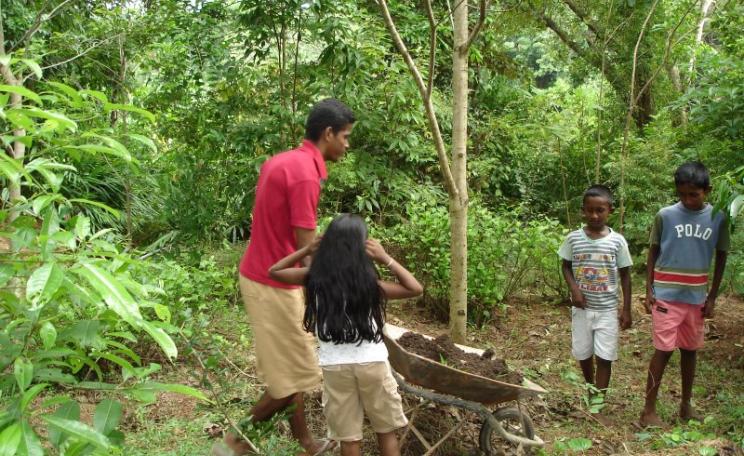
Modern practices mean that more than ever, people are disconnected from nature, writes Damitha Rajapakse. In Sri Lanka - a biodiversity hotspot which is full of endemic plants with unique properties - a conservation programme is under way to teach the new generation about the rich heritage of native fruits which surrounds them.
Conventional agriculture has made an enemy of evolution as pests and diseases develop resistance to biocides and over-bred hybrids succumb to them, writes Salvatore Ceccarelli. But there is another way - for farmers to participate in breeding seed lines that are continuously adapting to their environment, with ever improving yields, flavour, pest-resistance, and other sought-after qualities.
From banks that are too big to fail, to food banks for the too small to matter, the global econom systematically pumps money from the social economy and the poor up into the hands of a tiny minority of wealthy beneficiaries, writes Colin Tudge. Farmers, trapped between mountains of debt and low food prices, are among the main victims. It's time for a big rethink, starting from first principles.
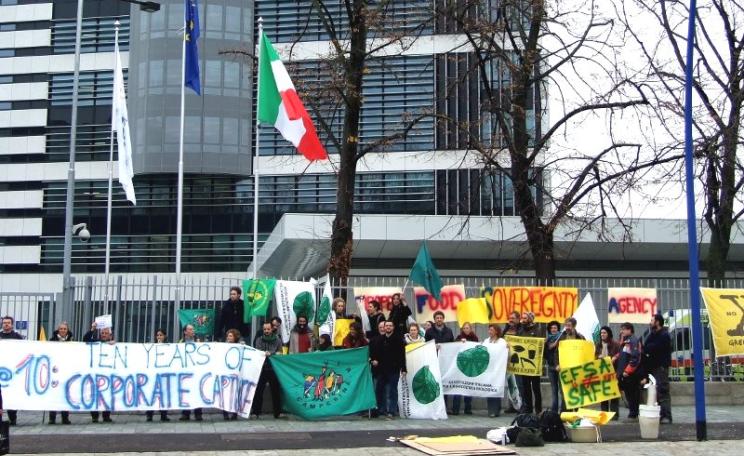
The chemical industry and the European Food Safety Authority are refusing to disclose key scientific evidence about glyphosate's risks, citing 'trade secrets' protection, writes Corporate Europe Observatory. They must be compelled to publish the 'mysterious three' scientific studies EFSA used to assess glyphosate as 'unlikely' to cause cancer to humans - contradicting the IARC's view.
The European Commission was guilty of maladministration and acted unlawfully in approving pesticides for which there was insufficient safety data, the EU Ombudsman has ruled. It must now reform its practices, writes Vanessa Amaral-Rogers, or face legal action.
India's farmers are the targets of structural violence aimed at uprooting indigenous agriculture and replacing it with an intensive corporate model based on GMOs and agrochemicals, writes Colin Todhunter. But as Monsanto's GM cotton succumbs to insect infestations despite repeated pesticide applications, agroecological farming is an increasingly attractive option for cultivators.
Gaza farmers have lost 187 hectares of crops to aerial spraying of herbicides by Israel hundreds of meters within the territory's borders. The action, carried out in the name of 'security', further undermines Gaza's ability to feed itself and may permanently deprive farmers of their livelihoods. It may also represent a war crime under the 1977 Protocol to the Geneva Conventions.
The Gates Foundation has received a 57,000 strong petition denouncing its support for a 'biopirated' GM banana program in Africa, and calling on it to suspend a feeding trial on US students, writes Vanessa Amaral-Rogers. The banana threatens both the health of the students, say campaigners, and the future of African agriculture.
The increasingly militant protests by dairy farmers against low prices forced on them by the corporate 'free market' represent serious and effective resistance against the 'free trade' agenda being forced on the world by neoliberal governments, writes David Miller. They are the first steps to building a new global food system that respects food, people, culture and environment.
The world is in the grip of a structural war against people, land, economies and ecosystems, writes Colin Todhunter. It is being waged by a quartet of organised criminal interests bent on monopolizing energy, money, food and violence across the globe. But a deep-rooted resistance against their 'neoliberal' doctrine of death and destruction is fighting back.
Vandana Shiva is more than just a leading scientist, author and campaigner on green issues and anti-globalisation, writes Scott London. She is also among the most prominent of Mahatma Gandhi's intellectual heirs. In this interview, she discusses how this led her to be an outspoken voice on such crucial environmental issues as seed legacy, biopiracy and economic injustice.
The public interest is already derelicted by federal officials on the US's public lands routinely intimidated by aggressive local economic and political interests, writes George Wuerthner. And now it's only going to get worse, with media coverage of the Malheur Wildlife Refuge debacle uncritically promulgating the false narrative of over-zealous enforcement of regulations.
Global oilseed, agribusiness and biotech corporations are engaged in a long term attack on India's local cooking oil producers, writes Colin Todhunter. In just 20 years they have reduced India from self-sufficiency in cooking oil to importing half its needs. Now the government's unlawful attempts to impose GM mustard seed threaten to wipe out a crop at the root of Indian food and farming traditions.
New research indicates that agricultural policies aimed at alleviating poverty in Africa are making things worse, writes Lawrence Woodward. Backed by 'development' aid, big business is forcing modern farming practices on unwilling rural communities. Only the rich benefit, while the poor carry the burden of landlessness and debt.
Over 100,000 Burkina Faso farmers were pleased with Monsanto's yield-boosting Bt cotton, write Brian Dowd-Uribe & Matthew Schnurr. But not the companies that had to buy the crop at a fixed government-set price. The shorter fibres produced by Bt varieties led to less lint being extracted, and of lower quality, making it a lose-lose proposition for the country's most important industry.
Agriculture is big business and with the EU pumping money at the sector, the corporate profiteers are holding all the aces, writes Chris Lang. The documentary ‘Land Grabbing’ investigates what happens when well-financed agro-investors take over rural communities' land and water.
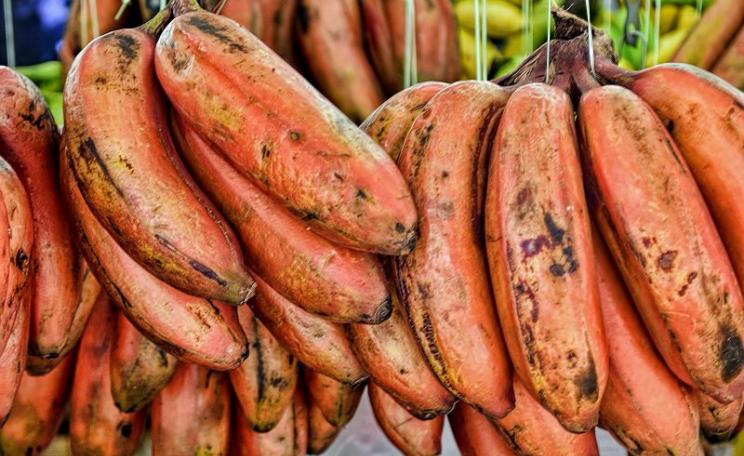
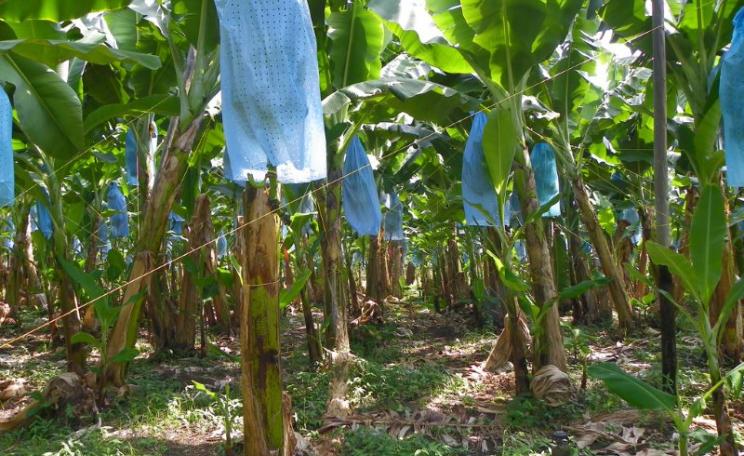
Bananas are at the sharp end of industrial agriculture's chemical war on pests and pathogens, writes Angelina Sanderson Bellamy. But even 60 pesticide sprays a year isn't enough to keep the diseases at bay. It's time to seek new solutions with little or no use of chemicals, working with nature, growing diverse crops on the same land - and breaking the dominance of the banana multinationals.
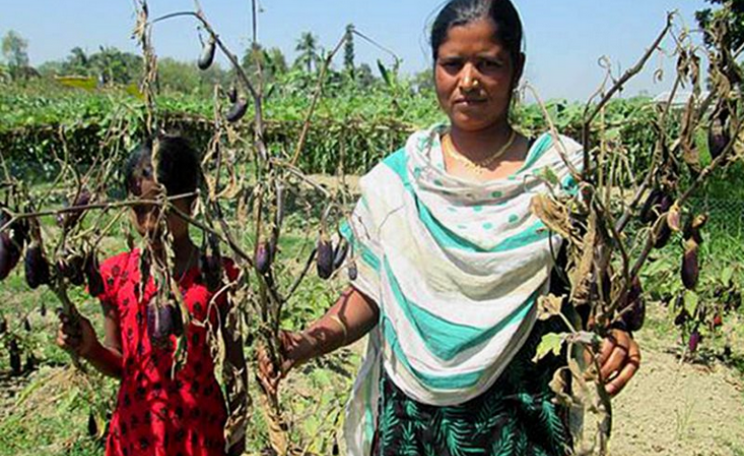
Cornell’s 'no pest' Bt brinjal project in Bangladesh appears to be going great with 200 farmers signed up, reports Farida Akhter. Only its not - hardly any of the farmers who grew the GM plants in previous years have come back for more after their crops wilted, failed to ripen, or were devastated by pests.
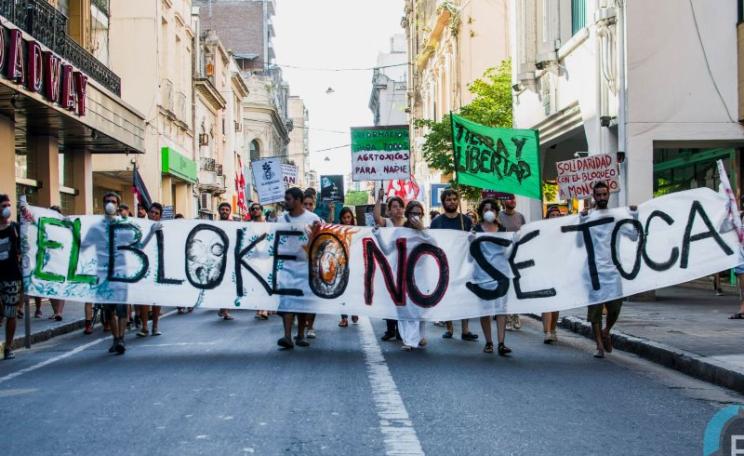
Protesters have now blocked a Monsanto seed factory in Córdoba, Argentina for over two years, writes Ciara Low. Another eviction attempt is now imminent, and campaigners are calling for a big mobilization this Sunday to fortify the blockade and send out a strong message to Monsanto and its acolytes: 'No Pasaran!' - 'They shall not pass!'
Colin Tudge reports on The College of Real Farming and Food Culture; a project designed to tackle the current issues in global food production. The current system is not fit for purpose but through a holistic approach and an overhaul of current mainstream agriculture, achieving a balance between feeding the world and conserving the environment is within grasp.
Monsanto has acquired a commanding role in the biotech, seed and agro-chemical industries, writes Carmelo Ruiz. So why is the company desperate to merge with its rival Syngenta? The truth is the company is in deep trouble, as its top-selling Roundup herbicide runs out of steam, and its rivals combine to challenge its dominance.
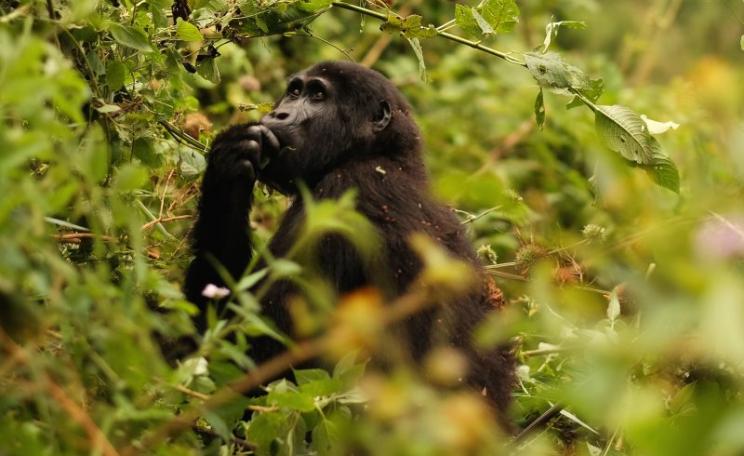
Mountain gorillas in the Bwindi Impenetrable Forest are at risk from tea plantations that would obliterate the adjacent Kafuga Forest, a vital buffer zone for local people, writes Richard Sadler. Deprived of foods, herbs, medicines and clean water from the forest, human pressure on the gorillas would inevitably increase, and expose them to potentially lethal diseases.