The fox-hunting season is now well under way, writes Toni Shephard. But with Cameron still pressing for a Commons vote on wrecking amendments to the Hunting Act, political controversy shows no sign of subsiding. Take, for example, the proposed lifting of the limit on number of dogs that can be used for the 'observation or study' of a wild mammal.
The uprooting and cutting down of over a million olive and fruit trees in occupied Palestine since 1967 is an attack on a symbol of life, and on Palestinian culture and survival, writes Dr. Cesar Chelala. A grave crime under international humantarian law, the arboricide is also contrary to Jewish religious teachings.
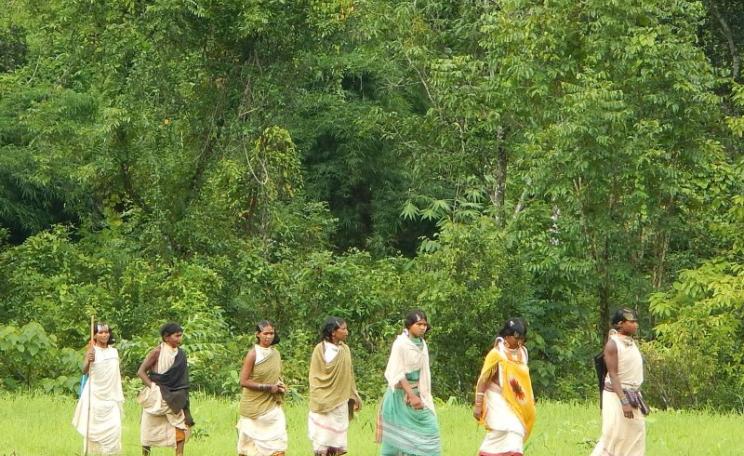
India's neoliberal government is attempting the mass seizure of indigenous lands, commons and forests in order to hand them over for corporate exploitation with mines, dams and plantations, writes Pushpa Achanta. But tribal communities are rising up to resist the takeover, which is not only morally reprehensible but violates India's own laws and international human rights obligations.
The EU's Nature Directives have been doing a great job of protecting Europe's most threatened species and habitats and building up wildlife numbers, writes Catherine Weller, and the UK knows it. But now it's the Directives themselves that are under threat. Other EU countries are standing up for them - but not the UK.
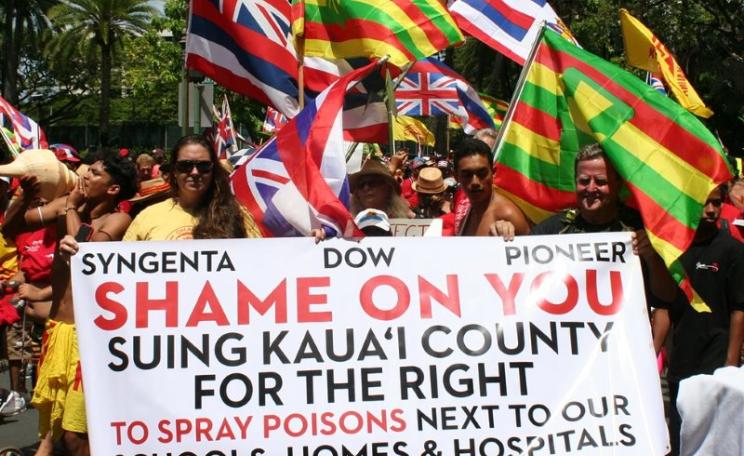
Hawaii has got everything, writes Christopher Pala, and not just for holidaymakers. It's also the perfect place for biotech companies to develop GMO corn varieties and spray them with toxic agrochemicals. People are getting sprayed too - and doctors report high rates of birth defects. But grassroots efforts to restrict the use of pesticides have twice been over-ruled by state courts.
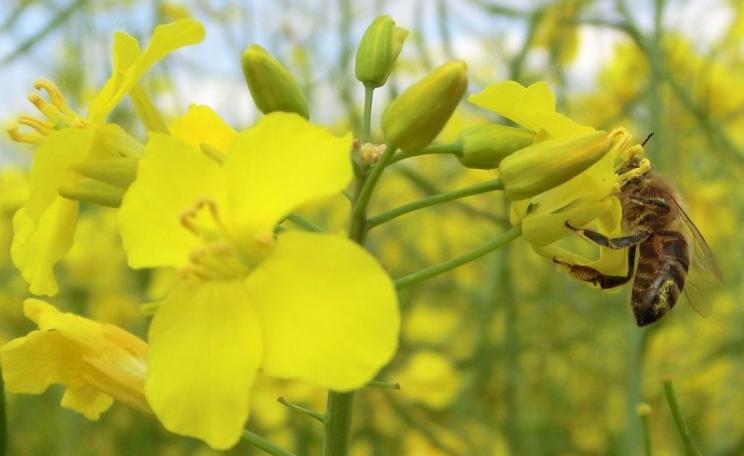
On the first anniversary of the UK's National Pollinator Strategy, writes Sandra Bell, the Bee Coalition warns that bees are still under threat from highly toxic pesticides, continuing loss of habitat, and an increasingly inhospitable countryside. The Government must do more to protect our bees.
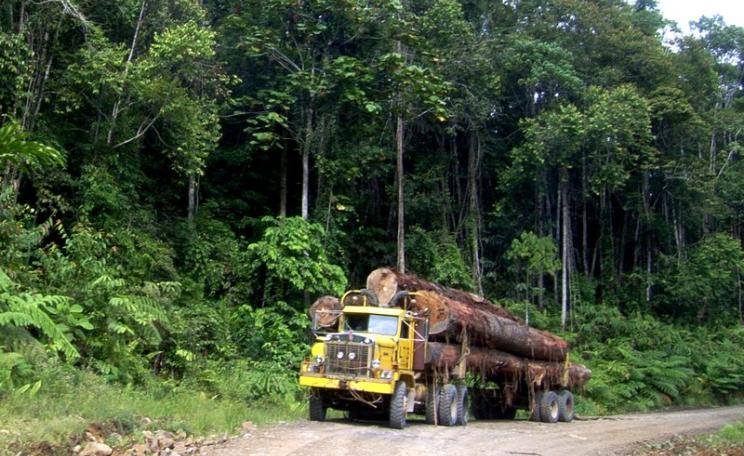
Just as Indonesia's forests are going up in flames, in part as a result of illegal logging on a massive scale, the country's Trade Minister has issued a regulation that would rubber stamp exports of illegal timber - also undermining a timber agreement with the EU that's due to come into force next month.
The EU's decision to authorise a new 'neonic' pesticide knowing it was highly toxic to bees has been challenged in the European Court. A similar permit granted to sulfoxaflor in the US has already been struck down by a federal court.
It was all going so well for Chevron - a New York court had ruled that a $9.5 billion judgment against it set by Ecuador's supreme court for massive pollution deep in the Amazon was corrupt and fraudulent. But then its star witness broke ranks and admitted, in another court, that he had lied, and the only bribes were coming from Chevron. Will Ecuador's pollution victims finally get justice?
The investor protections in the US-EU TTIP treaty would privilege US corporations over the EU's own citizens and businesses, writes Laurens Ankersmit & Oliver Tickell. That would sideline EU courts and undermine the completion of the internal market. It is therefore essential that the EU Court be asked to rule whether they are legal.
The leaked chapter of the Trans Pacific Partnership chapter on intellectual property represents a wholesale attack on internet freedom, investigative journalism, and the wider creative commons, writes Jeremy Malcolm. While massively advancing corporate financial interests in binding clauses, the parts that purport to protect information users are soft guidelines that cannot be enforced.
Disastrous water pollution from gold mines in El Salvador has united government and people to oppose new metal mines, writes Lynn Holland. In Central America's most water scarce country, the imperative is to keep lakes, rivers and streams clean and wholesome. But there may be a heavy price to pay, with a Canadian mining company pressing a $300 million 'compensation' claim.
The US's development of its new 'smart' nuclear bomb, the B61-12, is an outright violation of the Non Proliferation Treaty, writes Xanthe Hall. Yet five other 'non-nuclear' NATO nations - Germany, Holland, Belgium, Italy and Turkey - are set to accept it onto their territories, so their own aircraft can use it in nuclear attacks.
With all the EU's GMO exemptions filed, a clear majority - by number, population and area of farmland - have chosen to be GMO-free, writes Mary Dobbs. But the rules surrounding their opt-outs are complex in the extreme and many countries will find it hard to maintain their GMO-free status - specially if the Commission and the biotech corporations like Monsanto and Syngenta choose to exercise their powers.
With the deadline for EU countries who wish to ban genetically GM crops drawing near, writes Oliver Tickell, Poland is the latest to register with the European Commission to go GM-free. Now the division of the EU into pro and anti-GM zones may test the single market beyond its limits.
Coming so soon after the Magna Carta celebrations, the eviction and destruction of the Runnymede Eco-village is a parable of our times, writes Nicholas Sebley: a violent assertion of the power of capital over people and community, and part of a deliberate, systematic closure of alternative ways of living outside the mainstream economy.
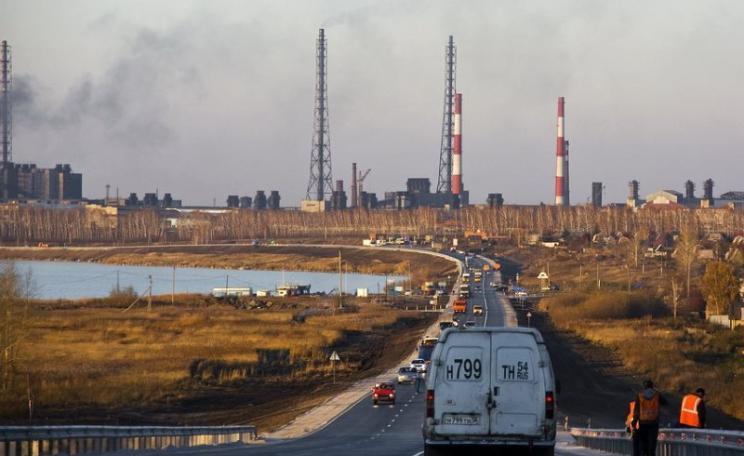
While other countries apply themselves to environmental challenges from climate change to nature protection, Russia - with its massive wealth of nature and natural resources - is stubbornly refusing to take part, writes Lucy E J Woods. And as the economy declines, the pressure is on: to ignore environmental regulations, and clamp down on environmental defenders.
New proposals on land reform in Scotland are a mixed bag, writes Craig Bayne: some good, some bad, and some downright ugly. Leading that last category is the failure to tackle offshore land ownership in tax haven shell companies, and force disclosure of the real landowners.
The EU Court has made a landmark judgement we should all be glad of, writes Tess Crean, firming up our right to know when products contain chemicals known to be seriously damaging to health. Now we must make sure that reluctant regulators step up to the mark.
The respected Russian campaign group Sakhalin Environment Watch is being forced to choose between registering as a 'foreign agent' label and closing down, writes Oliver Tickell. Environmental campaigning, it seems, is now a 'political activity'.
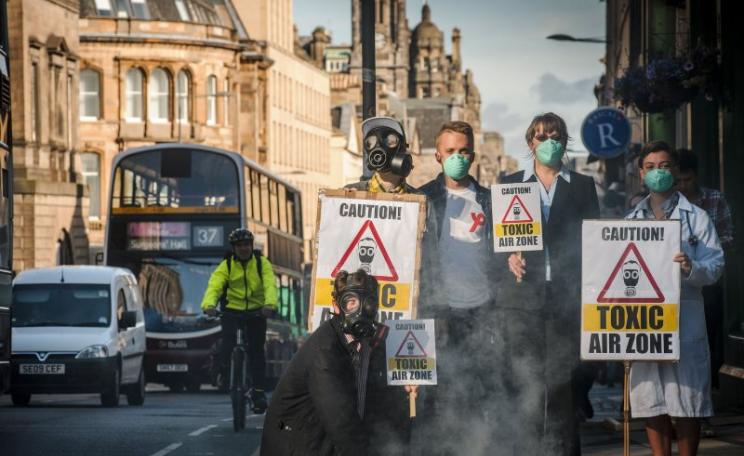
The UK government's response to the Supreme Court's order to clean up air quality in key urban areas has been condemened as vague, weak and slow, lacking in clear targets and compulsory measures. New figures reveal that over 50,000 people a year are being killed by air pollution.
British Prime Minister David Cameron is receiving Israel's Benjamin Netenyahu into his Downing Street home just as Israel embarks on its ethnic cleansing of the Negev, writes Alia Al Ghussain. The imminent demolition of the 'unrecognised' Bedouin village of Umm Al Hiran and the eviction of its residents looks like the realization of the 'Prawer Plan' to Judaize the desert.
It's tough being a filmmaker on the front line of environmental defense, writes David Lavallee - challenging corporate control of the Earth's resources, not to mention governments and security services, all of them intent on extracting every last drop of oil and gas from the world's most pristine places. All the more so when holding a camera makes you an instant 'eco-terrorist'.
Guarani man Semião Vilhalva was murdered by ranchers' gunmen last weekend after his community reoccupied parts of their ancestral land from ranchers. Thousands of Guarani Indians holding on to tiny patches of their ancestral land are living in constant fear of forcible eviction.