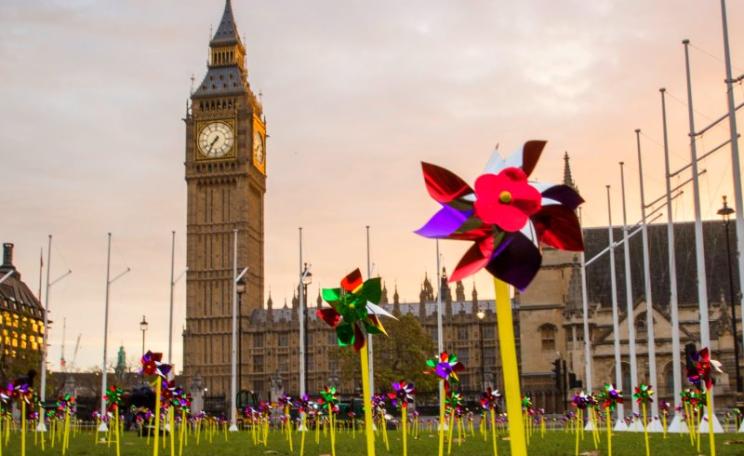
Will the UK keep Theresa May's promise to 'leave the environment in a better state than it found it' in the Brexit negotitions? Or is the government bent on the 'bonfire of red tape', including environmental protections, demanded by right-wing former and serving ministers? Viviane Gravey sets out four 'green lines' by which to judge the Brexiteers' true colours.
As the new year begins, the global clean energy transition is progressing much faster than most people realise, and is probably irreversible, writes Jeremy Leggett. President-elect Trump's prospects of revitalising the US coal industry, and giving the oil and gas industry the expansionist dream ticket it wants, are very low.
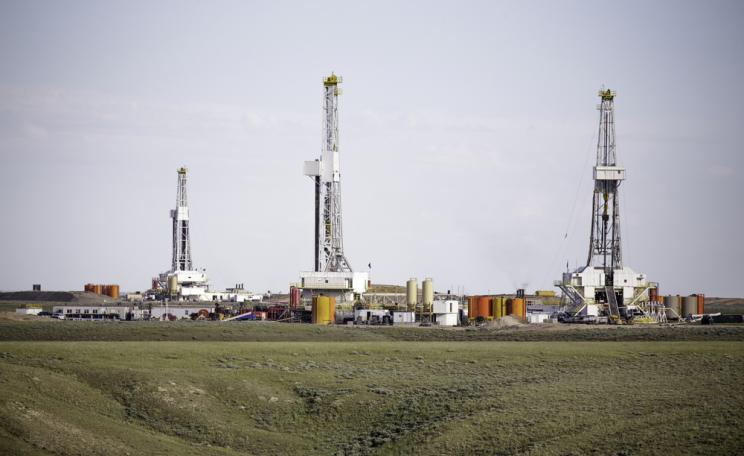
Fracking has no social licence in the UK, will contribute little to the economy, will have a huge adverse impact on other sectors, will be a disaster to climate and the environment, and won't even improve energy security, write Peter Strachan and Alex Russell. Do we really want to see 16,000 or more shale gas wells drilled in the British countryside? Let's FraXit now!
President-elect Trump's widely anticipated appointment of Exxon's CEO Rex Tillerson as new US Secretary of State is creating a government of, by, and for the oil and gas industry, writes Steve Horn.
The US is a party to the International Covenant on Civil and Political Rights and the UN Declaration on the Rights of Indigenous Peoples, write Colin Samson & Øyvind Ravna. Both require free, prior and informed consent for any intrusions on indigenous lands and stipulate that indigenous peoples shall own and control their traditional lands. The US is violating both at Standing Rock.
Two key wildlife laws that underpin nature conservation across the EU will be retained intact, the EU Commission announced today after an 18 month review that generated record public engagement due to fears that they would be weakened. Now campaigners are determined to ensure the UK retains the laws post-Brexit.
To secure the clean energy transformation for the long term we must get the good news out there, writes Natalie Bennett - driving forward a popular movement for warm, comfortable homes, affordable fuel bills, community renewables and thriving local economies.
It's now clear what place government ministers and senior officials want for the UK in a post-Brexit world, writes Mark Curtis - and it's not pretty! A new era of corporate 'free trade' colonialism looms, spearheaded by aid spending, with ramped-up arms exports to the world's most corrupt and repressive regimes, all backed up by military force to project the Britain's global financial interests.
Eight years ago the first exploration applications for unconventional gas extraction were submitted in South Africa. Last week fracking finally received official attention from South Africa's legislature during a debate that revealed how the country's different political parties gauge the benefits and risks linked to the drilling technique. JASPER FINKELDEY was at that debate.
Next April the UK government proposes to increase taxes on self-consumed solar electricity installations on schools, offices, warehouses and factories by a whopping 6-8 times, write the STA and undersigned. This inexplicable move, which threatens a once thriving solar industry already on its knees, must be abandoned.
Donald Trump has made some big policy flips since his election victory, writes Travis N. Rieder. But will the flippery extend to climate change? The danger is not just that America's emissions could soar under a Trump Presidency, but that other nations may follow suit. We must work to make sure he recognises his moral responsibility to humanity. The lives of millions depend on it!
After two decades of neoliberalism, India's magnates and corporations are profiting as never before, writes Colin Todhunter. But the entire economic edifice is built on the dispossession of the poor, locked into debt servitude, and ever rising income inequality. Prime Minister Modi's latest move, 'demonetization', is yet another example of the state stealing from the poor to give to the obscenely rich.
The European Parliament just voted against referring CETA, the EU's toxic trade deal with Canada, for legal scrutiny by the European Court of Justice, write Kevin Smith & Jean Blaylock. But this astonishing decision comes with an important silver lining: 258 MEPs voted in favour, building a platform from which to defeat CETA altogether in the main vote in February.
The COP22 climate conference in Marrakech was given an impossible mandate: to make the Paris Agreement happen, write Alexander Pfeiffer, Elizabeth Dirth & Alex Clark. But it failed. The task now falls to civil society - and to succeed we must move beyond the alienating discourse of science and diplomacy, and show marginalised communities that climate solutions can also deliver for them.
Both Trump and Brexit can be explained by the failure of mainstream political elites to address the pain inflicted on ordinary citizens in the neoliberal era, write Helena Norberg-Hodge & Rupert Read. In the US and the UK, working class voters rightly rejected the corporate globalisation that has created so much poverty and insecurity. But the real solutions lie not in hatred, but relocalisation.
Brazil's indigenous peoples rose up against the government's plans to suppress the rights they had fought so hard to win over decades, writes Christian Poirier. Their victory shows the way to defend our achievements and rights: collective struggle, organized response, strong mobilization and ceaseless pressure.
With the EU Parliament voting next week on CETA, the EU-Canada trade deal, 89 MEPs are demanding that its system of 'corporate courts' must first be verified by the European Court of Justice as compatible with existing EU law. But pro-CETA parliamentary leaders are trying to block all debate in the run-up to the vote.
Progressive green thinkers have been seduced by the EU, but now it's time for the Greens to seize the moment, reclaim their radical roots and take the lead on Brexit writes PAUL KINGSNORTH
Onshore wind power is effective, hugely popular, and the UK's cheapest form of new power generation, writes Max Wakefield, already competing against gas turbines in prime locations. So why did Cameron's Government ban it? And what will it take to get Chancellor Philip Hammond to reverse that decision next week?
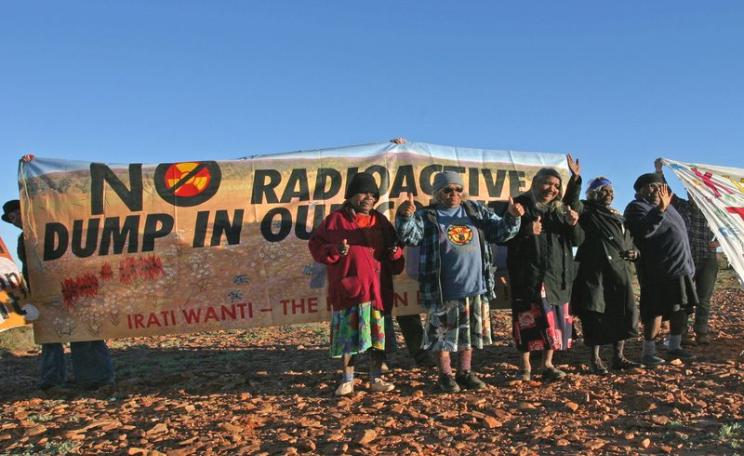
A 350-member Citizens' Jury convened to decide on whether a massive nuclear waste dump would benefit South Australia just gave the plans a big 'No!', writes Ian Lowe. SA Premier Weatherill must drop his attempt to reverse that decision with a referendum, and accept the jury's well informed, democratic verdict.
With the election of a 'climate hoaxer' to the US presidency James Dyke's normal optimism that we will deal with climate change in time to avoid the most catastrophic impacts has run out. Now his fears are compounded by the likely appointment of the US's leading climate change denier to run the EPA.
The Trump Presidency may not be the climate disaster that many fear, writes Joe Ware. The transition to clean energy is increasingly driven by technology and economics, not politics. it was Obama's 'all of the above' energy policy that enabled the fracking revolution. And pro-fossil fuel measures instituted by Trump will now galvanise massive domestic and international opposition.
President Obama faced reality last Friday when he conceded that the TPP would not be ratified by this Congress, write Kevin Zeese & Margaret Flowers. It was a massive victory for a people power: the culmination of a years-long campaign to expose the corporate depravity at TPP's heart, and turn it into political poison. Trump's victory was just the last straw that broke TPP's back.
Progressives must begin organizing now, writes Pete Dolack, before Trump takes office and command of the world's most deadly security apparatus. We must demonstrate strong resolve against the right-wing authoritarian rule to come, as a Trump White House will unleash repression on a scale not seen in decades.