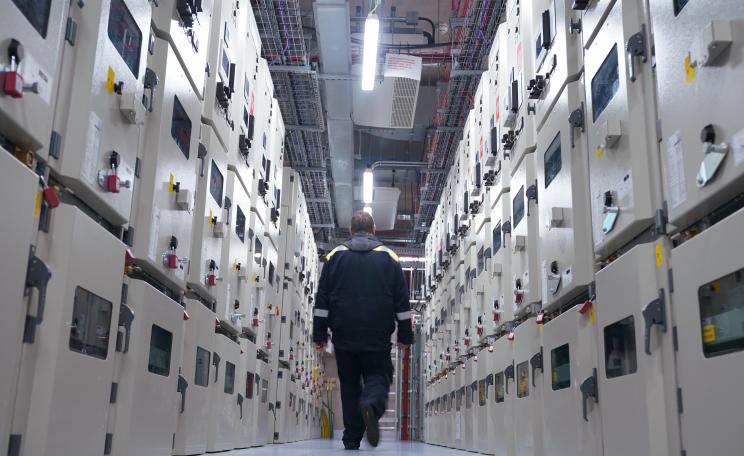
Local people don’t want massive data centres suddenly dropped on their doorsteps.
Data centres should not be built if they require the burning of more fossil fuels or will create water shortages say British voters, according to polling commissioned by Beyond Fossil Fuels and carried out by Savanta.
Read: The AI of the storm
More than 78 per cent of people in the UK said new data centres should only be built if they are powered by renewable energy sources while 70 per cent said they would be concerned about how new developments would affect their household’s water supply.
Read: Hyperscale data centres will 'turbocharge emissions'
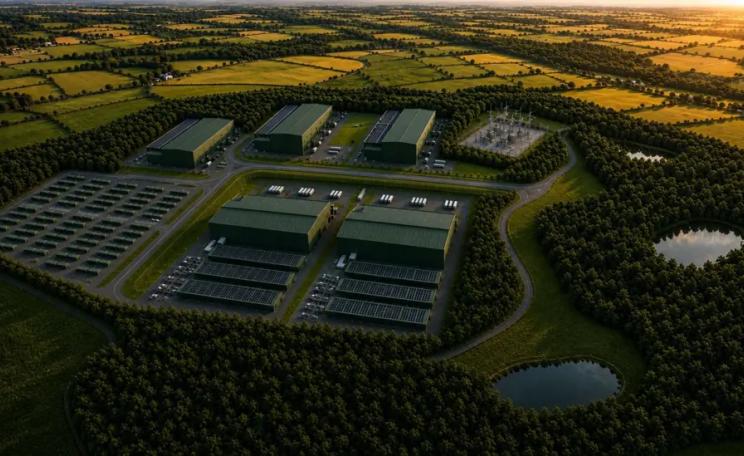
Ros Naylor is a spokesperson for the Potters’ Bar Special Interest Group Residents Association that is opposing the large-scale development of the DC1UK data centre on green belt land in Potters Bar. They said: “Local people don’t want massive data centres suddenly dropped on their doorsteps.
Healthcare
"Communities are being kept in the dark about how much water and green energy is going to be sacrificed but are now waking up to the significant costs of AI to our irreplaceable countryside, our health and the health of our planet.
"Who stands to benefit from the government's rush to impose AI and data centres everywhere? We don’t think it’s our community. Do we really need it? No, we are being told we do."
There is a strong desire among the British electorate for transparency and regulation of the energy and environmental impacts of data centres. A total of 88 per cent feel data centre operators should be required to disclose their environmental impact reports.
A decisive 82 per cent of adults in Britain think that the UK Government should put in place specific criteria to determine how energy is prioritised and distributed between industries, sectors, and services, including when there are risks of shortages.
When there are shortages, UK people think that public healthcare services, agriculture and food, housing and residential services and national defence should all be prioritised over data centres for energy supply.
Renewables
Oliver Hayes, head of policy and campaigns at Global Action Plan UK, said: “It’s no coincidence that Big Tech’s imposition of data centres has been most aggressive where public awareness is lowest.
"But when confronted with the stark reality, UK citizens clearly grasp what their government won’t: data centres deliver private gain for public pain.
The UK is a nation of climate advocates who know greenwash when they see it. Ministers who think they can quietly heed Big Tech’s demands for priority access to energy and water in service of chatbots and AI slop are in for a shock."
Local people don’t want massive data centres suddenly dropped on their doorsteps.
He added: "This polling couldn’t be clearer: the public expect Big Tech to pay for new renewables and grid upgrades, and for their activities to be in service of, not jeopardising, critical industries like housing and healthcare.”
Regulating
Jill McArdle, the international corporate campaigner at Beyond Fossil Fuels, said: “This is a wake up call for policy makers in Europe pursuing a political agenda of rapid data centre expansion at all costs.
"Rather than supporting this agenda, people are worried about data centres’ unregulated growth stalling Europe’s energy transition, draining water resources and sending energy costs skyrocketing.”
“Their message to European leaders is clear: new data centres must not run on fossil fuels. People want to see renewables powering data centres, or they do not want data centres built."
She added: "But that’s not all, they do not want data centres jumping the queue for access to energy, ahead of households, public services and the electrification of European industries. It is time for Europe to stop pandering to Big Tech and start regulating data centres.”
Magnitude
Shockingly, knowledge of data centres is lowest in Britain among in Western European countries - despite the country having more than anywhere else.
Less than half of residents are familiar with the term “data centre”, which was the lowest of the five countries surveyed - Germany, Ireland, Spain, Switzerland and UK. This is despite the UK having more data centers.
There are estimated to be 497 data centres in the UK currently, with the BBC reporting that as many as a hundred new data centres are set to be built imminently to meet the growing computing demands of AI. These new data centres will be orders of magnitude bigger than most already in existence.
Global Action Plan has compiled a comprehensive map of proposed data centres across the UK and are encouraging people to find out if a data centre is planned near them.
This Author
Brendan Montague is a member of the editorial team at The Ecologist.
Access this map and more information about data centres here: What's the deal with data centres?