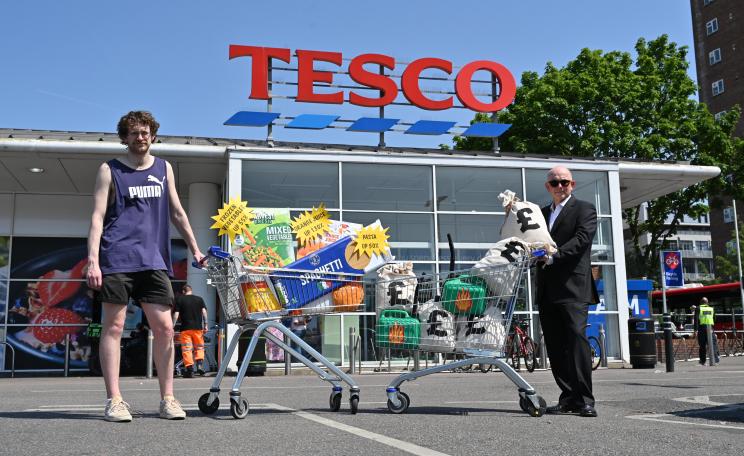
A meat tax is a win for our climate, our forests, our health, our healthcare systems, and animal welfare.
The concept of a tax on meat products, which places a levy on high-emission animal products, is gaining traction in the offices of agricultural ministries around the world.
Spain and Switzerland have carbon pricing plans in place, and Denmark, a major producer of pork and dairy, will begin taxing livestock carbon emissions in 2030. New Zealand, Germany, and the Netherlands are also seriously considering this tax.
The benefits are two-fold. Taxing livestock emissions according to their environmental impact will encourage consumers to make more sustainable choices.
Reforms
This reduction in demand will cut greenhouse gas emissions, which contribute to the climate crisis, and benefit public health as diets shift to more plant-based and less processed meals.
Taxing meat is heavily advocated by animal welfare and environmental groups alike, who argue such taxes, like those placed on sugar and tobacco products, have proven successful in changing consumer behaviour and mitigating their harmful effects.
Dr Richard Carmona, a former US Surgeon General has said on the record: "The idea of a meat tax is not to punish consumers but to provide the right incentives for healthier and more sustainable eating habits."
Advocacy groups used this month's COP30 climate talks to highlight the need for food system reforms and carbon pricing on high-emission products such as dairy and meat as a method to combat climate change.
So, how bad is the meat industry? Better World Info has carried out thorough research on the meat tax debate.
Miserable
The meat and dairy industries are responsible for 14.5 per cent of global greenhouse gas emissions overall. Meat accounts for nearly 60 per cent of all greenhouse gases from food production.
Beef production is responsible for 41 per cent of global deforestation, primarily in the extremely fragile Amazon rainforest region.
A meat tax is a win for our climate, our forests, our health, our healthcare systems, and animal welfare.
The meat, dairy, and egg industries occupy one-third of the Earth's land surface and are responsible for 30 per cent of biodiversity loss.
Globally, two out of three farm animals are now factory-farmed. Animals are crammed in their thousands into filthy, windowless cages, crates, or pens under highly restrictive conditions.
They will not see the light of day and endure painful, miserable conditions every day until they are transported to the slaughterhouse.
Levy
Confining animals in large numbers in one place produces an oversaturation of waste, which the surrounding area cannot support.
Factory farms are environmental hazards which pollute water sources, soils, and the air. Exposure to which causes respiratory problems, skin infections, nausea, and even depression.
Overuse of antibiotics in farmed animals contributes to antibiotic resistance in humans. Around 70 per cent of global antibiotic use is in healthy farmed animals, which do not need this routine treatment. They are used to prevent infections and have a marginal effect on increasing growth rates.
High meat consumption, particularly processed and red meat, is associated with increased risks of heart disease, strokes, cancer, and diabetes.
Taxes can shift consumers to healthier lifestyles. The UK soft drinks industry levy was implemented in April 2018 as part of the country's campaign to reduce obesity.
Barriers
The tax was designed to incentivise drinks manufacturers to reduce the sugar content in their products by charging them according to set parameters. A higher tax for higher concentrations. It worked.
Impressively, even before the levy came into force, more than half of all drink manufacturers made adjustments to avoid the charge.
A University of Cambridge study, conducted one year after the levy began, found that the average daily consumption of sugar had decreased by almost 5g per day for children and by almost 11g for adults.
Similar levies have been introduced with success in Mexico, South Africa, and Chile. It makes us wonder what political barriers are preventing this levy from being extended to high-sugar food products.
Tobacco taxation has also proved a highly successful tool in reducing tobacco use and preventing related deaths and health issues.
Beneficial
In Colombia, after tripling taxes on cigarettes, consumption fell by 34 per cent. The revenue generated led to a doubling of funding for their universal healthcare system.
Not only do these types of policies improve public well-being, but they also generate revenue. A study from the Netherlands estimated that a 30 per cent tax on meat and a 10 per cent subsidy for vegetables would generate a net benefit to society of more than £12 million over thirty years, for a population of less than 20 million people.
Paying for the environmental and health costs of meat production and consumption makes sense. Meat consumption has almost doubled since the 1960's and many countries are now eating way beyond the meat required in our daily nutritional needs.
In some North American, European, and Latin American countries, red meat is being consumed at rates three to six times higher than recommended.
Experts already agree that we simply cannot meet our climate goals and protect our precious ecosystems without reducing our consumption of meat and making the industry more sustainable. Taxing products according to their environmental and health impacts will have the most beneficial and direct effect.
Educational
If meat and dairy products are to become more expensive, healthy and sustainable options must become more affordable. By subsidising fruit and vegetables, low-income families will be minimally affected.
This also helps us to avoid the small animal-replacement problem (SARP), whereby consumers simply switch to less carbon-intensive meat options such as chicken.
We must also ensure that the transition for farmers and those along the supply chain is carefully managed to support diversification and agricultural reform.
The revenue raised can be used to help cover the costs of land stewardship, restoration projects, and the transition to producing high-quality, organic meat from much lower-density herds.
Tax revenues can also be used to fund sustainable educational campaigns on plant-based diets and help prop up healthcare systems, which are struggling with unprecedented numbers of patients with cardiovascular diseases, diabetes, and obesity.
Planetary
The animal welfare campaign group PETA has asserted that across the UK a meat tax "would lighten the burden on the already overstretched NHS."
The PETA spokesperson added: "Modelling predicts that a UK tax on red and processed meats could result in 22 per cent fewer deaths and save the health service £700 million a year."
A meat tax is a win for our climate, our forests, our health, our healthcare systems, and animal welfare.
Despite this, in the interest of profit, strategic lobbying by Big Meat is extensively working to prevent levies on the industry and stifle public and political support.
The debate continues, but one certainty is that we must make the production and consumption of meat and dairy more sustainable and realign our agricultural systems with planetary boundaries and dietary guidelines.
This Author
Rachael Mellor is a key writer for the nonprofit platform Better World Info, which focuses on global issues such as peace, human rights, environment, and social justice. Her articles have been published in The Ecologist, The Transnational, Common Dreams, Peace News, Pace e Bene, Research Gate, SSRN, and Sonnenseite.