For us, hope is not lost because the land will regenerate.
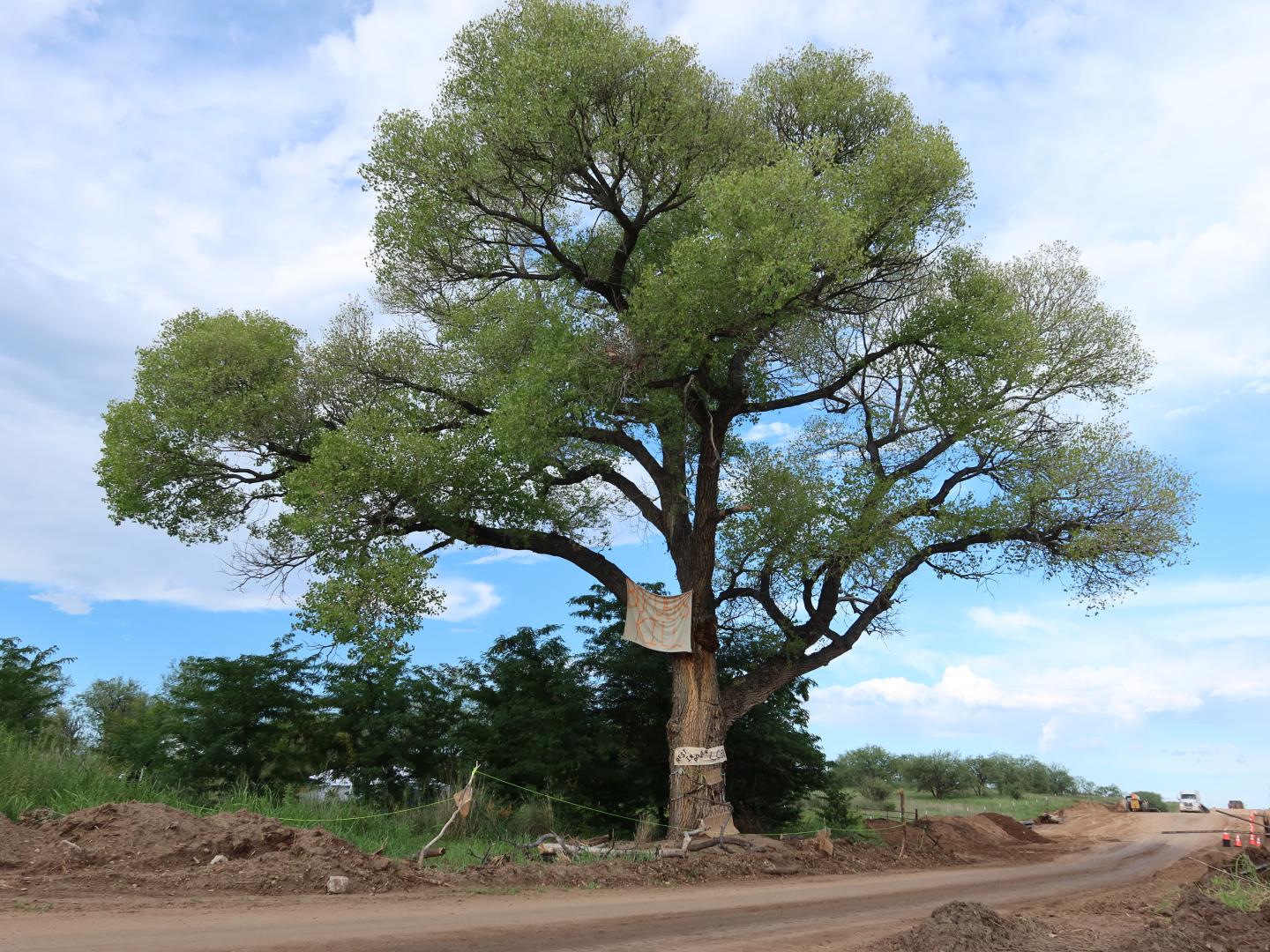
An activist had already been living in the upper branches of an ancient cottonwood tree for more than two months, preventing government contractors from cutting it down, when I arrived in the remote San Rafael Valley.
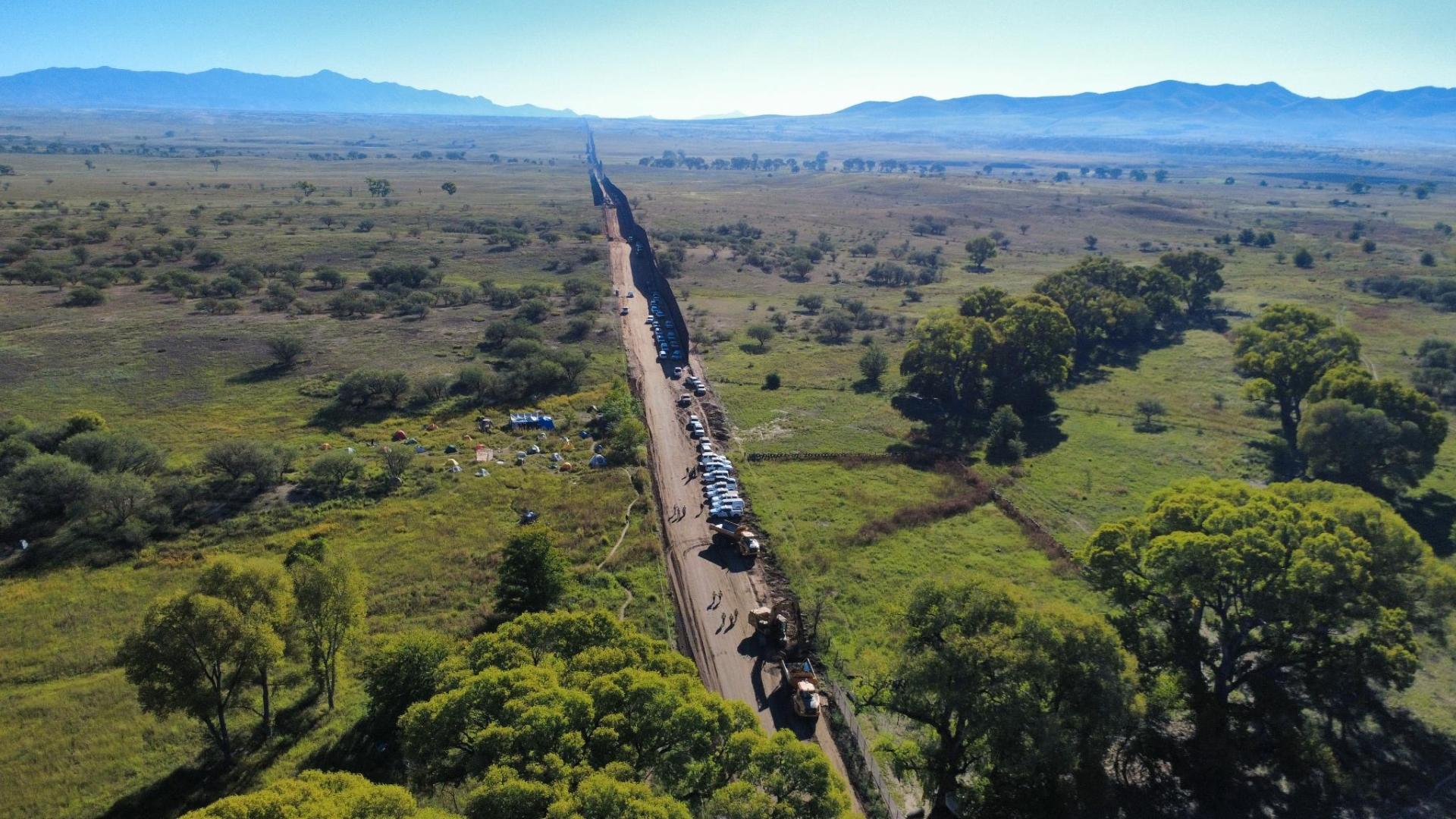
Below, an encampment had formed in a meadow where protesters were trying to stop the border wall and save cottonwoods in its path near Lochiel, Arizona. Local conservationists estimate the trees to be roughly 200 years old.
I drove through Coronado National Forest and parked next to the encampment, established on private land with the landowner’s permission.
Solidarity
The tree sitter lived on a platform in the upper branches of a cottonwood locals call the “Grandmother tree.”
I helped activists use pulleys to send food and water up to the tree sitter. I camped in the adjacent meadow among the intergenerational, binational group of protesters, the majority of whom were women, queer, and femme people.
The encampment began after a protester was arrested on Monday, 27 July 2026 for standing in front of construction equipment to prevent workers from reaching the trees. That same day, workers cut down three of the four cottonwood trees in the wall's proposed path.
The following day, an activist occupied the fourth tree, and the encampment moved beneath it. Since then, helicopters, drones, Border Patrol, and local law enforcement have surveilled the area, according to activists.
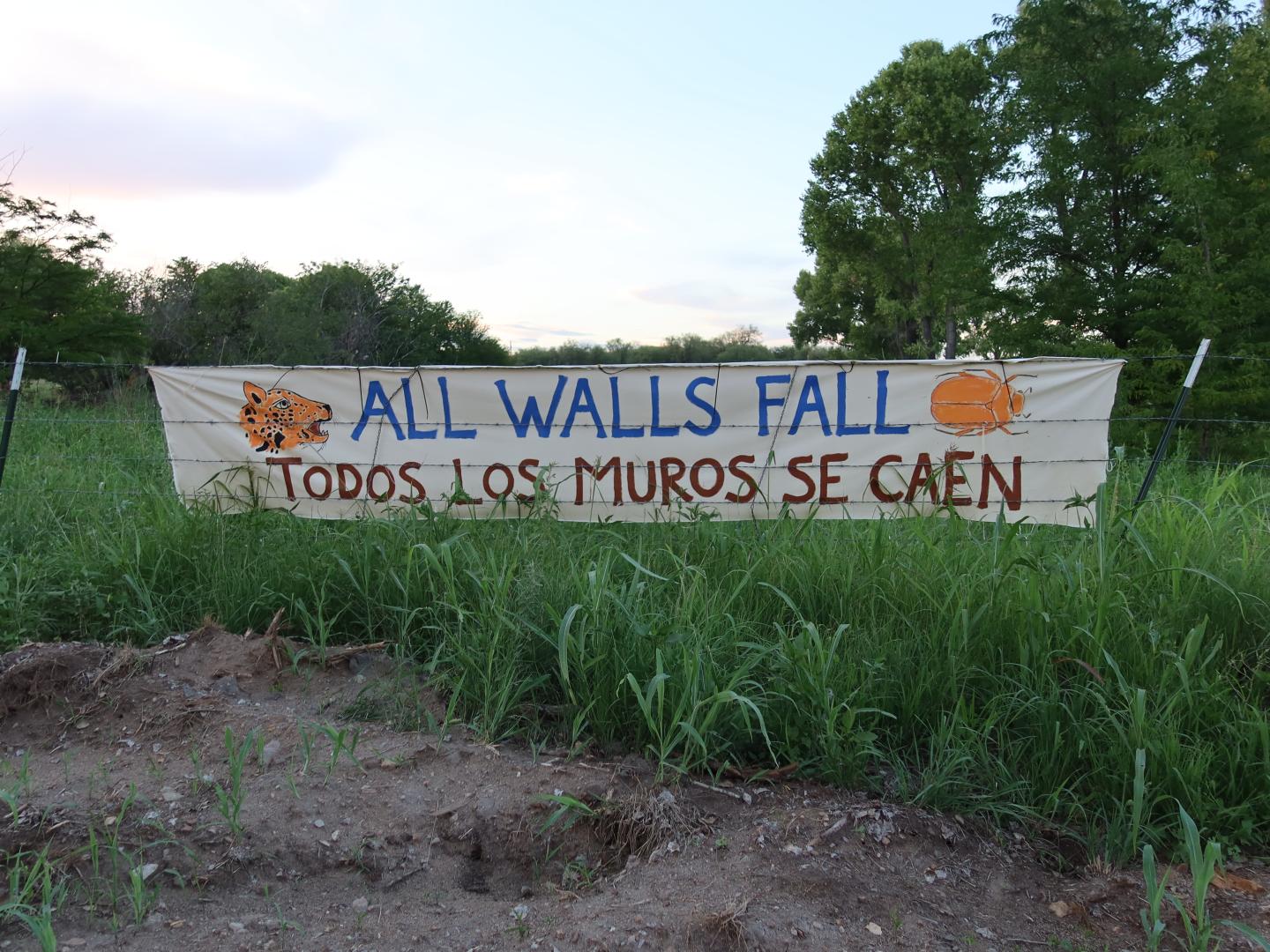
Erick Meza told me that after the trees were felled in the United States (US), Mexican activists erected signs across the border as a gesture of international solidarity. One of the felled US cottonwoods had touched a tree in Mexico and became a symbol of international friendship for the local community.
Sitter
On Tuesday, 18 August, the tree sit-in became binational when a local environmental activist occupied one of the cottonwoods in Sonora, Mexico, supported by activists camped nearby.
According to Kate Scott, an environmental activist, the Mexican occupation blocked the proposed path of one wall, while the US occupation blocked the other.
Erick Meza told me he believes it was the first binational tree sit-in opposition to border wall construction under the Trump administration.
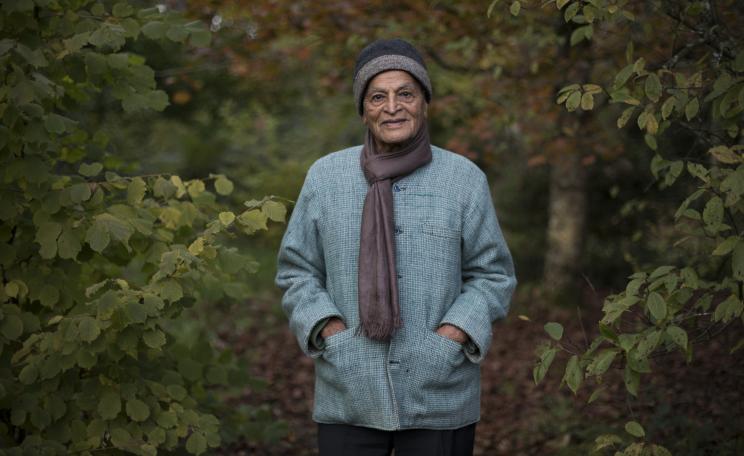
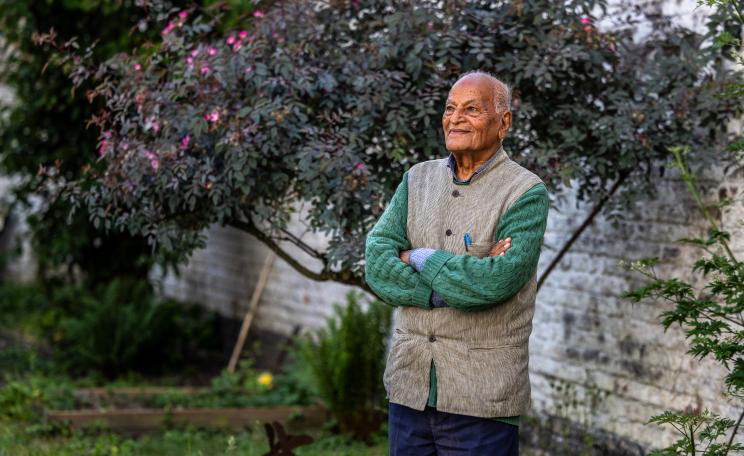
As Zach Palma, a resident of both Sonora and Arizona and an organizer with Sky Island Alliance, said: “This resistance isn’t new, but there’s new energy behind our binational community.”
For us, hope is not lost because the land will regenerate.
By the time I visited, the Mexican tree sitter had been removed, but protest signs remained visible on both sides of the border.
Advocates
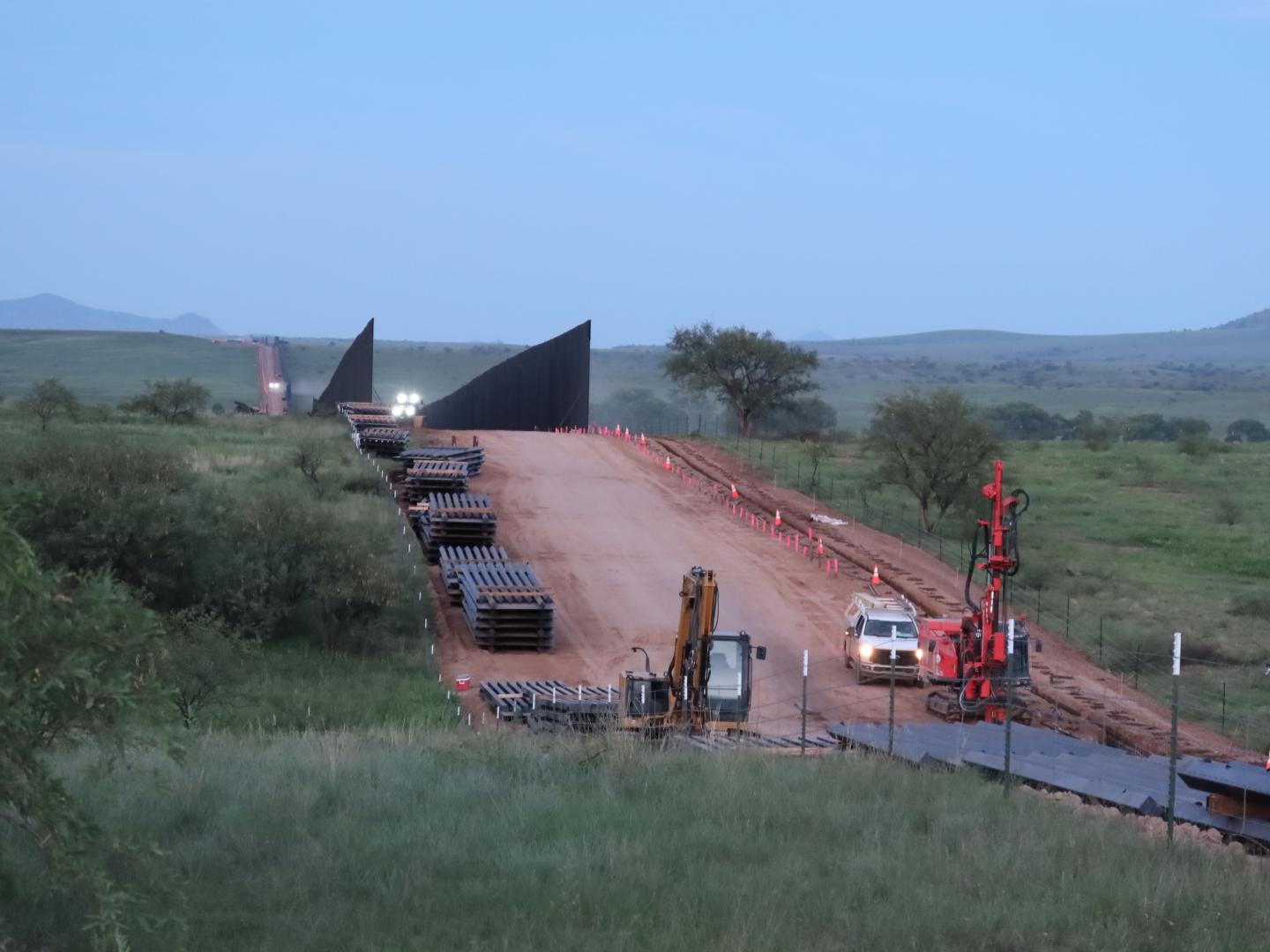
A double wall was under construction near Lochiel: two 30-foot-high steel walls running parallel with a buffer between them.
Previous barriers were primarily vehicle barriers and barbed-wire fencing, which I could easily hop over as I walked from my car to the grandmother tree. They contrasted sharply with the double wall rising beside the encampment.
At the encampment, I heard a yellow-billed cuckoo in the US calling to another yellow-billed cuckoo responding from the Mexican side of the border.
The western distinct population segment of the yellow-billed cuckoo is listed as threatened under the Endangered Species Act. Scott told me the birds had also been seen in the grandmother tree.
The movement includes advocates from environmental groups on both sides of the border, including the Sierra Club, Sky Island Alliance, and the Madrean Archipelago Wildlife Center.
Buffer
Scott told me that jaguars travel through the San Rafael Valley between Arizona and Sonora in search of food, water, and mates. The double wall creates a physical barrier across these routes, fragmenting wildlife habitat and corridors.
I met activists who had fought border barriers here before. Former Arizona Governor Doug Ducey’s administration built a border wall of shipping containers in federally protected forest in 2022, fragmenting habitat in the San Rafael Valley.
After the federal government sued, Arizona agreed to remove them in late 2022, and the removal was completed in 2023.
The US Customs and Border Protection (CBP) promised in a letter dated Thursday, 18 June to conduct environmental monitoring and coordinate with “appropriate federal agencies” if construction “will result in the disturbance or harm of a migratory bird.”
For example, the “contractor will establish a buffer zone around active nests until nestlings have fledged.”
Extinct
Erick Meza reported that he saw birds nesting in the tree shortly before it was removed: however, CBP said that preconstruction surveys found no active migratory bird nests.
The Department of Homeland Security waived dozens of federal laws, including Endangered Species Act requirements that otherwise would have applied to the project.
Under the REAL ID Act, the department can waive legal requirements to expedite border infrastructure. The waivers have facilitated wall construction on normally protected public lands, including national parks and wildlife refuges.
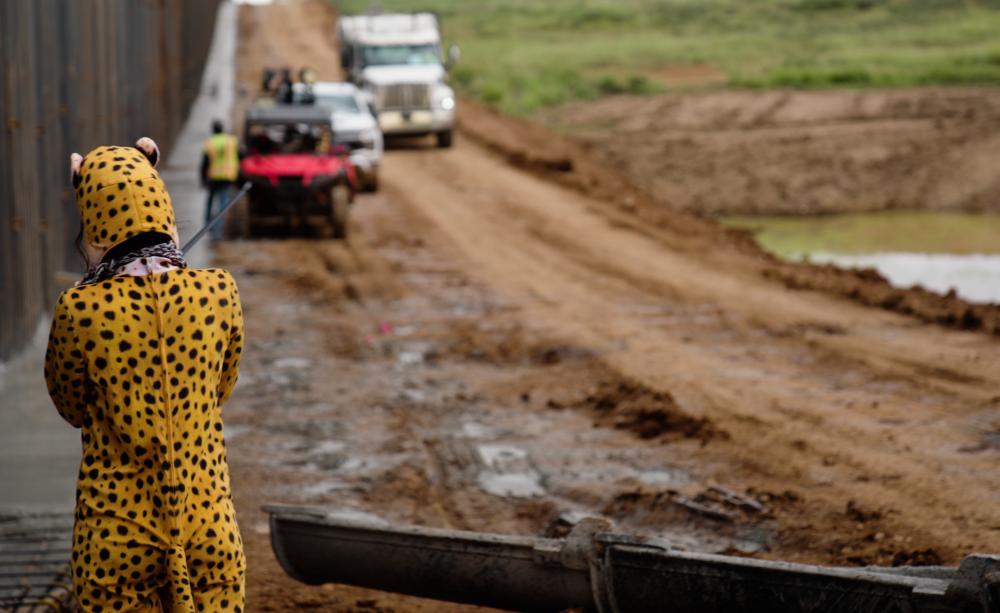
On Monday, 14 September, four protesters dressed as endangered species, including jaguars and yellow-billed cuckoos, blocked construction equipment, including cranes and concrete-pouring machines.
They yelled “we’re trying to make it across the border” and “We’re going to go extinct.”
Fighting
Three protesters were arrested for disorderly conduct and released the following day. Other members of the movement picked them up from jail wearing a blow-up jaguar costume.
Meza believes the Lochiel protest was the first time activists had used direct action to successfully halt US federal wall construction for more than a month since he was hired at the Sierra Club.
At the encampment, I learned that Lochiel activists and members of the Tohono O’odham Nation had attended some of each other’s community meetings and ceremonies.
Protesters told me that cottonwoods are sacred to many local Indigenous people and described the wall as “an act of settler colonialism” and themselves as “land defenders”.
The Tohono O’odham people are fighting wall construction on their land and at Quitobaquito Springs in Organ Pipe Cactus National Monument.
Dehydration
Against the wishes of the tribe, border wall contractors and 20 US Customs and Border Protection agents entered tribal land, according to the Nation, and began preconstruction work on Tuesday, 25 August.
The Nation had previously warned that unauthorised individuals would be trespassing. Having already sued the federal government over the project, the Nation said it was evaluating further legal action after the August entry.
I heard stories from No More Deaths volunteers who enter the desert near the border to provide water and aid to migrants crossing the border.
The Prevention Through Deterrence strategy seeks to redirect unauthorised crossings away from urban areas toward remote terrain, and human-rights researchers and advocates have linked the policy to increased migrant deaths.
On Thursday, 1 October, another humanitarian group, Humane Borders, reported that federal agencies, including the Bureau of Land Management, National Park Service, and US Fish and Wildlife Service, had declined to renew permits for a dozen water stations in Arizona’s Sonoran Desert intended to prevent deaths from dehydration.
Barbed
After my visit, the US Forest Service closed part of Coronado National Forest on Monday, 28 September, through to January 2029, citing “public health and safety during construction of the international border wall.” Activists I spoke with were worried the closure could have consequences for their encampment.
After I left Lochiel, events escalated quickly. On Sunday, 4 October, protesters celebrated the 70th day of the tree sit. The following morning, as they prepared for their daily sunrise ceremony, Border Patrol arrived.
An anonymous activist at the scene told me that the Border Patrol arrived in two or three trucks and established an approximately 100-foot perimeter around the Grandmother tree.
They estimated that 50 to 60 agents were on the ground, with more than 200 in the surrounding area, and said some had covered their badges.
Protesters alleged that they witnessed agents pushing people into barbed wire and stepping on the necks of others.
Screamed
According to two anonymous activists I interviewed, the agents did not show a warrant or court order despite repeated requests but read a letter referencing the US Forest Service closure of public access to the Coronado National Forest due to active border wall construction.
The activists said Border Patrol cited and released ten protesters and detained another ten, and that the detainees were taken to Sonoita and then Nogales, where all but four were released. They said the yellow citation slips read “violate closure order 43CFR8364.”
Social media footage shows contractors cutting branches while the tree sitter remained above them. Agents on a cherry picker then brought the activist down.
An anonymous member of the movement described the operation as proceeding “without regard for public safety.”
Once the tree sitter was removed, contractors felled the grandmother tree as activists screamed and cried. It was the last of the four US cottonwoods in the wall’s path.
Regenerate
That morning, I interviewed protesters who emphasised that the movement was not over. An anonymous activist stated that the grandmother tree was “more than a tree—she was a warrior.”
They added: “She stood strong in the path of the wall and brought us all together so we could unite in our love against the violent occupation of Indigenous land…This fight has always been about more than the tree, and she knew that too.”
Another protester said that the grandmother tree was “not only a symbol of the movement, but she was teaching us and fighting with us,” and that those lessons would guide the future of the movement.
An anonymous activist said: “One of the cottonwood trees that was cut down had grown new sprouts. We were able to save pieces and regrow them through grafting. The grandmothers may be gone, but they are giving us children to replant.”
The activist continued: “For us, hope is not lost because the land will regenerate.”
Ceremony
Less than 24 hours after the grandmother tree was felled, an activist crossed the border and climbed the cottonwood tree in Mexico in the wall’s path.
They established another encampment in its branches, which activists said again stopped most construction at the site. Supporters chanted, “Tierra Libre. One People. One Land.” Activists call the tree “Abuela.”
Located in La Noria, Sonora, its branches extend across the border and into the wall’s planned path. Mexican activists had occupied the same tree during the August binational demonstration.
Activists I contacted on Tuesday, 6 October said Border Patrol arrived during the morning ceremony and took five people into custody, while four were cited and released.
Occupation
Another activist said agents pushed three people into barbed wire and used pepper spray on at least one protester. He believed agents had targeted Black and Brown protesters and femme people.
Meanwhile, activists opposing border wall construction in Big Bend National Park were heading to Arizona to support the encampment, an anonymous local activist told me.
Abuela symbolises “continued resistance to the border wall which rips apart communities of humans, plants, and animals connected across borders” and unity “all over the world regardless of nation or race,” say the activists.
By the day after the grandmother tree was cut down, the tree occupation that began in Arizona had not disappeared. It had moved across the border.
This Author
Dr Meg Perret is a professor and environmental historian writing an NSF-funded book about the impacts of U.S.-Mexico border wall construction on local communities and the environment.