As the UK's nuclear dream fades, writes Chris Goodall, investors are turning to the possibilities of 'Concentrating Solar Power' in the Sahara connected to Europe by HVDC power lines. The cost would be much lower than nuclear or offshore wind, and provide reliable baseload capacity. With the UK government's say so, Tunisian sunshine could soon be powering our grid.
The rainforest habitat of chimpanzees and other great apes is being destroyed by the expansion of palm oil projects in central Africa, according to new evidence from Greenpeace.
Scandinavian inventors are hoping that efficient new waves power technologies will for the first time make the sector competitive with other renewable energy sources, writes Paul Brown - opening up a massive new clean energy resource around the world.
A broad community of independent scientific researchers and scholars challenges claims of a 'consensus' that genetically modified organisms (GMOs) are 'safe' to grow and eat. The claims - which continue to be widely and often uncritically aired - are a false and artificial construct that have been misleadingly perpetuated through diverse media.
Montana legislators have brushed off the attempts of farmers, ranchers and landowners to effect 'zoning' regulations to protect them, their land, their water and their livestock from the toxic impacts of fracking. Now they say: 'See you in Court!'.
India's renewable power capacity is set to reach 170GW by 2022, write Areeba Hamid & Oliver Tickell - reducing power shortages and bringing electricity to off-grid of rural communities for the first time. But it may also have an unintended consequence - cutting off investment in India's troubled coal sector as prospects for future profitability evaporate..
A powerful call has gone out the the US Export-Import Bank not to finance a massive coal mine, railway, port terminal and dredged 'canal' through Australia's Great Barrier Reef with $1 billion in loans and guarantees.
The oil and gas industry has admitted that its canals and drilling rigs have destroyed 1,900 square miles of coastal wetlands on the US Gulf Coast, but a Federal Judge with deep industry ties has ruled that 97 companies off have no liability for the $50 billion damage.
A small community in Uganda is challenging a UN-backed international oil palm venture that has expropriated small farmers and obliterated an entire forest on a Lake Victoria island to establish a vast plantation. Three years after the grab, Friends of the Earth groups are backing the islanders legal action, which is launched today.
Levels of neurotoxic mercury in Yellowfin tuna are rising at almost 4% per year, and will soon reach a point where the fish are officially unsafe to eat, writes Paul Drevnick. And after decades of debate, there's no longer any doubt where the mercury comes from: humans. Industrial sources like coal burning are mainly to blame, and it's high time we put a stop to it.
Deep in the text of the TPP trade deal lurk little-known provisions to boost the profits of Big Pharma, writes Conor J. Lynch, by extending patent terms and suppressing 'generic' alternatives - as if the industry's 23% margin wasn't enough already. As for the millions that will suffer hardship, ill health or death from higher drug prices ... it's their fault for being poor.
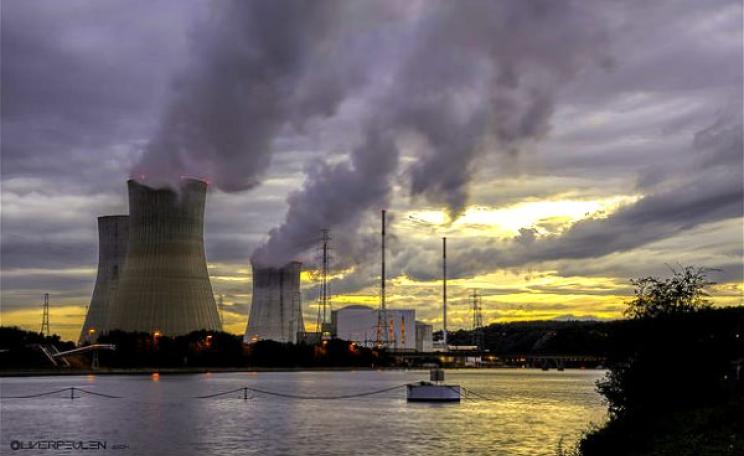
The discovery of over 16,000 cracks in two Belgian reactor vessels may have global implications for nuclear safety, says the country's nuclear safety chief. He and independent experts are calling for the immediate checks of nuclear reactor vessels worldwide.
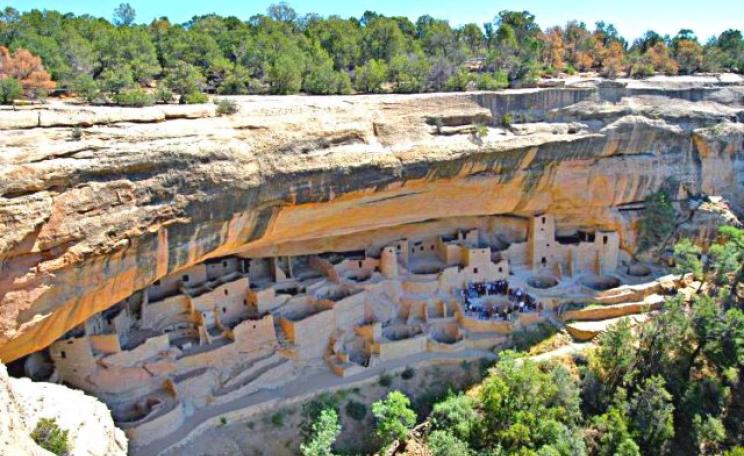
The same pattern of severe droughts that extinguished the Ancient Pueblo culture of the southwest US in the 13th century will come back with a vengeance later this century as climate warms and dries, writes Tim Radford. And it could have precisely the same effect on the region's modern-day residents.
The raft of 'free trade' agreements under negotiation represents a massive seizure of power by corporations, writes Joyce Nelson - effectively stripping democratic governments of their power to legislate for health, environment, labour or anything else that could reduce corporate profit. But the mainstream media are mysteriously silent.
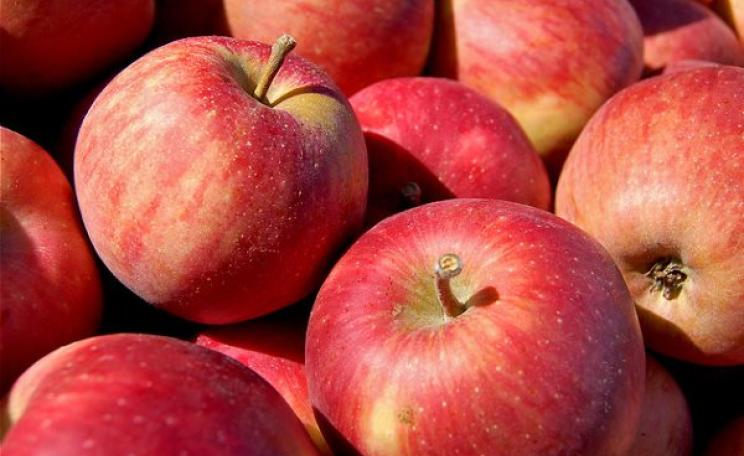
Scientists, environmental and consumer groups have decried USDA's approval of two 'Arctic' apple varieties, while major food companies and apple growers have no plans to source or grow them - despite their potential to 'generate consumer excitement in the apple category.'
A land grab twice the size of France is under way in Ethiopia, as the government pursues the wholesale seizure if indigenous lands to turn them over to dams and plantations for sugar, palm oil, cotton and biofuels run by foreign corporations, destroying ancient cultures and turning Lake Turkana, the world's largest desert lake, into a new Aral Sea.
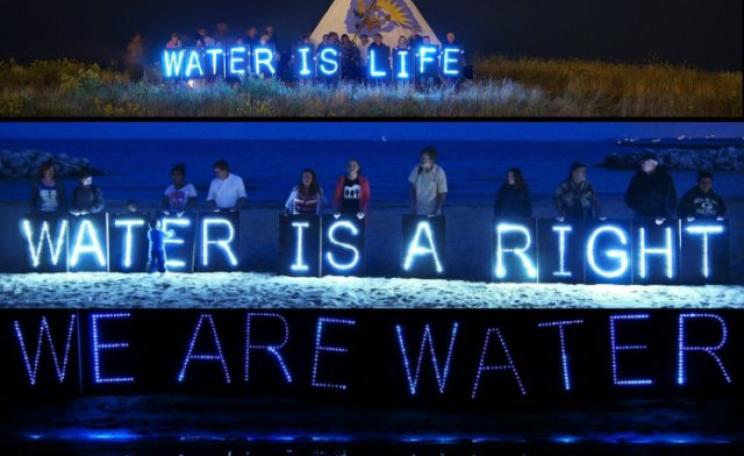
The US and other governments are pushing a failed model of water privatization, writes Victoria Collier - but water is a human right, not just a commodity to be traded for profit or monopolized by corporations, and citizens and communities worldwide are fighting back, from Detroit to Cochabamba, from Berlin to Malaysia, to reclaim their water commons.
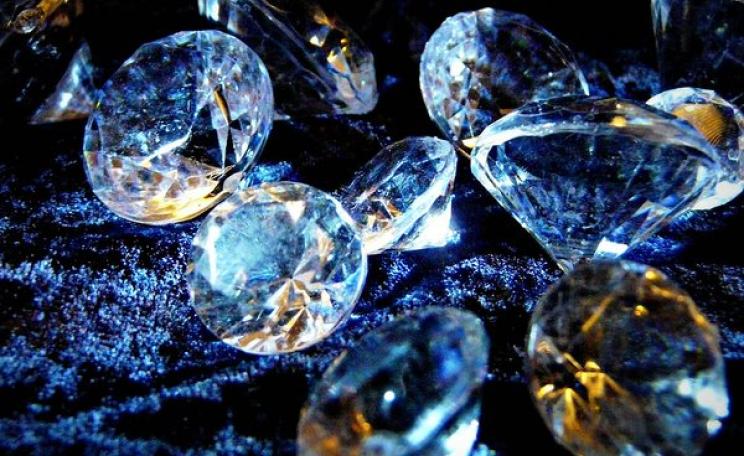
Thirty years after diamonds were first discovered in Botswana's Kalahari desert, the Bushmen have been evicted, and the first diamonds have gone on sale. Happy Valentines!
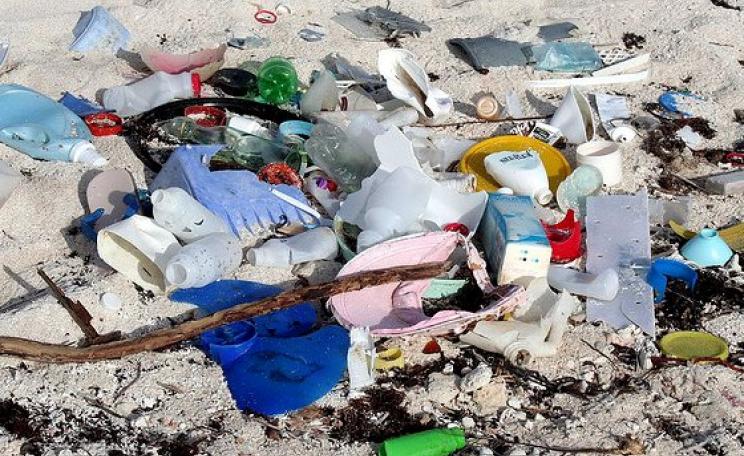
On current trends the world will contain 33 billion tonnes of plastic by 20150, writes Mae Wan Ho, and much of it will litter the oceans, concentrating toxins and damaging marine life throughout the food chain. The alternative is to classify the most toxic plastics as 'hazardous waste', and for all plastics to be reused and recycled in 'closed loop' systems.
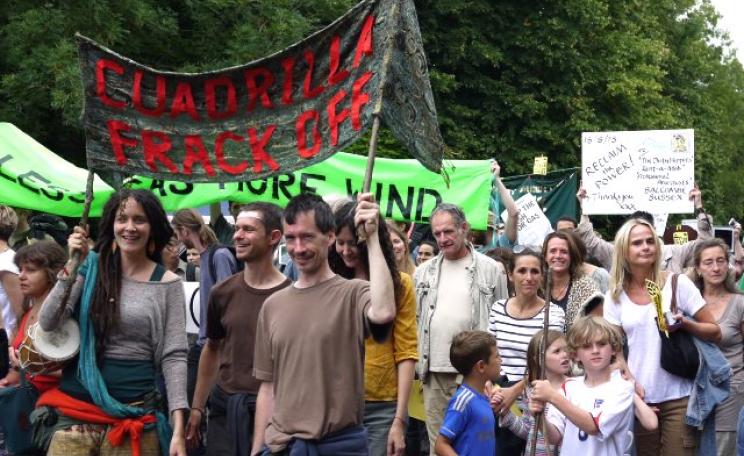
The UK fracking company Cuadrilla has collapsed in value as a result of falling oil and gas prices, popular protests and growing political opposition, writes Brendan Montague. Now investors are having to write off hundreds of millions they sunk into the industry.
Across Africa, laws are being rewritten to open farming up to an agribusiness invasion - displacing the millions of small cultivators that now feed the continent, and replacing them with a new model of profit-oriented agriculture using patented seeds and varieties. The agencies effecting the transformation are legion - but they are all marching to a single drum.
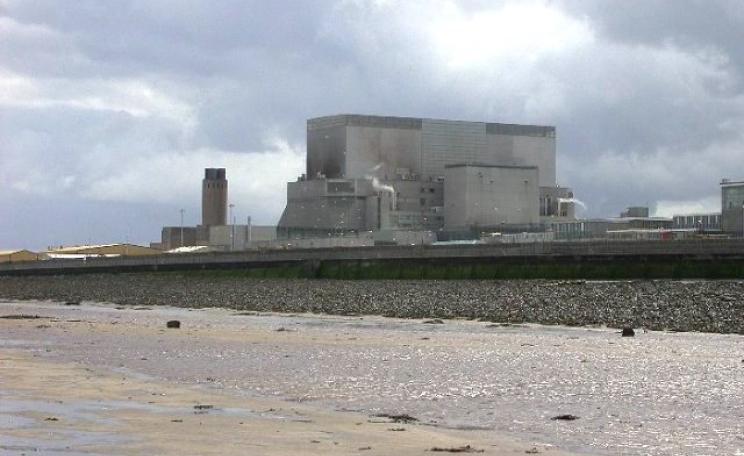
The UK government has warned Austria that it will 'embrace any future opportunity that arises to sue or damage Austria' if it pursues its legal challenge to the the Hinkley point C nuclear plant, according to a leaked document.
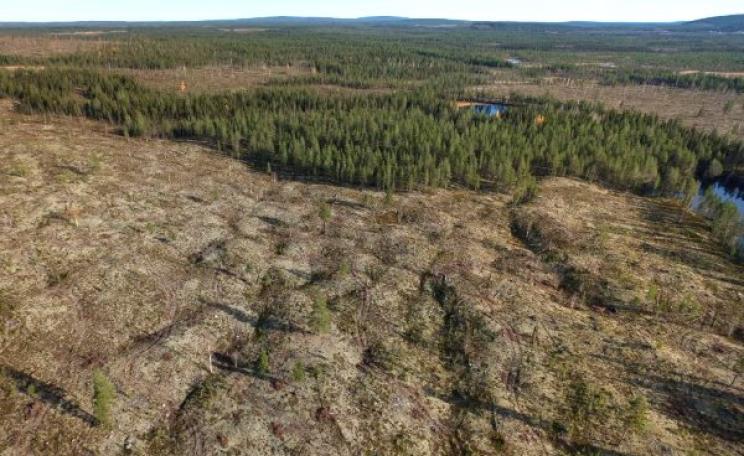
Sweden's biodiverse ancient forests will be largely wiped out within two decades, writes Alec Forss - and along with it will go thousands of species that depend on mature forest ecosystems. But with powerful logging companies riding roughshod over the law, regulators, politicians and certifiers, who is to stop the destruction before it's too late?
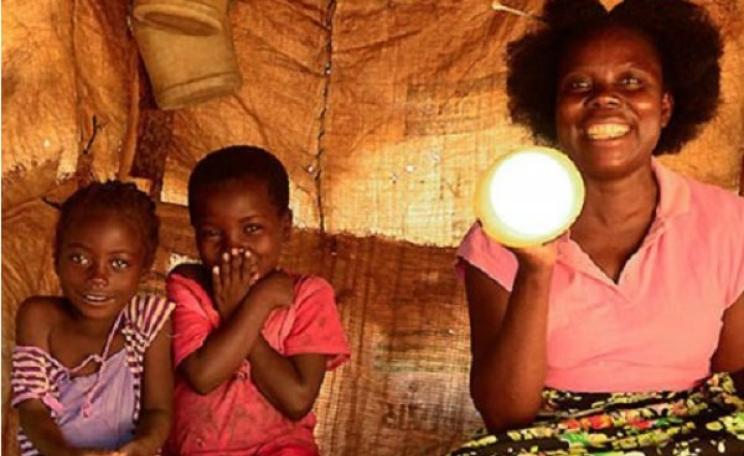
The charity SolarAid has just celebrated 1.5 million small solar lighting installations in Africa, writes Paul Brown - an important milestone on its mission to get solar lighting into all of Africa's homes by 2020, and see out dangerous, polluting kerosene lamps.