These soft-power arrangements are crucial for Shell and BP. The world operates on the basis of who you know.
The British Government’s refusal to grant new licences for oil and gas drilling in the North Sea has been a hot topic in recent weeks. But, for anyone familiar with climate science, a total ban should be a no-brainer.
There is more than enough carbon in the existing reserves already owned by the world’s fossil fuel companies to guarantee dangerous global heating. Opening up new reserves would be an epochal act of societal self-harm.
And yet, while the government rightly takes this approach at home, the Foreign Office is working hard around the world to help Shell and BP secure contracts to explore for and exploit ever more oil and gas fields, scorching any chance of avoiding climate catastrophe.
Power
BP, in particular, has spent recent years drilling through the hull of our civilisation. On 26 February 2025, the oil giant finally abandoned its previous pretence that it cared about climate breakdown.
Speaking to investors in London that day, the company’s then CEO Murray Auchincloss said that it had gone “too far, too fast” towards renewables over the previous years. As a result, he announced what The Guardian called “a drastic pullback from green energy in favour of oil and gas investments”.
And as the company has travelled the world searching for more hydrocarbons, there has always been an office full of friendly assistants keen to help with introductions, lobby foreign governments, and polish reputations: otherwise known as British embassies.
For the last year, I’ve been pestering the Foreign Office for details of meetings between diplomats and Britain’s oil giants. Mostly it has done everything it can to frustrate me.
But the information I have managed to dig out has revealed a government whose approach to oil and gas extraction is a bit like a parent who loudly tells their own children that drugs are bad, while introducing all of the neighbours’ kids to the local heroin dealer.
In the previous essays in this series, I’ve looked at some of the harder ways in which the British state props up the oil industry. We have examined trade, the military, the law and tax havens. In this essay, I’m going to look at how the softer end of British power is used to prop up the oil industry and, specifically, how British embassies around the world are used to promote BP and Shell.
Central Asia
Shavkat Mirziyoyev, the authoritarian president of Uzbekistan, announced in September 2025 that a “very large gas field” had been discovered through a borehole drilled 6.5km under the Ustyurt plateau, a desert that extends between the country and neighbouring Kazakhstan and Turkmenistan.
These soft-power arrangements are crucial for Shell and BP. The world operates on the basis of who you know.
Fortunately for BP, it had a longstanding base from which to expand into the territory - just over the Caspian Sea in Azerbaijan, where it has a close friendship with the British embassy.
Five months after the announcement, in February this year, in a ceremony in the British embassy in Baku, Azerbaijan’s capital, BP’s vice president for the Caspian region, Bakhtiyar Aslanbayli, became one of the first two Azerbaijani nationals to be awarded an honorary OBE.
The embassy said he was being recognised for “his services to the development of UK-Azerbaijan relations, particularly for his role at BP in fostering positive economic, social, and cultural impact in Azerbaijan”.
The prize marked another milestone in a longstanding partnership between the oil company and Britain’s representatives in the Caucasian petrostate.
Documents I got from the Foreign Office using transparency laws show that British diplomats in the country had met with BP a total of nine times between July 2024 - when the current Labour government was elected - and August 2025.
The minutes of one of these cosy meetings show two partner organisations updating each other on their affairs. In September 2025, the embassy and BP were co-hosts of an “Azerbaijan-UK policy forum”.
During the course of one conversation, for example, the British ambassador asks if BP will chip in funding to support a dual degree programme between Warwick Manufacturing Group - a department of the University of Warwick - and Azerbaijan State Industry and Oil University, which the oil giant seems to have then done.
This relationship goes back more than a century. As Peter Geoghegan has set out, Azerbaijan’s oil fields were first auctioned off in the late 19th century, by Alexander II of Russia.
A week after the revolution of October 1917 in Russia, the ‘Baku commune’ took control and expropriated the oil infrastructure, creating the world’s first nationalised oil company. Britain responded by sending in troops and occupying the country in November 1918, in order to protect the claims of the Anglo-Persian Oil Company - BP’s predecessor.
It was in this context that Whitehall handed the Armenian-speaking Nagorno-Karabakh region to Azerbaijan, starting the eponymous conflict that continues to this day. The countries would then join the Soviet Union, and British interests dissipated for 70 years. In 1991, Azerbaijan regained its independence as the Soviet Union collapsed.
Digging through papers about ministerial visits between Britain and Azerbaijan in the early 1990s, released by the National Archives under the 30-year rule, one thing was clear to me. Whitehall’s main interest in the new country was helping BP secure lucrative oil deals there - which it eventually did in the so-called deal of the century.
This seems to have also extended to the British government providing the country’s brutal ‘security’ services with Met police ‘counter-terrorism’ training, as I revealed on Declassified, in effect interfering in the re-emerging Nagorno-Karabakh dispute in which Britain was and is officially neutral.
This friendship between the government and the oil giant was so close that, before Britain opened its embassy building in the new country, the ambassador and his team worked out of the BP offices there.
Margaret Thatcher, shortly after resigning as prime minister, personally delivered multi-million-pound cheques as part of their negotiations that secured the contract for BP.
When a major investment decision was made between BP and Azerbaijan in 2013, it appears to have effectively been announced by the then British ambassador. These days, between 20 per cent and 30 per cent of foreign direct investment in the petrostate comes from Britain, primarily through the energy sector.
As BP sought to expand across the Caspian Sea after Uzbekistan’s announcement last year, its close relationship with British state representatives based in Central Asia seems to have been crucial.
In February 2026 - five months after the Ustyurt gas field had been discovered - foreign secretary Yvette Cooper hosted the first “ministerial dialogue” in London with five Central Asian countries.
According to the Uzbek government, energy was one of the key areas the talks focused on. During their trip, they met with “members of the management board of BP, during which ongoing energy sector reforms in Uzbekistan, prospects for advancing major joint projects, development of the Ustyurt project [and] exploration of additional oil and gas opportunities” were discussed.
I asked the FCDO if it was fair to say that then foreign secretary Yvette Cooper facilitated this meeting between Uzbek officials and BP. The department didn’t respond.
In May 2026, eight months after the “very large gas field” was discovered, BP and the Azerbaijani state oil and gas company, SOCAR, signed a production sharing agreement for “six blocks in the North Ustyurt region” of Uzbekistan.
At the centre of the negotiations was BP’s vice president for the Caspian region, Bakhtiyar Aslanbayli OBE, who proudly announced the deal on his LinkedIn page, where his name is garnished with its British state title.
"We believe Uzbekistan has significant resource potential and see this as an opportunity to support the exploration and development of the country’s oil and gas resources, delivering long‑term benefits to the region," a BP spokesperson told The Ecologist.
In June 2026, as plans to start drilling were announced, a BP executive was quoted in the Uzbek press stating: “We are entering the Uzbek market not with the aim of short-term, but rather 50–60-year strategic cooperation."
Climate science dictates that the world must have reached net-zero emissions in 23 years’ time in order to keep global heating below the 1.5C increase as promised in the United Nations brokered Paris Agreement.
Venezuela and Trinidad
The British embassy in Caracas met with Shell six times during the twelve months before president Donald Trump sent US troops to depose and capture Venezuelan president Nicholas Maduro, documents released under freedom of information laws show.
Before the coup, Shell had been “trying for years to advance the 4.2-trillion-cubic-feet Dragon gas field in Venezuelan waters”, according to the news agency Reuters.
Within four months of the new president taking over, “advanced talks with Venezuela's government to develop four large areas” were under way. A massive 4.2 trillion cubic feet of gas would be tapped, likely producing 231 million tonnes of CO2. This compares to the UK’s annual domestic emissions of 371 million tonnes of CO2 equivalent.
When I asked for the minutes of the last of those meetings, the Foreign Office said: “No minutes or readouts were made following the meeting, and no notes are held.” One civil servant in the department later told me this was “very surprising”. He added: “We have to minute everything.”
It is not clear to the public what the embassy and the oil giant discussed. The Foreign Office did, however, share some of their notes from a separate meeting between Shell and Jennifer Chapman, the then junior minister for Latin America and the Caribbean, after making redactions.
Officials said in their briefing to the minister that the meeting was “an opportunity to discuss Shell’s deal with Venezuela and Trinidad [redacted]. You should … seek updates from Shell on their investment in the Dragon and Loran Liquefied Natural Gas (LNG) fields; [redacted].”
Most of the notes of what was then discussed at the meeting are entirely redacted, because apparently you have no right to know what government ministers discuss with the corporations whose activities threaten your children’s future.
What we do know is that, for more than a century, the British government has worked hard to support the interests of British oil companies in Venezuela.
Just offshore from Venezuela is the Caribbean country, the Republic of Trinidad and Tobago. Three of the ten current major projects listed on BP’s website are located in or offshore from Trinidad. Shell has also operated on (and off) the islands for more than a century.
These two companies have extracted fossil fuels from the islands with the active support of the British diplomatic service. When a new British high commissioner was appointed in January 2025, he met with the country’s energy minister that same month. They discussed the “significance of the two British-based oil and gas companies, Shell plc and BP plc, to both countries”.
Both firms appear to have a close relationship with the British high commission in Port of Spain, the country’s capital. The high commissioner hosted a birthday party for King Charles in 2025 - confirming it was “made possible” by corporate sponsors including BP and Shell. The party included a display of photos from the Natural History Museum’s Wildlife Photographer of the Year exhibition, helping to greenwash the oil giants.
Likewise, at the Trinidad and Tobago energy conference 2025, the high commissioner spoke at the ‘BP breakfast’ about the ‘energy transition’ - which is a bit like giving a lecture on chicken safety sponsored by Big Fox.
In February, BP confirmed that it is seeking a licence from the US government to drill the Cocuina-Manakin gas field on the maritime border between Venezuela and Trinidad, which it estimates contains more than a trillion cubic feet of gas, equating to about 55 million tonnes of CO2 emissions.
West Africa
Mauritania and Senegal, in West Africa, are similarly on the new hydrocarbon frontier. Since the Tortue gas field was discovered in 2015 beneath an area of seabed that stretches between their waters, both BP and Shell have had a major presence there.
Britain didn’t have an ambassador stationed in Mauritania before 2018. Britain’s head of mission in Morocco oversaw the post. But in May that year, Britain appointed its first resident ambassador to the role. Shell signed a contract to explore for hydrocarbons in the country’s territory just two months later.
The final person to hold the joint post of ambassador to Morocco and to Mauritania was Thomas Reilly, who was appointed in 2017. Reilly had been a special advisor in charge of International Government Relations and Regulatory Affairs at Shell - a post he held in the middle of a career otherwise spent in the Foreign Office.
In 2017, another former ambassador had been involved in launching a Mauritania British Business Council at an event in the British Museum, at which BP’s Bernard Looney spoke about the “world class potential” of the Tortue gas field. Other speakers included Mauritania’s energy minister, and Greg Hands, then British trade minister. The British Museum has long accepted sponsorship money from BP.
The first civil servant appointed to the newly created ambassador post was Samuel Thomas. He had previously worked on issues relating to oil and energy in Libya, Russia and Iraq. Later that same year, BP and partners won approval for their major subsea drilling project off the coast of the country.
British embassy staff in Mauritania have met with BP more than 40 times since May 2018, according to responses to Freedom of Information Act requests I submitted. Due to the way the information was presented, the actual number of meetings could be significantly higher.
Shell withdrew in 2024. But BP has had more luck - leading to one of its biggest ever projects.
In June 2025, the British Embassy in Senegal helped launch a Senegal-UK Chamber of Commerce. The organisation’s website states: “As the MSGBC [Mauritania, Senegal, Guinea Bissau, Guinea Conakry] region cements its position as one of the world’s fastest-growing energy frontiers, the Chamber’s involvement underscores the expanding role of UK engagement across West Africa’s energy and extractive industries.”
Sandra Jeque, the project director at the South Africa-based Energy Capital & Power, a member of the chamber, has said: “The UK has played an important role in shaping Senegal and the wider MSGBC region’s energy landscape – from pioneering LNG developments to advancing new frontiers.”
BP has sponsored parties at the Mauritanian embassy more than once. This has included a celebration of King Charles III’s 75th birthday in 2023. The embassy wrote on Facebook: “Given His Majesty’s deep interest in environmental issues, guests were invited to take away a sapling with which to contribute to the greening of Nouakchott.”
These activities have helped the controversial company buy a more positive reputation in the country.
The campaign group Culture Unstained used the Freedom of Information Act to extract documents from the Foreign Office relating to the relationship between BP and the British embassy in gas rich Egypt ahead of a UN climate conference in the country.
The campaigners said the emails, released in 2023, “paint a picture of diplomacy and networking with BP and the Egyptian government playing out through trade missions, Embassy receptions and at polo events over the last year in spite of ongoing human rights concerns”.
This cosy relationship appears to have continued. Shell, BP and the large independent oil company Harbour Energy were all sponsors of the king’s birthday party at the British embassy in Cairo last year.
West Papua
West Papua won independence from the Dutch empire but was almost immediately annexed by Indonesia, in 1963. Its people have long faced repression from their Jakarta-based rulers, which has always come alongside violent resource extraction and dangerous levels of deforestation of the world’s third-most significant tropical rainforest.
Indonesia “embarked on a brutal and ongoing campaign of violence towards the West Papuan people, who have never accepted Indonesian rule,” according to Survival International.
“This has included rape, crucifixion, mutilation, aerial bombings, and alleged chemical weapons use. Experts have described such killings as part of a ‘Neglected Genocide’ and some estimates suggest that over 500,000 Indigenous West Papuan people have been killed by the Indonesian military since the occupation began. All calls for West Papuan Independence are banned and West Papuans face up to 15 years in jail just for raising their national flag.”
BP has been drilling for liquefied natural gas in the Tangguh Bay area of the territory since 2009, leading to longstanding allegations that it is complicit in the violent oppression and deforestation of the territory.
The Centre for Climate Crime and Climate Justice at Queen Mary, University of London, last year calculated that this project alone would produce more than 1.5 billion tonnes of carbon - equivalent to the net reduction of all European Union emissions projected between the years 2015 and 2030.
And in May this year BP announced it had signed a deal to extend the project into two other nearby blocks in Papua. Wherever BP has wanted to expand its fossil fuel exploitation from West Papua, British diplomats have been ready to help it clean up its reputation.
Two years ago, for example, the British embassy in Jakarta hosted a ceremony, witnessed by Indonesia’s energy and mineral resources minister, at which BP agreed to fund a British government Chevening scholarship programme, specifically for people from Papua.
British diplomats in Indonesia met with BP staff to discuss BP’s business in Papua sixteen times in the two years to May 2026, according to documents secured under the Freedom of Information Act.
This included one meeting between Murray Auchincloss, the then chief executive of BP, and the British Ambassador in June 2025. That same evening, the British ambassador spoke at a cocktail reception in Jakarta sponsored by BP, described by organisers as an “evening of connection and good spirits”. The Foreign Office claims it does not have any records of what was said at this meeting.
The embassy has also launched ‘quarterly updates’ with the British Chamber of Commerce, Indonesia, including briefings and networking sessions at the embassy. BP’s head of policy and regulatory affairs - a title which is often a euphemism for “lobbyist” - in the country is also a vice chair of the chamber.
Texas
Much of Britain’s oil diplomacy is taking place on new frontiers. But let us not forget the motherland of the oilman: Texas. The US has rapidly expanded fossil fuel extraction in recent years, and is now the world’s biggest oil producer.
BP has been on the front line of this planet-killing revolution. “We are modernizing and expanding our operations in the Gulf of America to safely produce more oil and gas, underscoring our commitment to continued investment in US energy production,” the company announced in November 2025.
Donald Trump drove the point home a few weeks later. “We will drill, baby, drill.”
British diplomats have cheerfully acted as wingmen to BP as its executives squeeze the last breaths out of any hope of maintaining the climatic stability that allowed complex human civilisations to emerge and survive during the last 12,000 years.
Particularly helpful here is the consulate-general in Houston, Texas, whose diplomats had six formal meetings with BP staff between November 2024 and February 2026.
BP sponsored the Greater Houston LGBTQ+ Chamber of Commerce's reception at the British Consulate-General, Houston, in May 2026, and a couple of months earlier the consul general hosted its annual “energy reception” at the British residence in Houston. The consul himself, meanwhile, sits on the board of the British-American Business Council (Texas), along with representatives from BP and Exxon.
The consulate celebrated the fact that “BP plans to invest $5 billion annually in the US for five years… producing more of the energy the world needs” after one visit by the consul general to the BP US headquarters in Houston on its LinkedIn account.
Much of that investment consists of expanding oil extraction from the Gulf of Mexico. The British government is cheering on BP’s expansion of oil production in the US - even as it bans similar projects back home in Britain.
Social licence to operate
These soft-power arrangements are crucial for Shell and BP. The world operates on the basis of who you know.
Britain has one of the world’s biggest networks of diplomatic missions - that is, embassies, high commissions, consulates and the like - each of which is deeply networked into the government and business communities of their host countries.
The diplomats are funded by taxpayers to build these connections, which they then use to promote ‘British’ businesses at networking events and parties. I use inverted commas because, in reality, while Shell and BP may have HQs in London, they are global corporations that do everything they can to avoid paying taxes to the British treasury.
Similarly, the cultural work of embassies is important for helping the companies launder their reputations. Because of the legacy of the empire, British diplomats can pick from a verdant herb garden of world famous institutions - the monarchy, universities, English literature, British museums - to garnish toxic offers from some of the world’s biggest polluters.
For companies that are regularly smeared in the stench of their last scandal, this is a profoundly useful service.
Chris Gerrard, a co-director of Culture Unstained, said: “Just as polluting companies like BP need a formal licence in order to undertake drilling for fossil fuels, they also need a ‘social licence to operate’ - the trust and consent of wider society and those who stand to be impacted by their business.
“In order to pursue contentious projects, there needs to be that ‘buy-in’ and agreement from relevant stakeholders, policy-makers and local communities. Fossil fuel producers like BP - and the tobacco industry before them - engage in cynical strategies for manufacturing that social licence and consent.
“This concept of social licence is multifaceted, though, and the insidious nature of these strategies is not always fully understood. It is about a corporation like BP burnishing its brand and boosting its profile among the wider public.
“When [BP] was the ‘sustainability partner’ of the London Olympics in 2012, it helped the company to displace the toxic associations of its Gulf of Mexico oil spill just two years earlier with a clean, green corporate identity.”
Sponsoring things like scholarships and embassy parties, he added, has allowed Shell and BP “to cultivate an image as responsible corporate citizens that are in touch with the public mood. Of course, BP and its peers need new fields to be licensed in a practical and legal sense, but that process flows all the more freely when its executives are seen by policy-makers not as experts with niche concerns about oil and gas extraction but as corporate statesmen.”
Gerrard explained that it is “over canapés at an exhibition opening or a BP sponsored party for the king’s birthday - not at a carefully minuted meeting - where its executives can speak freely and play the role of a philanthropic friend to policy-makers.
“So, when embassies invite BP to sponsor these private parties, they are consciously creating the conditions for unaccountable influence to take place, while also handing cultural and political power on a plate to a private, profit-making company.
“Cosying up to BP in this way invites a blurring of the boundaries that actively undermines the democratic role that embassies should play as branches of the UK government, not as champions of polluting corporate interests.”.
These strategies are, he added, “the very means by which they can remain cemented to the state, its institutions and the cultural values it promotes”.
He concluded: “Just like the British Museum helps BP to clean up its toxic image with a high-profile sponsorship deal, these embassies are also engaged in a form of reputation laundering by helping BP and Shell to present themselves as respected corporate citizens and champions of UK plc, rather than the profit-making polluters they actually are.
“Sponsoring these swanky events only aids these oil giants in deflecting attention from their links to human rights abuses, genocide and climate breakdown.”
Perhaps none of this is surprising. British embassies use their soft power around the world to promote semi-British businesses. Once you consider the basic physics at the core of the climate crisis, it’s clear how reckless its diplomats are being.
In 2015 climate scientists warned us that 75 per cent of the fossil fuel reserves we knew about then had to stay in the ground if we were going to avoid dangerously destabilising the planet’s climate systems. Continuing to seek new fossil fuel reserves more than a decade later means knowingly choosing to do something that will result in millions of deaths.
A more recent paper, in the Harvard Law Review, 2024, argued that, because of “the extreme lethality of fossil fuel companies’ conduct and their longstanding awareness of the catastrophic consequences”, they could be found guilty of “every type of homicide short of first degree murder” in jurisdictions across the United States. British diplomats are, fairly obviously, if indirectly, facilitating mass social murder.
History
In a sense, none of this is new. The British state - unlike many of its European equivalents - traditionally conducted much of its imperialism through a series of corporate fronts. The East India Company, the Virginia Company, the Hudson’s Bay Company and the Royal African Company, all founded in the 17th century, were the primary means by which wealthy Britons conquered the world.
The Northern Department, which was to become the Foreign Office, was founded in 1660, when the Stuarts were returned to the throne. The Royal African Company - the biggest single transporter of enslaved people during the trans-Atlantic slave trade - was founded by the Stuarts later that same year.
For most of its history, the Foreign Office existed as one member of this family of British overseas institutions, which were often overseen by the same crisscrossing networks of people, from buildings within a short walk of each other in central London. It developed a longstanding sense that ‘the national interest’ was the same thing as the interests of those corporations.
In the early 20th century, BP became a crucial one of those corporations. It was founded as Anglo-Persian Oil in 1909. In 1914 the government bought out 51 per cent of its shares, to ensure a stable supply of oil for the Royal Navy during the Great War, and retained a majority stake in the company until Thatcher sold it off between 1979 and 1987.
British foreign policy has to a large degree focused around supporting BP and, to some extent, Shell. Harold Wilson secretly armed Nigeria’s brutal war on secessionist Biafra in the 1960s at the behest of the companies; Shell and BP secretly funded the government’s covert cold war propaganda operations as a means to access oil in newly liberated former colonies. Both cases only came to light when government files were declassified in recent years.
Today, if you flick through registers of meetings held by top Whitehall officials, it’s clear that BP and Shell retain their special relationship with the British government. This is despite the fact that both companies are actively undermining any chance we have of avoiding catastrophic climate breakdown.
In some ways, this situation has got worse under the current Labour government.
“The salesforce for the UK economy”
It was a Labour government that founded the Department for International Development (DfID) in 1997. It existed - in theory at least - to “promote sustainable development and eliminate international poverty”. My impression is that, on the whole, it recruited the kind of person who was genuinely committed to that aim, and a particular culture followed from that.
DfID was merged into the Foreign and Commonwealth Office in 2020 by Boris Johnson - producing the Foreign, Commonwealth and Development Office (FCDO). The Tories forced the merger. But it is the current Labour government that has destroyed Britain’s aid efforts - and turned foreign diplomacy into an advertising service.
Almost as soon as the new Labour government took power in 2024, British diplomats were given clear instructions to prioritise promoting ‘British’ businesses over the more traditional tasks of intergovernmental diplomacy. David Lammy, then foreign secretary, described Britain’s diplomatic service as “the salesforce for the UK economy”.
Lammy announced that ambassadors would now be judged on their success in drumming up deals for British businesses around the world. Inevitably, given that Shell and BP are two of Britain’s biggest companies, the oil behemoths are significant beneficiaries of this process.
Then, in 2025, the government announced that it would be slashing the UK’s aid budget from 0.5 per cent to just 0.3 per cent. The department as a whole has also had deep cuts imposed through its budget, as part of a 2030 restructuring plan. As many as 2,000 jobs will be lost, according to some estimates.
This feels to many inside the service as the final blow for the old Department for International Development. One civil servant, speaking on condition of anonymity, confirmed this point. Many former DfID staff are now expecting to lose their jobs as the department shifts aggressively into shilling for ‘British’ business.
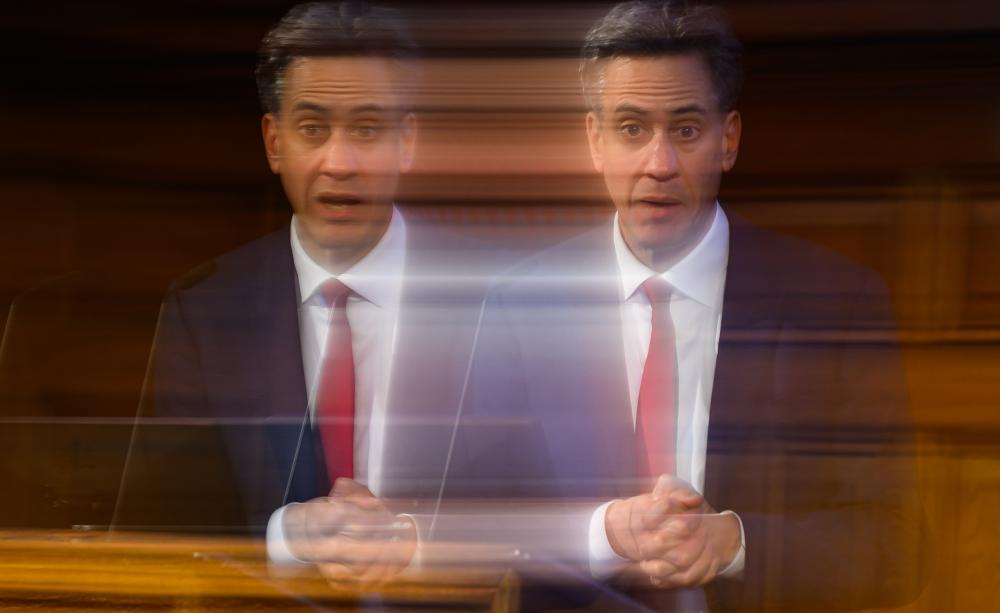
Whether Ed Miliband, who was recently appointed as foreign secretary after Andy Burnham’s became prime minister, will change any of this is yet to be seen.
Lack of accountability
The people who actually decide British foreign policy are, to a remarkable extent, unaccountable to the elected members of Parliament. The rights to set strategies for diplomats, sign treaties, deploy troops are wielded by ministers through the ‘royal prerogative’: these powers are delegated to ministers from the monarch.
Foreign, Commonwealth and Development Office strategy is overseen by its own Supervisory Board, which is made up of departmental ministers, senior civil servants, and a group of ‘non-executive directors’. One such director is also a senior adviser to the consultancy McKinsey, whose global role in promoting firms driving climate change has been widely criticised.
Lammy appointed Karen Blackett to the same committee. Blackett was a former UK president of the advertising company WPP, which makes more money from fossil fuel clients than any other in the industry. She also just happened to have donated £5,000 to Lammy’s office during the election campaign, as I revealed in the newsletter Democracy for Sale.
She has since stood down from the role.
Ellie Chowns, the Green Party’s foreign affairs spokesperson, told me: “Reports of British diplomats helping to secure further fossil fuel expansion abroad are beyond belief – representatives of the UK government should be working to promote UK values and strengthen international relationships, not acting as cheerleaders for climate-wrecking oil and gas giants like BP.
“The scientific consensus is crystal clear: we need to urgently ramp up our climate action if we are to avoid catastrophe. The UK must recognise this and demonstrate the political integrity to stand up to vested interests like oil and gas corporations, not support them in causing further damage to our planet.”
I asked the Foreign Office if it wanted to respond to the claim that much of its activity directly undermines the UK's own widely professed climate ambitions, and is therefore contrary to the national interest. It did not.
Climate activists have rightly criticised cultural institutions for allowing big oil companies to clean up their reputations by allowing them to become ‘patrons of the arts’. I think it should be as controversial for a British ambassador to shill for Shell as it is for the British Museum to accept sponsorship from BP. That’s something we can make happen - together.
This Author
Adam Ramsay is a Scottish journalist and a member of the National Union of Journalists. His book Abolish Westminster is due out with Faber and Faber in 2026 and he publishes a Substack newsletter of the same name. His children’s book My Dad Brought Beavers Back is due out with Scotland Street Press. Adam is a member of the Green Party of England and Wales and the Scottish Green Party, he is on the board of Europe for Scotland, a director of Make Hope Possible, and on the editorial advisory board of the journal Soundings.