They may have wanted to leave Europe behind but Brexiteers still want the same - if not higher levels of environmental protection - for the UK's wild bee populations and natural wild places says a new report commissioned by Friends of the Earth and published today
With the 5th International Degrowth Conference taking place next week Spanish Ecologists Professor Joan Martinez Alier and Federico Demaria - both working at the Environmental Science and Technology Institute (ICTA) at the Autonomous University of Barcelona (UAB) - explain why we need a 'less is more' alternative economic model and how the burgeoning Global Environmental Justice movement is a key concept in achieving the only goal that will halt Climate Change.
Do we need big solutions to big problems? Charles Eisenstein challenges the logic of 'bigness' and looks for answers in the principles of 'interbeing'.
Instead of leaching the world's resources to support out-of-control consumerism, EU leaders could do worse than ponder novelist Victor Hugo's claim that whilst "you can kill people, you can't kill an idea whose time has come", writes NICK MEYNEN
Illegal logging accounts for between 30 and 50 percent of wood harvested in Romania. Horatio Morpurgo reports on the destruction of Romanian forests, post communism, and looks at what we can learn.
Cara is one of the Ecologist's New Voices contributors. An Irish-American environmental scientist and climate communicator living in Ireland, she lectures in climate change at University College Dublin and blogs and vlogs as ‘The Verdant Yank'. Here she challenges all environmental scientists to demand action on Climate Change from the politicians still turning a blind eye
Last week, as the UK voted itself out of the European Union, Greenpeace called for another exit strategy - a glyphosate exit plan. Nick Mole from PAN UK explains how we can all get involved in a campaign to ban all pesticides - not just glyphosate - in our towns and cities
Thanks to fracking company Cuadrilla, grandmother Tina Rothery will be in court tomorrow over a £55,000 'debt' imposed on her for joining a peaceful occupation of a fracking site in Lancashire. But as she explains, she can't pay, she won't pay, and even if she could pay, she wouldn't. Someone has to stand up to corporate vandalism and abuse of justice - and in this case, it's her, no matter what the consequences.
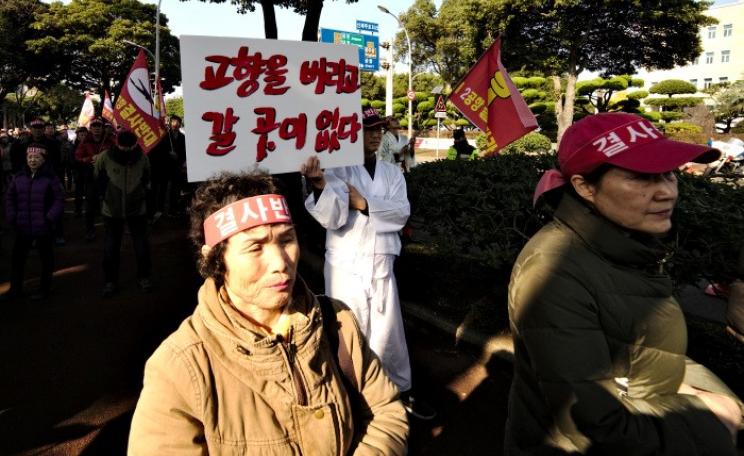
Communities on Jeju, South Korea's 'island of peace', are resisting a second airport that's threatening the island's farming, nature, culture and way of life, writes Rose Bridger. Linked mega-projects include an 'Air City' of shopping malls, hotels and offices, plus high-speed transport corridors, luxury resorts, casinos, theme parks and golf courses - all catering to wealthy outsiders.
In an independent cotton sustainability ranking released earlier this week by Pesticide Action Network (PAN) UK, Solidaridad and WWF, just eight out of 37 companies make it out of the red zone. Only home furnishing giant IKEA, which tops the list, is in the green zone.
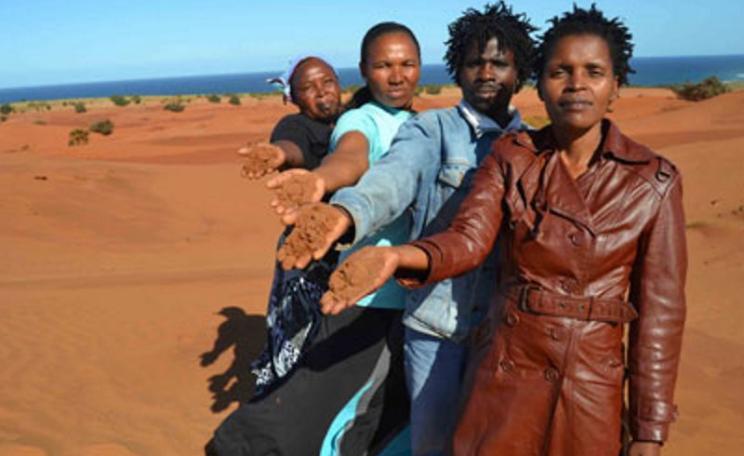
The pristine landscape of South Africa's Wild Coast is under threat from mining, writes Hal Rhoades, and the communities standing up to defend the land are facing deadly consequences: harassment, threats, physical assault and murder. Attacks on mine opponents have taken four lives so far and many others have been injured. But the opposition is growing and gaining international support.
Local people are furiously trying to stop a fracking company from drilling near a drinking water reservoir serving tens of thousands of homes, after Northern Ireland planners failed to block Infrastrata's claim for 'permitted development' rights.
Earlier this year, 13 climate activists were sentenced for aggravated trespass after blocking a runway at London’s Heathrow airport. For Kara Moses, the protest was part of her Buddhist practice of loving kindness to life and planet.
Momentum is gathering behind the UK's transition to a fossil free society, writes Guy Shrubsole. We know we need to leave at least 80% of proven fossil fuel reserves in the ground to avert catastrophic climate change. Here's a quick run-down of progress to date - and the key upcoming fights, including an invasion of the UK's biggest coal mine this weekend.
Next month thousands will gather in Wales to shut down the UK's open cast coal mine at Ffosyfran, whose 3,500 acres abut both Merthyr Tydfil, one of Britain's most deprived communities, and the glorious Brecon Beacons national park. It will be one of dozens of coordinated actions across the UK, and around the world, to bring the age of coal to the rapid end it so richly deserves.