Australia's Labor scored a big win in Victoria's election this weekend - and with the party's 'green' policies that's potentially good news for the state's exploited forests. Now's the time to keep campaigning for the early creation of a Great Forest National Park.
Vultures have become one of the most threatened families of birds on the planet thanks to poisoning by the veterinary drug diclofenac. Now Birdlife has discovered that it's on sale in Europe - threatening to wipe vultures out and undermine significant EU investments in vulture conservation.
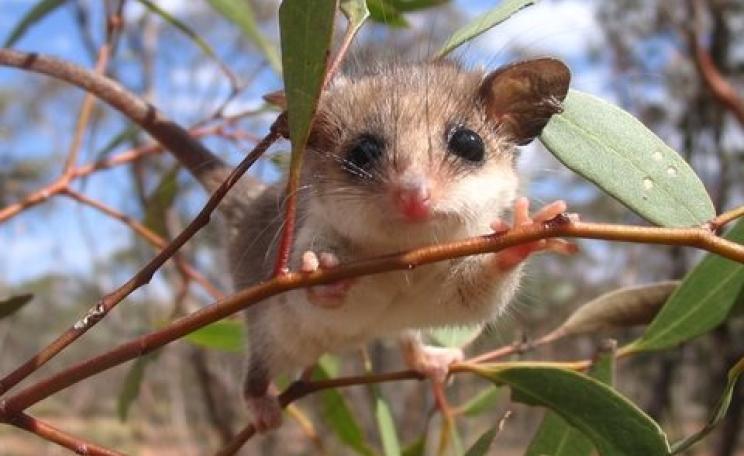
We know that Australia's dry bush has co-evolved with fire, so that means regular planned burning is a good thing? Up to a point ... some increasingly rare species depend on 'old growth' bush up to 100 years old, and over-frequent burning is putting them under long-term threat.
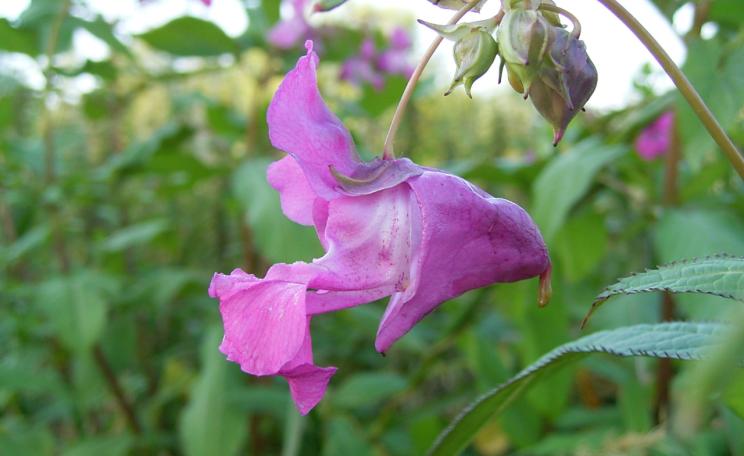
Even if you love Himalayan balsam, it has surely become too much of a good thing as it takes over Britain's wetlands and riverbanks. But now it's facing a major setback - the deliberate introduction of a parasitic rust fungus from its native range in the mountains of Asia.
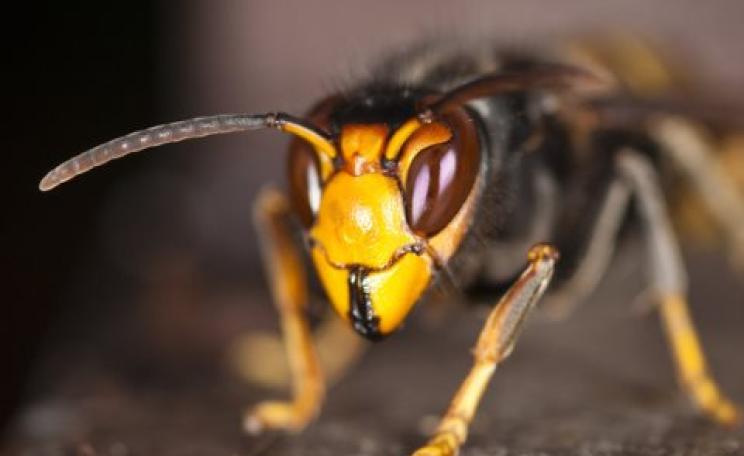
Mussels, crabs, hornets and ... racoons? Future invasive species are not what you might expect, write Jodey Peyton & Helen Roy. In particular, we have to beware of 'ecosystem engineers' that can transform the environment they inhabit, creating ecological havoc for other species.
Patented and 'indentured' seeds are fast taking over the world's food supply, write Jack Kloppenburg & Irwin Goldman, terminating farmers' and gardeners' ancient right to develop new varieties, and forcing them to buy seed anew for every crop. Enter the Open Source Seed Initiative ...
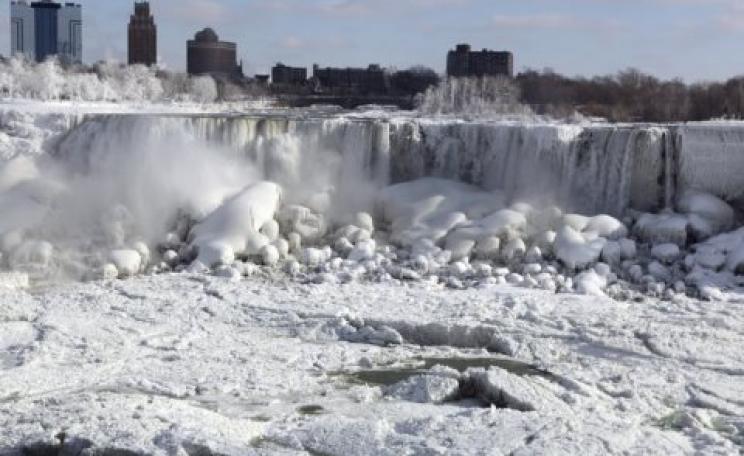
A string of events earlier this year provided a sobering snapshot of a global climate system out of whack, writes Peter Fisher. Could it represent the end of a rare 10,000 year island of stability in global climate? If so, we had better get used to it. The Earth may never be so comfortable again ...
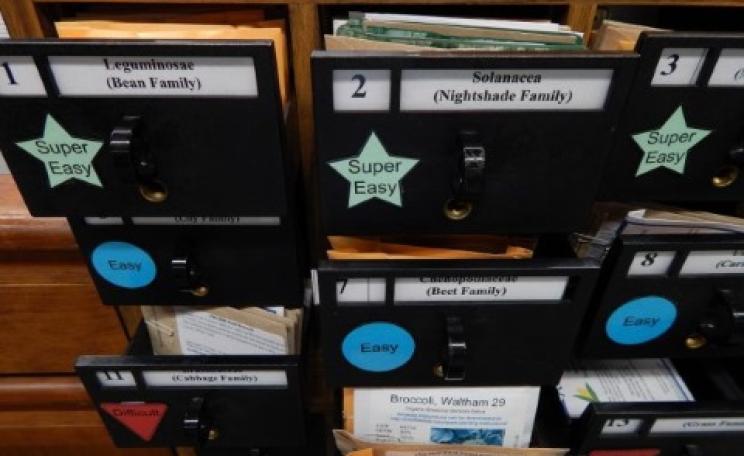
A Pennsylvania seed library stands accused of 'agri-terrorism' over alleged breaches of the Seed Act 2004, reports a bemused Kevin Carson. Have USDA and state agriculture departments become the enforcement branch of the agribusiness crime syndicate?
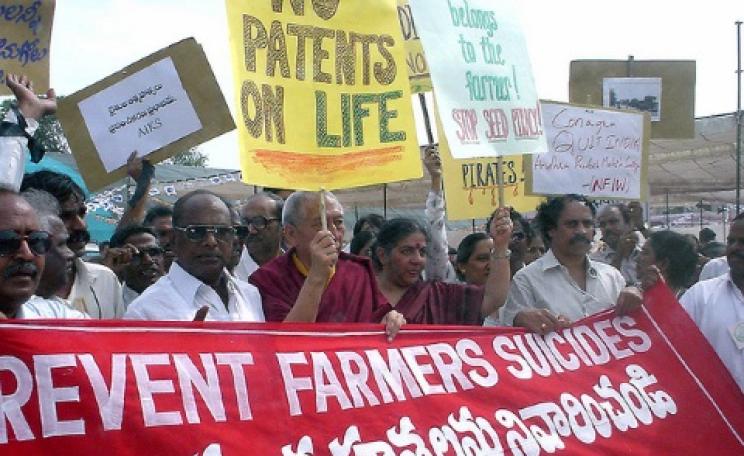
Recent decades have seen a hardening global clampdown on the rights of farmers to use, save, develop, share, swap and distribute the seeds that produce the food we all eat, writes Andrew Kimbrell - and which constitute an essential common heritage of mankind. Here's his plan to fight back against the seed monopolists ...
Already 56,000 people have pledged to support a global 'internet seed swap' initiative promoted by Avaaz, writes Julian Rose. Trouble is, the plans are deeply flawed, and have been developed without consultation with major seed saving groups worldwide.
Africa sustains some of the most spectacular ecosystems on the planet - from the Sergengeti to the Congo Basin to the Eastern Arc forests. But those ecosystems and their iconic wildlife are now facing their greatest peril, writes William Laurance - a mining boom of unprecedented intensity.
The EU's farming policy is being touted as 'greener than ever' - but it's no such thing, write Lynn Dicks & Tim Benton. The 'green reforms' pay farmers for actions (and often inactions) that do not benefit wildlife, and contain no real or effective measures to help.
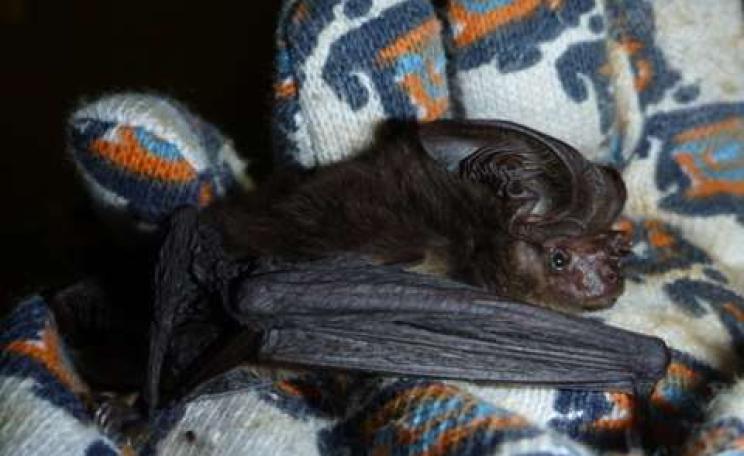
A 'microbat' that has remained unrecorded since 1890 has been discovered in Papua New Guinea. But with the country's forests under growing pressure from logging and for conversion to plantations, this and thousands of other biological treasures are at risk.
Owen Paterson has done it again - offering up ancient woodland for development via 'biodiversity offsetting' - planting new trees elsewhere. Trouble is, says Austin Brady, ancient woods are centuries in the making.
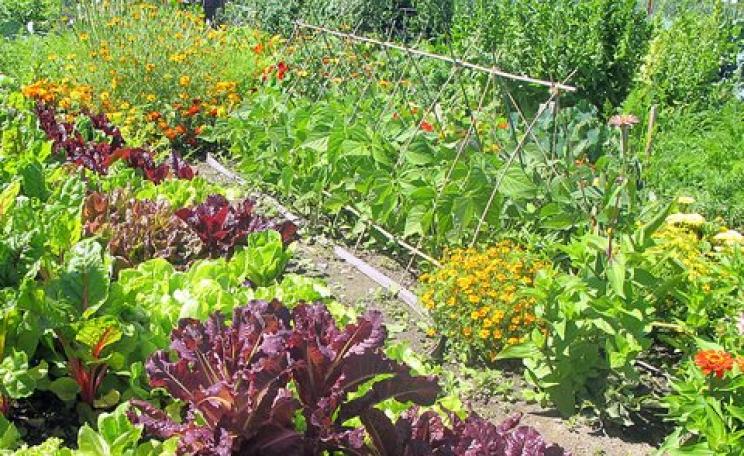
Despite hard economic times, a recent survey shows that two thirds of UK homebuyers would consider paying more for a house with a wildlife-friendly garden ...